
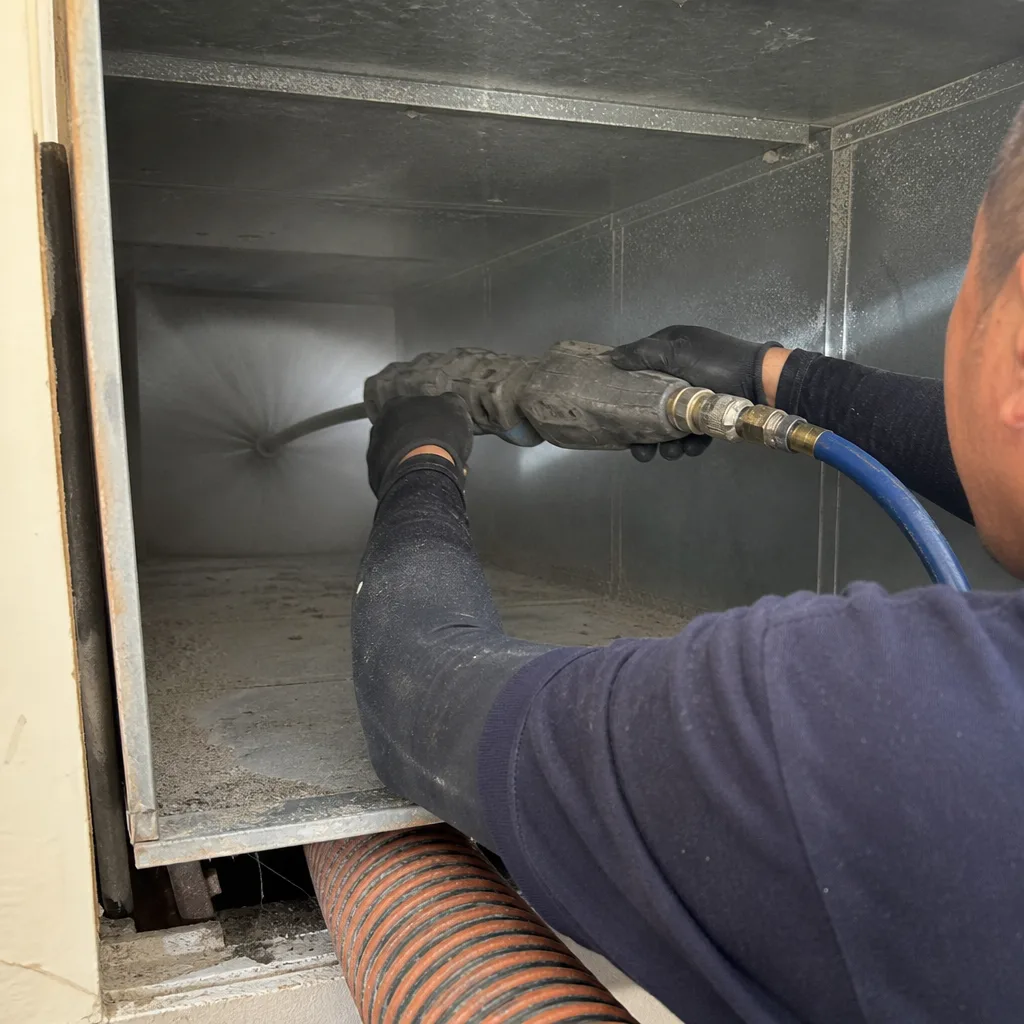
Last updated November 4, 2026
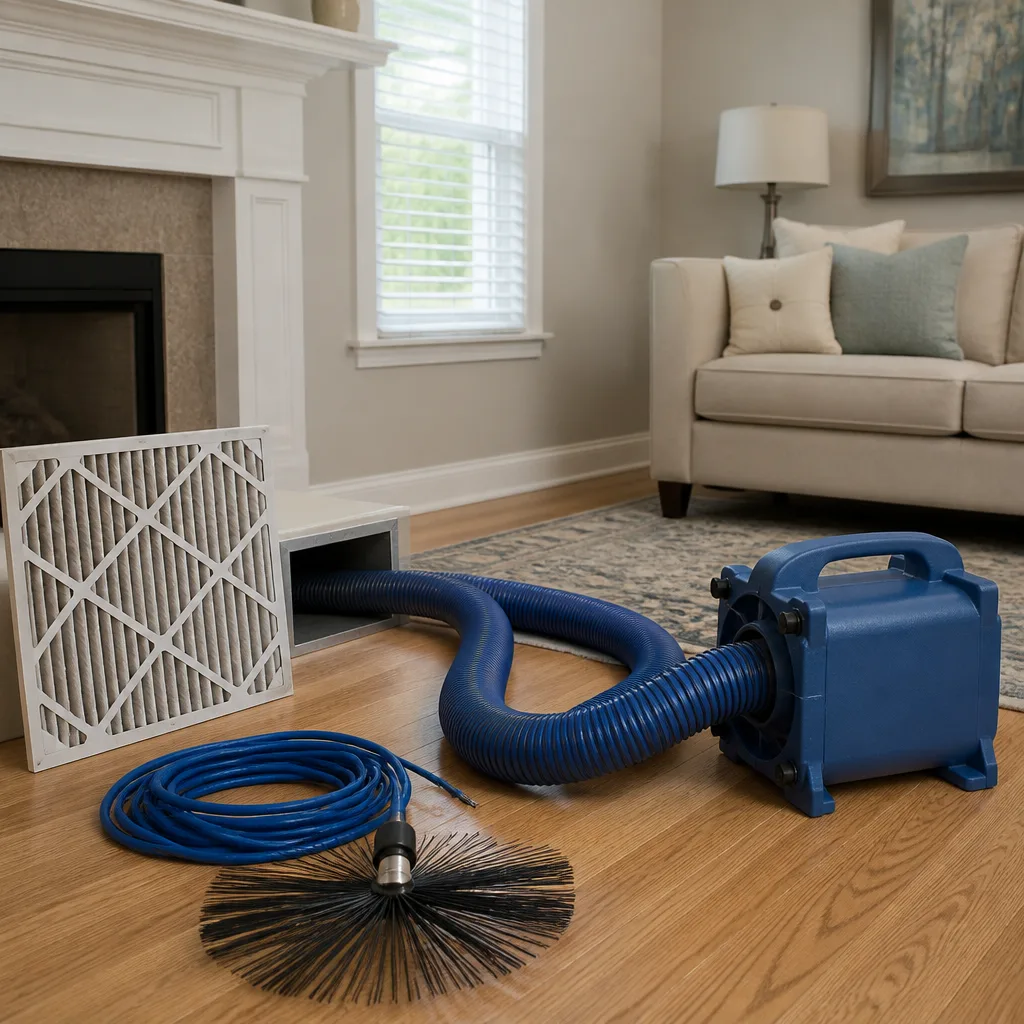 Whole-home duct cleaning
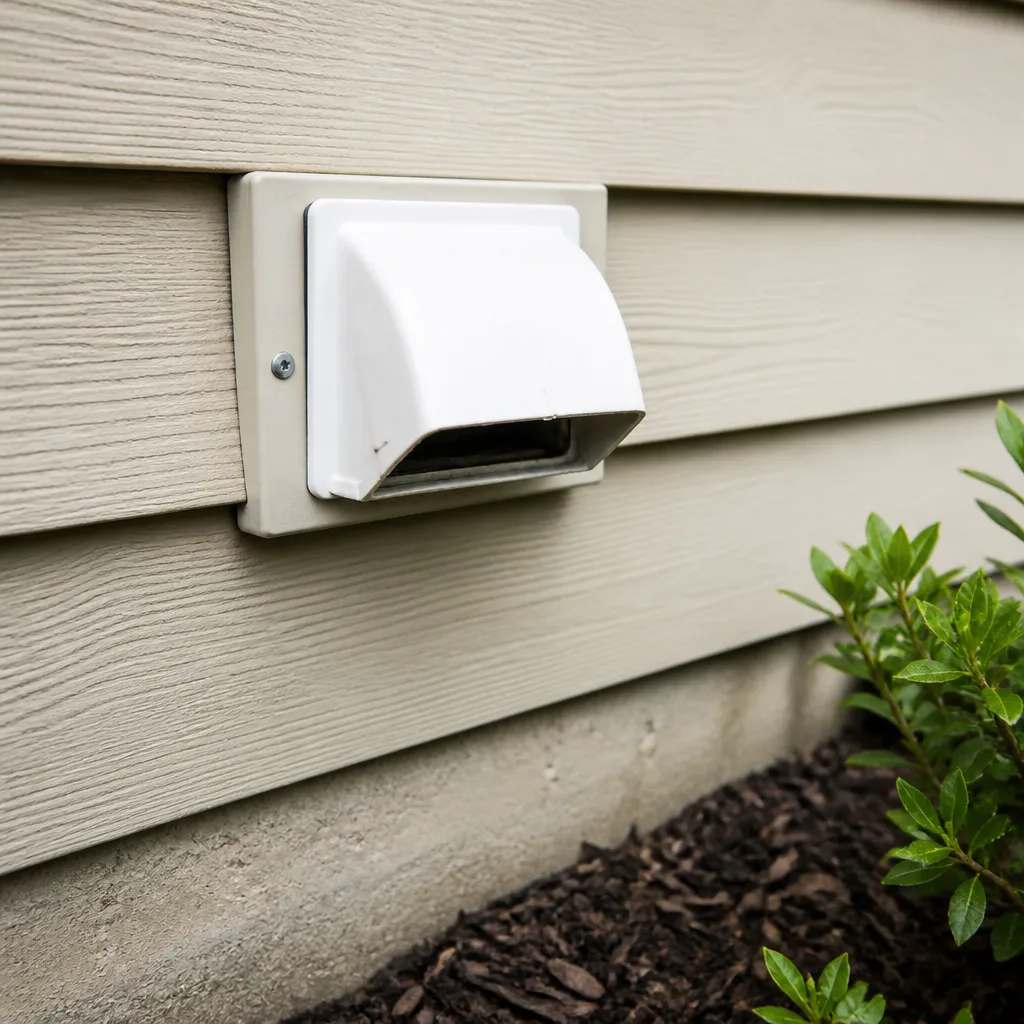 Dryer vent cleaning
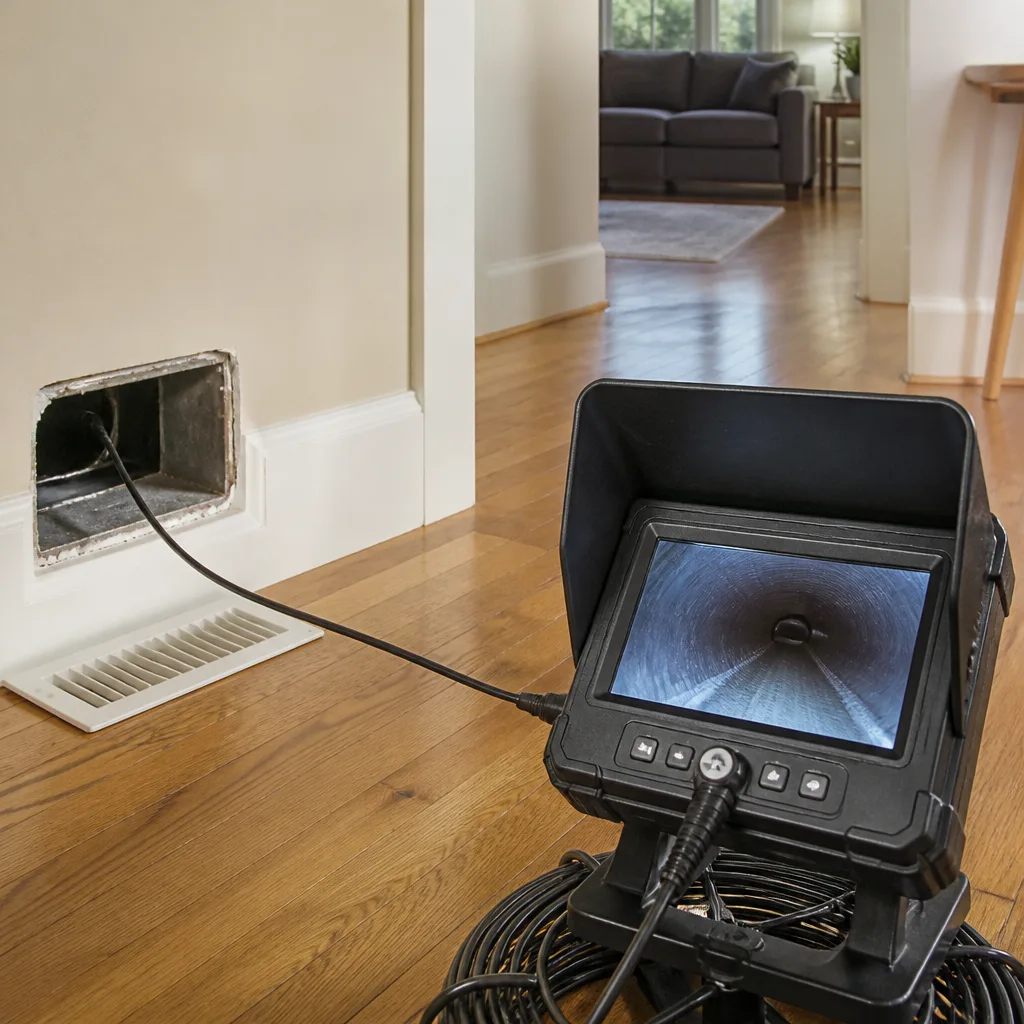 Camera inspection
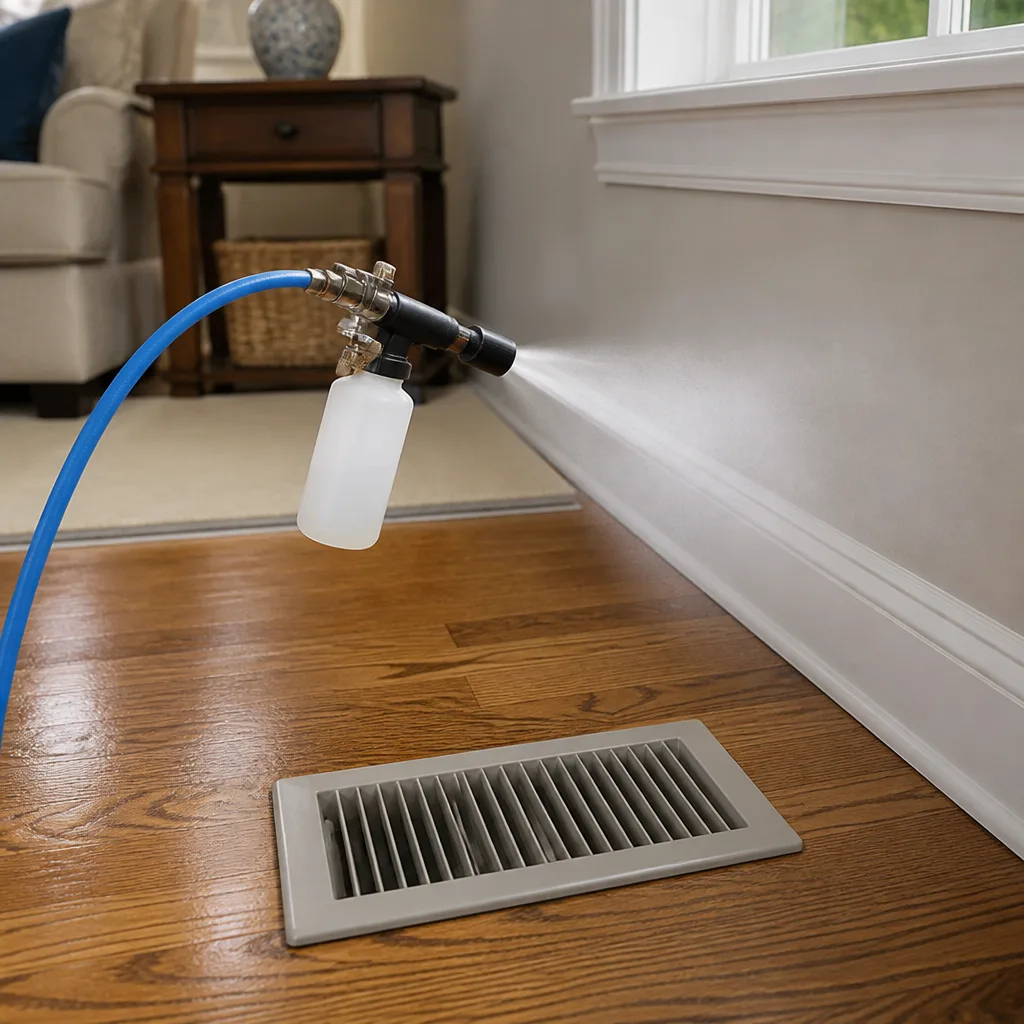 Sanitizing & deodorizing
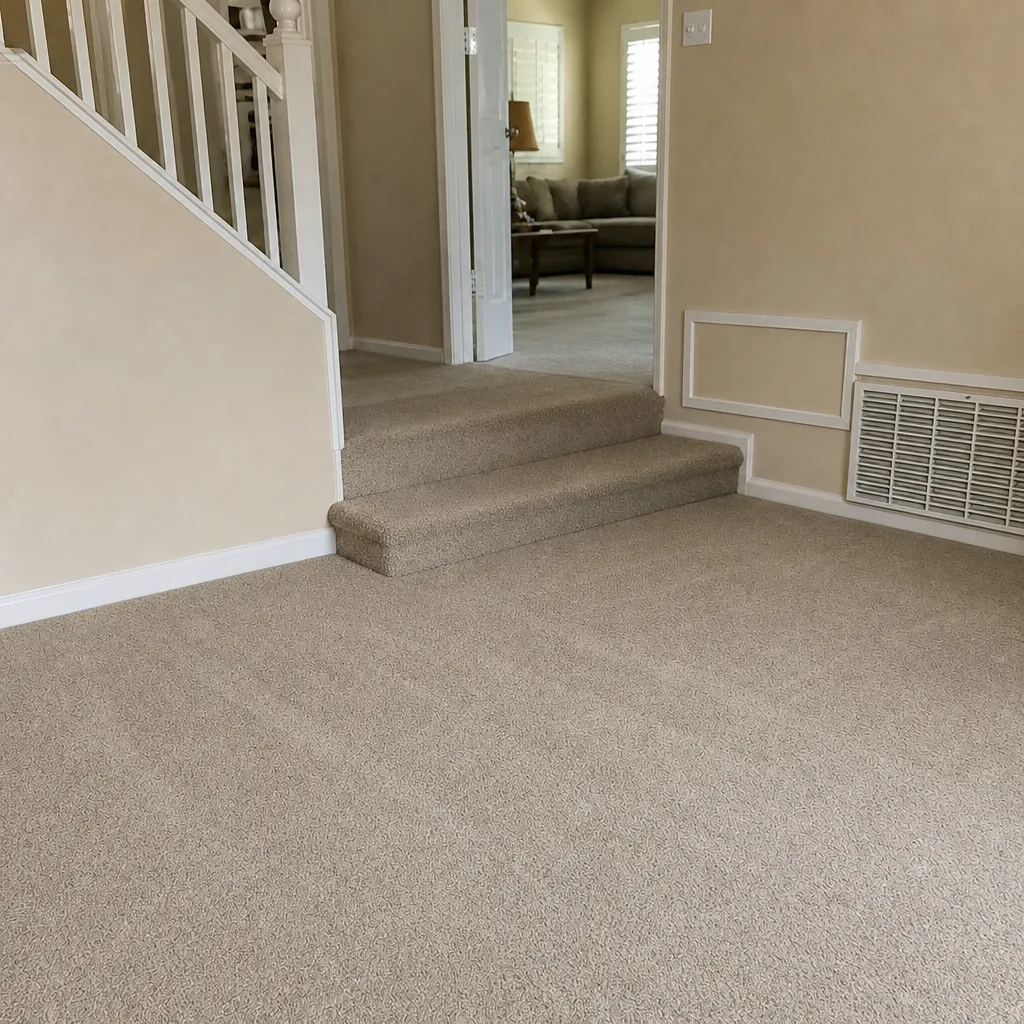
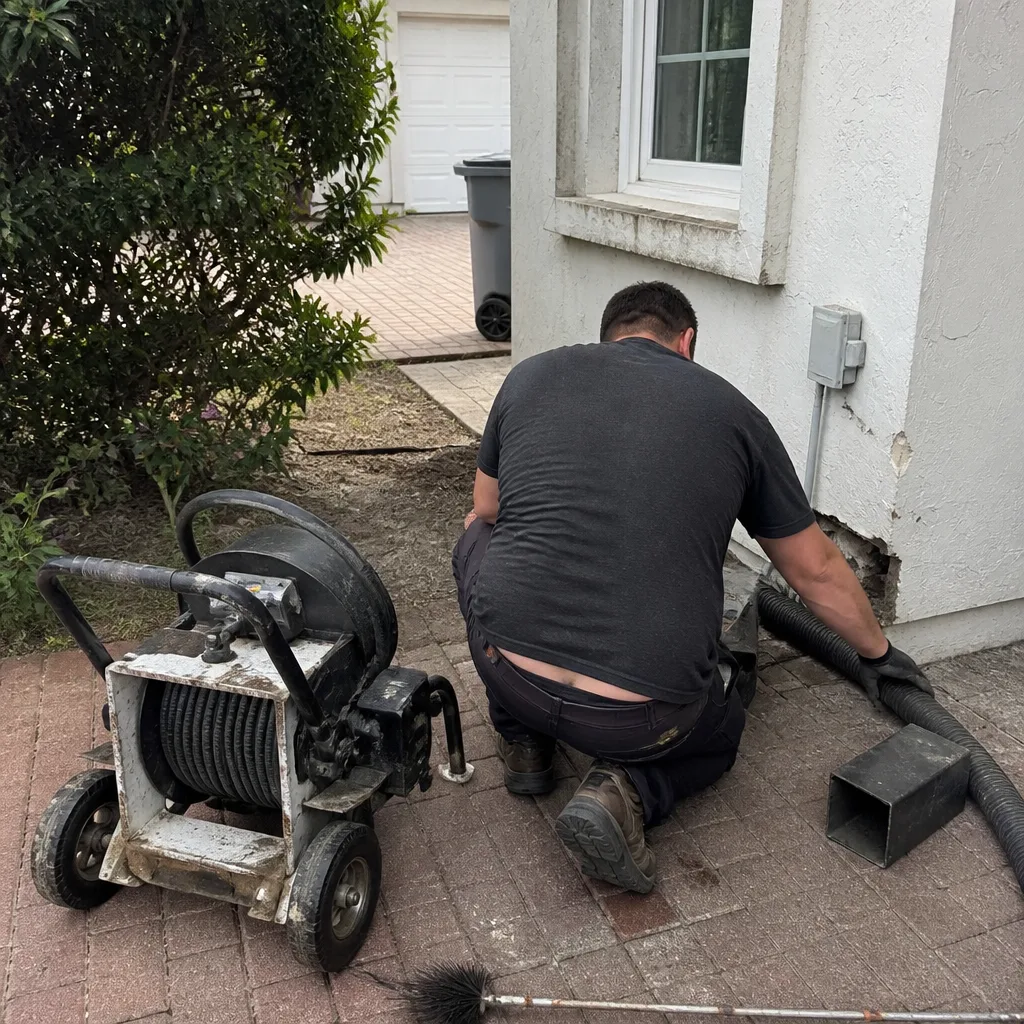
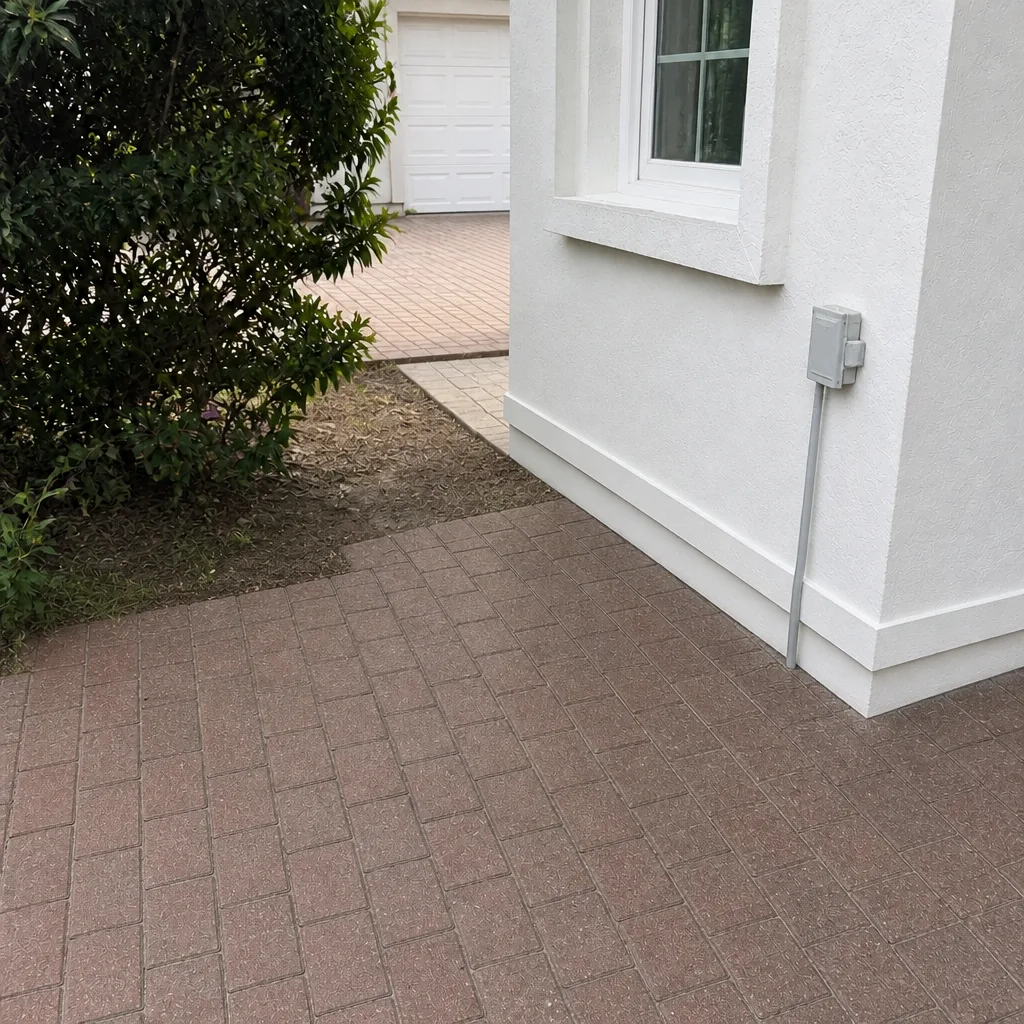
Whole-system duct and dryer vent check with before-and-after photos - you see exactly what came out of your vents
That "$99 whole-house special" is a bait ad - the real number appears once they are in your hallway, or the "clean" is a shop-vac at the register. We photograph the inside of your ducts before and after instead.
Air Duct Cleaning Maintenance Checklist for San Clemente Homeowners
The standard advice you’ll find online, “clean your ducts every 3 to 5 years,” was not written with San Clemente in mind. A home two blocks from the beach accumulates particulate differently than one tucked into the hills off Avenida Pico, and a generic checklist won’t account for that. This guide is a working maintenance routine for homeowners who want to know what to look at, smell for, and listen to between professional cleanings, and what actually matters in this specific coastal climate. You’ll learn what accelerates buildup here, which monthly checks catch problems early, and what documentation to keep so the next cleaning is anchored in evidence, not guesswork.
Quick Answer
An air duct cleaning maintenance checklist for San Clemente homeowners means a monthly visual and sensory check of supply vents, return grilles, and the filter, plus seasonal logging of energy bills, humidity, and any temperature inconsistency between rooms. Given San Clemente’s marine layer and canyon wind patterns, most homes here should plan for a professional air duct cleaning every 2 to 4 years rather than the national 3-to-5-year range. The most useful thing any homeowner can do is keep a simple log so you know your system’s baseline before a problem announces itself.
Styles & brands we work with
- Whole-home duct cleaning
- Dryer vent cleaning
- Camera inspection
- Sanitizing & deodorizing
Table of Contents
- The Monthly Visual Inspection: What to Actually Look For
- Filter Change Intervals for 92672 vs. 92673
- Logging HVAC Performance: Energy, Temperature, Humidity
- Post-Wildfire Smoke Protocol for San Clemente Homes
- The Handoff Checklist: Documentation to Request After a Cleaning
- Signs That Move You from Maintenance to Immediate Action
- Common Mistakes to Avoid
- When to Call a Professional
The Monthly Visual Inspection: What to Actually Look For
You don’t need to open the ductwork to run a meaningful inspection. What you’re doing is reading the evidence the system leaves at its openings, and that evidence tells you more than most people realize. In San Clemente specifically, the marine layer keeps relative humidity elevated for months at a time, and that changes how dust behaves. It clings. It clumps. It doesn’t stay dry and loose like it does in Arizona.
Here’s the monthly routine we suggest for San Clemente homeowners:
- Look at each supply vent. Remove the vent cover (most lift off with a quarter-turn screw or a gentle pull). Check for gray, sticky film around the register opening. In San Clemente’s humidity, a chalky white residue usually means moisture has been present at some point. Dry, gray powder is normal accumulation; sticky or clumped dust is a signal.
- Check return grilles more closely. Returns pull air in, so they collect a concentrated sample of whatever is floating in the home. If the return grille has visible dust bridging across its fins, the system is pulling more particulate than the filter is catching.
- Smell at the return when the system kicks on. A musty or laundry-like smell at startup indicates moisture has been present inside the system. San Clemente’s persistent humidity makes this more likely here than in drier climates. A brief musty puff that clears within a minute is worth noting; a persistent smell is worth a call.
- Listen for changes in airflow. Stand near a supply vent while the blower runs. You should hear a steady, smooth rush. A whistling or rattling sound suggests restriction somewhere, often a filter that’s past its interval or a partially closed damper. A noticeable drop in airflow from one vent compared to others in the same system points to a blockage in that branch.
- Check for dust settling patterns. The day after you dust horizontal surfaces, look for a fine film returning faster than usual. Faster-than-normal settling with no obvious source (no remodeling, no open windows) is an early indicator the supply side of the system is carrying more than it should.
None of this requires tools or technical knowledge. The point is to know what normal looks like for your system so that when something shifts, you notice it in the first month rather than the twelfth.
Filter Change Intervals for 92672 vs. 92673
San Clemente is split between two primary ZIP codes, and they behave differently. The 92672 side sits closer to the water, where marine air, salt particles, and persistent humidity affect both filter loading and what those particles do once inside the duct. The 92673 side runs up into the hills and canyon-adjacent areas, where coastal wind and drier chaparral air move dust through homes differently. A single filter schedule for both is too blunt.
For 92672 (closer to the coast)
- Pleated 1-inch filters: Replace every 4 to 6 weeks. The moisture-holding capacity of coastal air means even moderately loaded filters become damp, and a damp filter is a breeding environment, not a barrier.
- 2-inch or 4-inch media filters: Replace every 2 to 3 months. Check monthly during May Gray and June Gloom, when outdoor humidity is highest and biological growth inside the system is most likely.
- Note on Honeywell and Aprilaire media cabinets: If your system uses a media cabinet with a 4-inch Aprilaire or Honeywell filter, those cartridges hold more surface area, but in a coastal home they still reach saturation faster than the manufacturer’s generic 12-month rating suggests. Plan for replacement every 6 to 8 months in 92672.
For 92673 (hills, canyon-adjacent)
- Pleated 1-inch filters: Every 6 to 8 weeks is a reasonable baseline, but check monthly during Santa Ana wind events. Those winds carry fine particulate from canyon brush that loads filters surprisingly fast.
- 2-inch or 4-inch media filters: Every 3 to 4 months is typical, with a visual check every 6 weeks.
San Clemente’s air quality is often good, but that can create a false sense of system cleanliness because the visible air looks clear. The filter is the first defense, and the filter schedule is the single highest-impact maintenance habit you can control without any training. A loaded filter doesn’t stop protecting the equipment quietly, it restricts airflow first, and that restriction is what pushes the system to work harder and pull bypass air around the filter frame into the ductwork.
Logging HVAC Performance: Energy, Temperature, Humidity
The most underused maintenance tool is a simple notebook or spreadsheet. What gets logged gets noticed. What gets noticed gets addressed before a small problem becomes a large one. For San Clemente homes, we suggest tracking three things monthly:
- Energy bill comparison. Compare each month’s kWh usage against the same month from the previous year, not against last month. A 10 to 15 percent jump with no behavioral change, no added HVAC equipment, and no significant heat wave is an early signal that the system is working harder to move the same air. That usually means restriction, either at the filter or inside the ductwork.
- Temperature consistency between rooms. Once a month, walk the home with the system running and note whether any room feels noticeably warmer or cooler than the central thermostat area. A persistent two-to-three-degree difference in one room, repeated over two months, suggests a branch duct issue rather than normal building variation.
- Indoor humidity readings. If you have a hygrometer, log it. San Clemente’s outdoor humidity is high but indoor humidity above 60 percent for sustained periods warrants attention. If you don’t have a hygrometer, a basic one costs little and gives you a number to anchor everything else.
Here’s the key: the value of this log accumulates. A single month of elevated energy use means little. Six months of gradual rise, matched with one room consistently warmer and humidity creeping up, is a clear call to have a professional look inside the system. This is how we’d want our own maintenance decisions made, on trend data rather than a single alarming reading.
Post-Wildfire Smoke Protocol for San Clemente Homes
Wildfire smoke events from the Cleveland National Forest and surrounding areas are not a hypothetical in San Clemente. When smoke settles over the city, it doesn’t just drift through open windows. It gets pulled through the HVAC system, and fine smoke particulate does things to ductwork that regular household dust does not. What settles in the duct after a smoke event is microscopic, sticky, and can linger for months, releasing odor every time the blower runs and re-entering the living space.
Here’s what to do after a significant smoke event:
- Replace the filter immediately. Even if it was just changed. Smoke loads filters to saturation quickly, and a saturated filter can’t catch what’s already in the duct.
- Run the system on fan-only for a full day. This circulates air through the filter without heating or cooling, helping clear airborne particulate from the living space.
- Check for smoke odor at startup in the following weeks. If the system smells ashy or smoky when the blower first kicks on, that particulate is inside the ductwork or on the coil, and it won’t leave on its own.
- Schedule an inspection if odor persists beyond two weeks. Smoke particulate isn’t ordinary dust and doesn’t respond to the same cleaning approaches. A professional using HEPA-rated negative-air equipment, like the Nikro systems used in commercial remediation, is designed for exactly this contaminant.
San Clemente’s location means wildfire smoke is a recurring environmental factor, not a one-time event. The checklist should include a standing line item: after any visible haze or smoke smell outdoors, check the filter and note the date. That note becomes part of the system’s history, and it informs whether the next cleaning should include a smoke-particulate focus.
The Handoff Checklist: Documentation to Request After a Cleaning
A professional air duct cleaning should leave you with more than cleaner air. It should leave you with a baseline: documentation that tells you what the system looked like, what was found, and what to watch for going forward. Most homeowners don’t know what to ask for, and most crews don’t volunteer it. Here’s what you request:
- Before-and-after photos. Not of a single star area, but of the supply trunk, return trunk, and a representative supply branch. These photos are your evidence, and a company that shows you the inside of your own system rather than stock images is showing you they did the work. We use the same approach: see the process, not just the promise.
- A written summary of findings. Any areas with moisture staining, mold-like growth, significant debris, disconnected sections, or damage should be documented in writing. This is the baseline for your future comparison.
- Filter replacement confirmation. If the filter was changed during the service, note the date and the filter type. That date starts your next interval.
- Recommendations for specific areas. If a particular branch runs long, serves a room that’s always dustier, or showed moisture evidence, the cleaner should tell you that in writing. Those are the areas to watch in your monthly inspections.
- Any dry vent cleaning or repair work completed. If the company also handles dryer vent cleaning or duct repair, those items should be on the same summary. You’re building one system history, not three separate memories.
This documentation is what turns a one-time service into a maintenance cycle. The next cleaning, whether in two years or four, starts from a known point rather than a foggy recollection of what the last tech said.
Signs That Move You from Maintenance to Immediate Action
Most maintenance items are slow-burn: check monthly, note changes, act when trends develop. But there are signals in San Clemente homes that should trigger a call right away rather than a log entry. Here’s what separates “watch this” from “call about this”:
- Visible mold-like growth at any supply vent or return. Given San Clemente’s humidity, this isn’t a rare occurrence. It’s also not something to treat with household cleaners and move past. Mold inside the ductwork means moisture and organic material are present together, and the professional-grade approach is needed.
- Persistent musty odor from multiple vents. One vent might indicate a localized issue. Every vent suggests the problem is in the trunk line or at the coil, which affects the whole system.
- Sudden increase in dust levels. Not the slow buildup of months, but a noticeable jump: your monthly log will tell you when something changed. That sudden shift points to a returned duct that has come disconnected or a breach in the duct run.
- Unexplained respiratory irritation concentrated at home. If symptoms improve away from home and worsen on return, and you’ve ruled out other sources, the HVAC system is a prime suspect. This isn’t medical advice, but it’s a pattern worth taking seriously.
- Reduced airflow from one or two specific vents. This isn’t a filter issue, which affects the whole system. Branch-specific airflow loss means a blockage or disconnection in that particular run.
If any of these appear, the maintenance checklist has done its job: it told you to look, and you looked, and now you know something is wrong. The next step is a professional assessment. Call Monarch Air Duct Cleaning at (866) 282-7304. We answer 24/7. Fast dispatch from 7am to 7pm, Sunday through Friday.
Common Mistakes to Avoid
In our experience working in San Clemente homes, maintenance mistakes tend to follow patterns. Here are the ones we see most often, and what to do instead:
- Treating the 3-to-5-year guideline as fixed for every home. That range was written for a national average. Homes closer to the water, homes with pets, and homes that run the system heavily all fall toward the shorter end. Your filter tells you more than a generic range does: if you’re replacing filters that are consistently loaded, the system is working harder and the ducts are loading faster too.
- Checking the filter only when you remember. A calendar check becomes routine. A memory check becomes random. Put it on a recurring phone reminder tied to the day you pay your mortgage or rent. It works.
- Assuming clean-looking air means clean ducts. Ducts are hidden for a reason: you can’t see them. What you can see is the evidence at vents, returns, and the filter, and that’s what the monthly inspection is for.
- Ignoring humidity in the equation. San Clemente’s humidity isn’t just an outdoor comfort issue. It affects what happens inside the duct system. Homes without a whole-home dehumidifier, or with one that isn’t set correctly, are more likely to see biological growth inside the ductwork than homes in drier ZIP codes.
- Not documenting anything. The single biggest recurring mistake. Without a log, you’re relying on memory, and memory is a weak maintenance tool. A simple notebook with monthly notes is worth more than any smart home gadget you could buy.
- Choosing a cleaning company on price alone. This trade is crowded with low-bid operators who run consumer-grade vacuums for a few minutes and leave. The equipment matters: professional-grade systems like Rotobrush rotary brushes paired with Nikro HEPA-rated negative-air vacuums clean differently than a shop-vac. We clean it. We clear it. We fix it. Ask what equipment will be on your job before you book.
- Treating duct cleaning as a one-and-done event. It isn’t. It’s the reset point for the next maintenance cycle. The home that treats cleaning as the end of the process is the home that’s dirty again before it realizes it.
When to Call a Professional
The maintenance checklist is a homeowner’s tool, but it has a handoff point. You can inspect, log, and track, but you can’t clean inside the duct runs without the equipment. Call a professional when any of these apply: visible mold-like growth at a vent or return, persistent musty or smoky odor at startup, sudden and unexplained dust increase, branch-specific airflow loss, or a post-wildfire smoke event that left lingering odor. You should also call if your log shows a trend: rising energy use, rising humidity, and consistent room-to-room temperature differences developing over multiple months.
We don’t ask you to take our word for how we work. Better air starts inside the walls, and the only way to verify it is to see it. Monarch Air Duct Cleaning uses Rotobrush rotary-brush systems paired with Nikro HEPA-rated negative-air vacuums, with Abatement Technologies air filtration equipment on every job. The same systems professionals use for remediation work. Monarch Air Duct Cleaning offers free estimates in San Clemente. Call (866) 282-7304. We answer 24/7. Fast dispatch from 7am to 7pm, Sunday through Friday.
See the difference
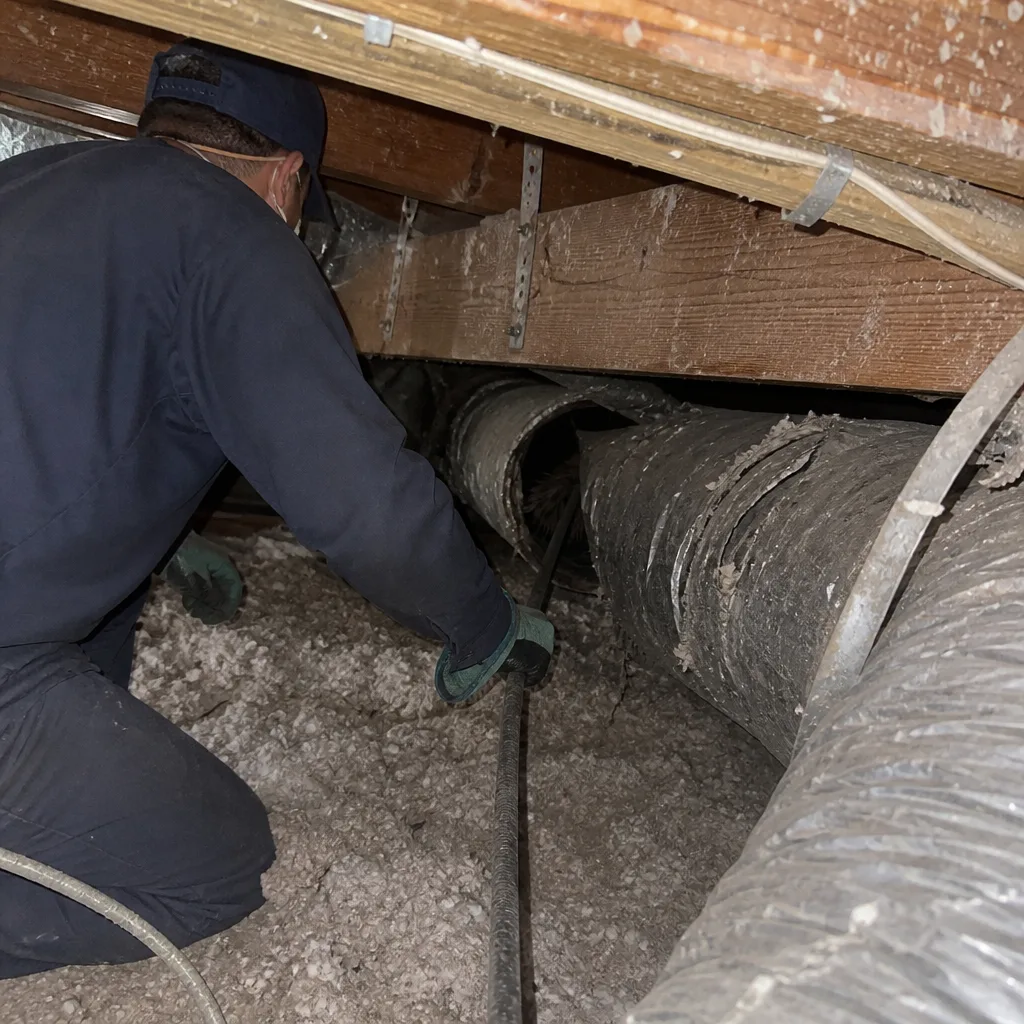 Before
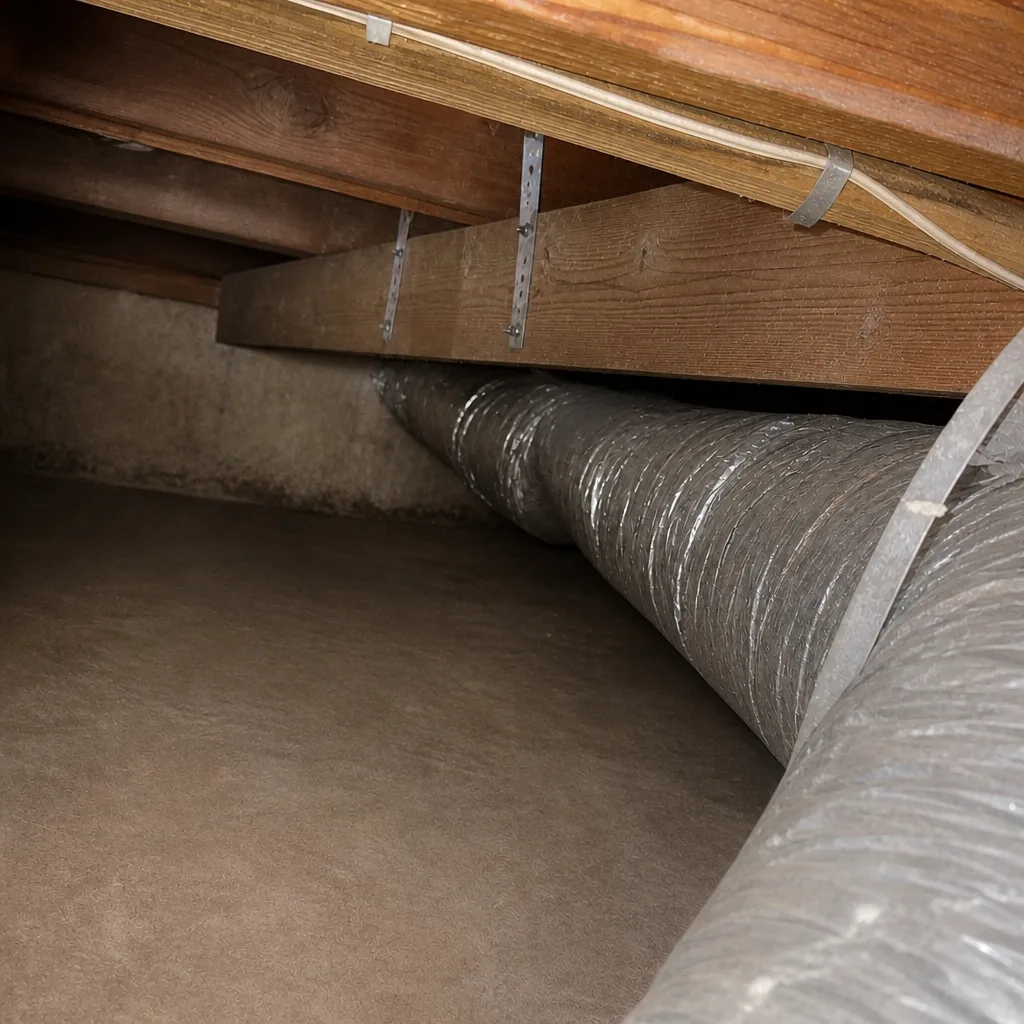 After
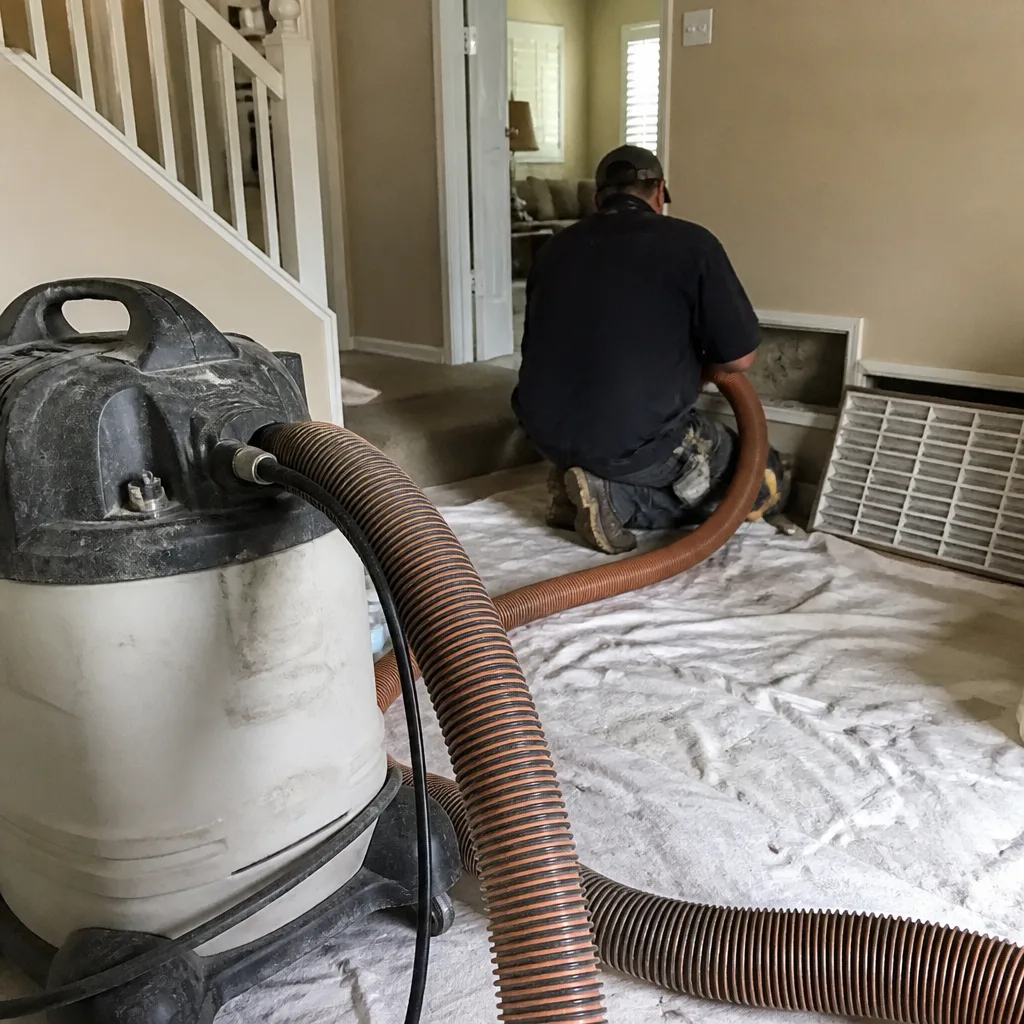 Before
 After
 Before
 After
Frequently Asked Questions
Most San Clemente homes should plan for professional cleaning every 2 to 4 years, shorter than the national 3-to-5-year average, because the marine layer’s humidity and canyon wind patterns accelerate particulate buildup inside duct systems. Homes in 92672 with pets or allergy-sensitive occupants often benefit from cleaning at the 2-year mark. Call (866) 282-7304 for an exact assessment based on your home.
You know by reading the evidence: visible dust bridging return grille fins, sticky or clumped dust at supply registers, a musty odor at system startup, faster-than-normal dust settling on furniture, and a sudden or gradual increase in energy use all point toward a system that needs attention. Any one of these is worth a professional look, and several together are a clear signal. Call (866) 282-7304 for a free estimate.
The equipment and the process. A low-bid operator often runs a consumer-grade vacuum into a few vents and calls it complete. A professional-grade cleaning uses rotary agitation to dislodge particulate followed by HEPA-rated negative-air collection to capture it, so the contaminant leaves the home rather than recirculating. That’s the standard we work to, using Rotobrush and Nikro systems with Abatement Technologies filtration on every job. Call (866) 282-7304 to ask what equipment will be on your job.
Not always immediately, but a smoke event in San Clemente should trigger a filter replacement right away and a close watch on startup odor for the following weeks. If the system still smells smoky or ashy when the blower kicks on after two weeks, the particulate is inside the ductwork and professional cleaning is warranted. Smoke particulate is different from household dust and needs HEPA-rated collection, not a basic vacuum pass. Call (866) 282-7304 to discuss your situation.
Yes. Homes in 92672 close to the water should replace 1-inch pleated filters every 4 to 6 weeks rather than the standard 60 to 90 days, because coastal humidity reduces a filter’s effective life and damp filters can become a growth environment. If you have a 4-inch media cabinet from Honeywell or Aprilaire, plan for replacement every 6 to 8 months instead of the 12-month rating. Call (866) 282-7304 if you’re unsure which filter your system uses.
You should receive before-and-after photos of the supply trunk, return trunk, and a representative branch run, plus a written summary of findings including any moisture staining, damage, disconnections, or recommendations for specific areas. A company that shows you the inside of your own system is demonstrating the work was done. That documentation anchors your next maintenance cycle. Call (866) 282-7304 to ask how we document our work.
The Bottom Line
A useful air duct maintenance checklist for San Clemente is specific to this climate, not copied from a national template. The monthly inspection duty is simple: look at vents and returns, smell at startup, listen for airflow changes, and log energy, temperature, and humidity monthly. Filter intervals are shorter near the coast than in the hills. Wildfire smoke resets the schedule. And the most valuable tool you have is a simple written log, because trend data tells you more than any single observation. When the evidence says the system needs professional attention, don’t wait. Monarch Air Duct Cleaning offers free estimates in San Clemente. Call (866) 282-7304. We answer 24/7. Fast dispatch from 7am to 7pm, Sunday through Friday.
Written by the team at Monarch Air Duct Cleaning, serving San Clemente since 2012.