
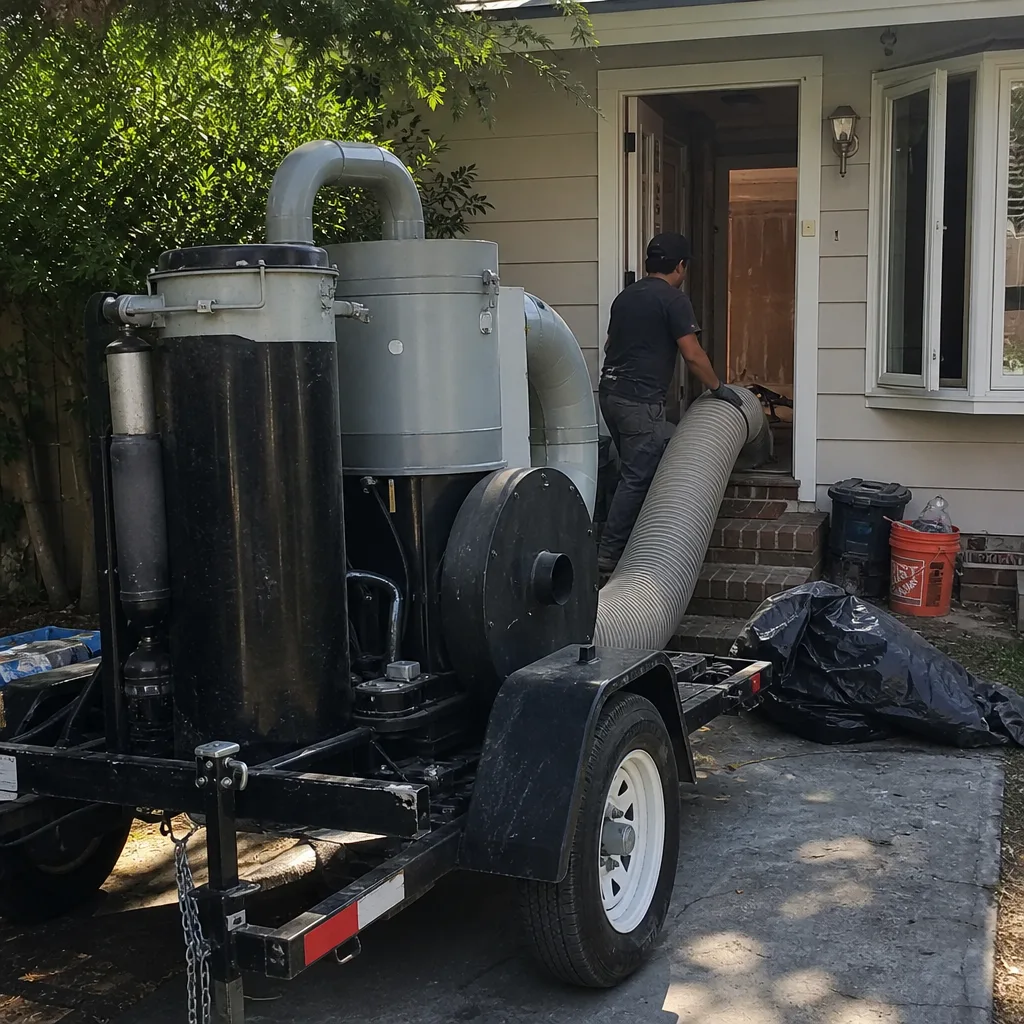
Last updated November 4, 2026
 Whole-home duct cleaning
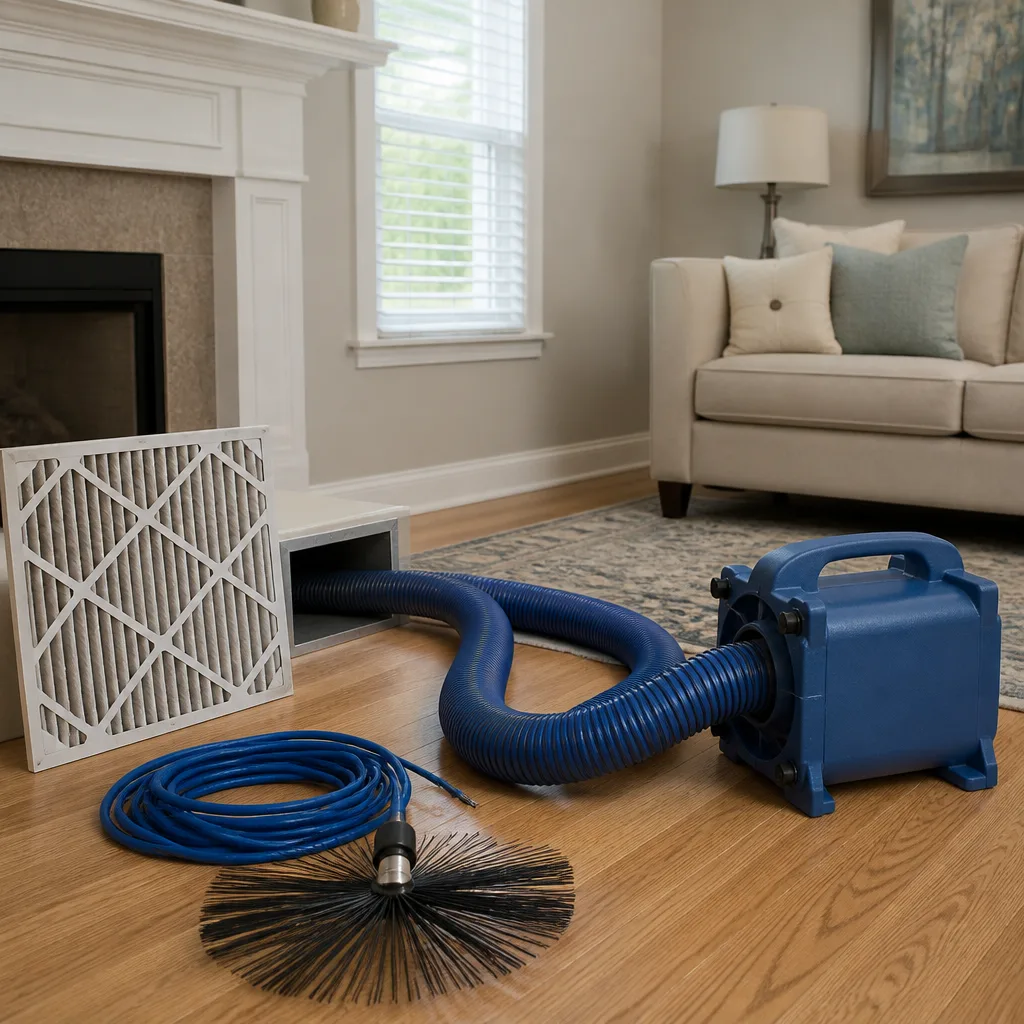
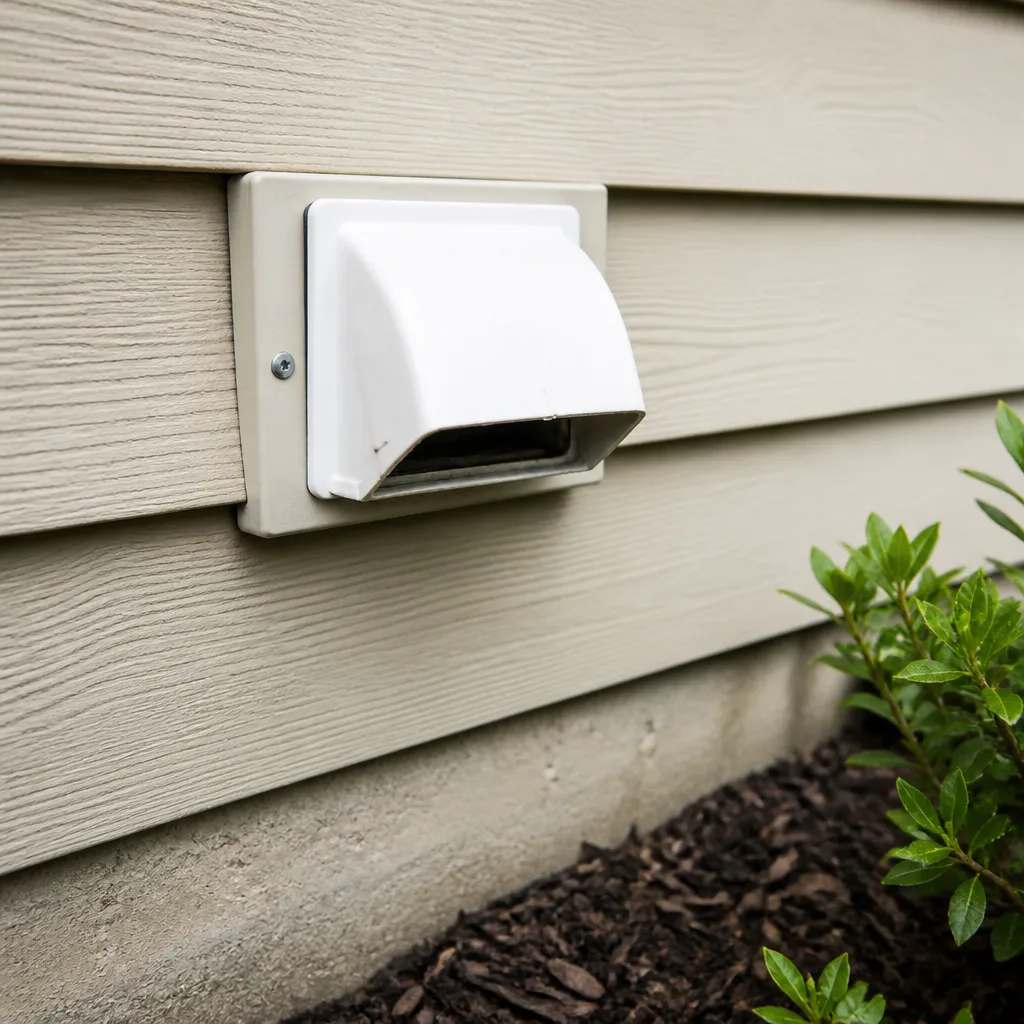 Dryer vent cleaning
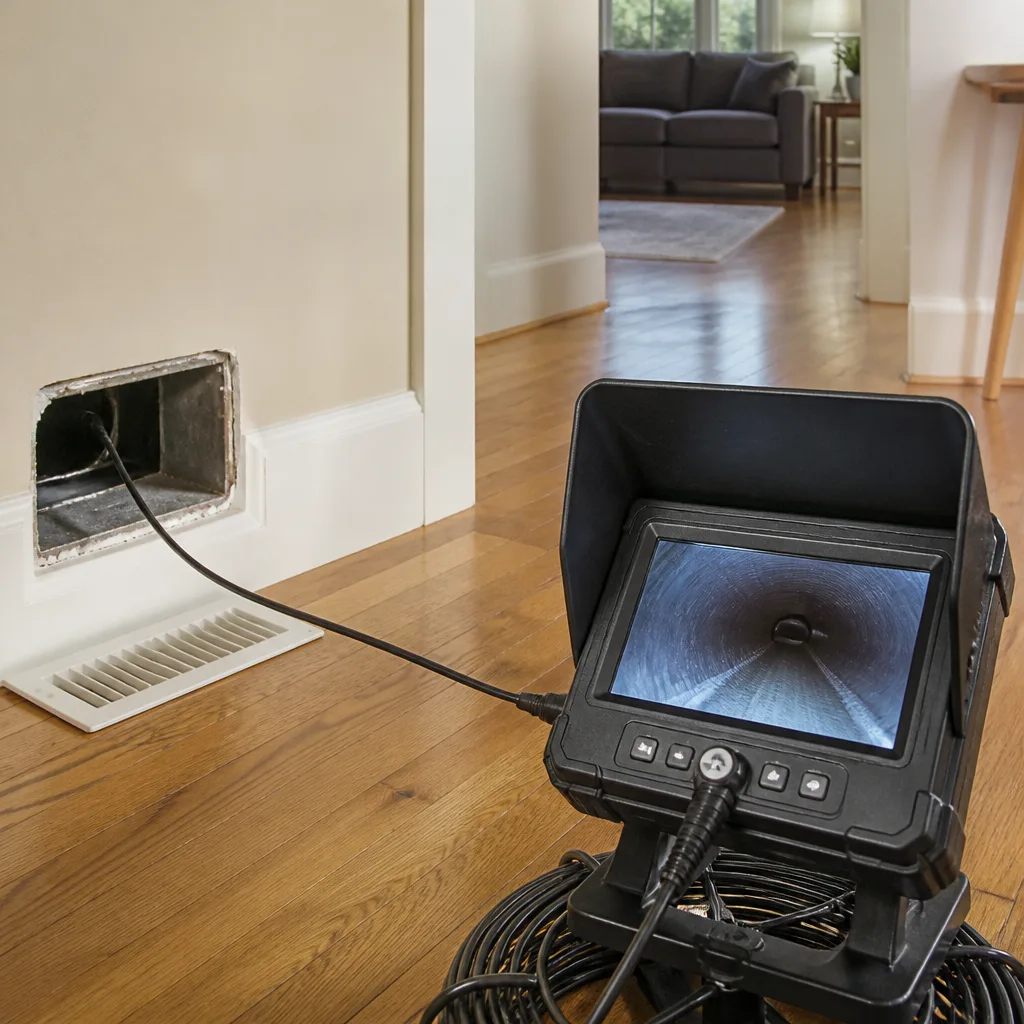 Camera inspection
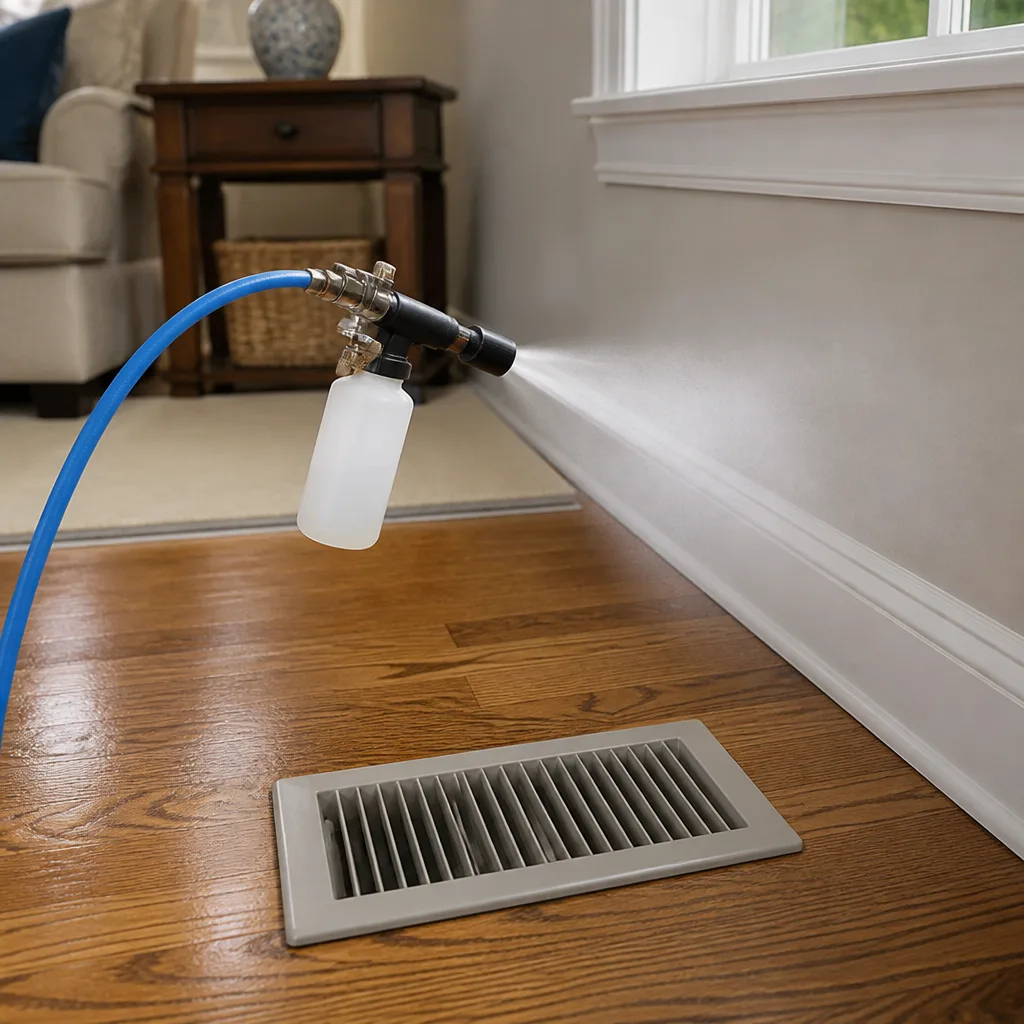 Sanitizing & deodorizing
Whole-system duct and dryer vent check with before-and-after photos - you see exactly what came out of your vents
That "$99 whole-house special" is a bait ad - the real number appears once they are in your hallway, or the "clean" is a shop-vac at the register. We photograph the inside of your ducts before and after instead.
Air Duct Cleaning Cost Breakdown: The San Clemente Homeowner’s Reference for 2026
A $79 duct cleaning quote and a $650 quote in San Clemente are not two prices for the same job. They are two entirely different scopes of work being sold under the same name, and understanding what’s inside each number is the only way to avoid paying twice. Most homeowners don’t discover this until a crew is already in the driveway, a Rotobrush is running through the vents, and someone starts pointing at a thermal camera screen suggesting “optional” add-ons that suddenly make the $79 quote look like a $900 invoice. This guide breaks down what actually drives legitimate pricing in San Clemente, what equipment matters, what a real quote should include, and how to tell the difference between a professional cleaning and a bait-and-switch pitch dressed up as one.
Styles & brands we work with
- Whole-home duct cleaning
- Dryer vent cleaning
- Camera inspection
- Sanitizing & deodorizing
Quick Answer
Professional air duct cleaning in San Clemente typically runs $450 to $900 for a whole-home system in 2026, depending on home size, number of furnaces, access difficulty, and duct condition. Legitimate companies price by scope: home square footage, number of supply and return registers, number of HVAC units, and how hard the ductwork is to reach. Ads offering $79 or $99 whole-home cleanings are almost always loss-leader bait designed to get a technician inside the home who will then explain why the “real” cleaning costs much more, usually after partial work has already begun. A legitimate quote should be a flat, written number agreed to before equipment comes through the door, and you should know exactly what that number includes and excludes.
What Actually Drives Duct Cleaning Costs in San Clemente
San Clemente homes share a few structural characteristics that have more influence on duct cleaning cost than almost anything else. The most significant is access. In our experience, homes with attic-mounted ductwork are the fastest and most straightforward to clean. A technician can move through the attic, reach each branch line directly, and run the rotary brush through the full length of the duct without obstruction. Crawlspace systems with floor registers are the next tier. Every register becomes a work station, and each run of duct gets cleaned from both directions where possible, which adds time. Slab-foundation San Clemente homes, where ducts run through concrete chases, are the most labor-intensive because access points are limited to the registers themselves, requiring longer tooling runs and more careful negative-air setup. A three-bedroom home with attic ducts and one furnace often lands around $450 to $600. The same square footage on a slab foundation may run $650 to $850 simply because of how many hours it takes to do the same job properly.
Duct material matters too. Flexible ducts, common in many San Clemente homes built in the last three decades, can be cleaned with standard rotary brush heads. Rigid galvanized sheet metal ducts take longer because the brush travels slower through hard bends and may require multiple passes per run. Older systems with asbestos-wrapped ducts are a separate category entirely; they should never be brushed, and a reputable company will say so before starting and refer you to a specialist. System age plays a role as well. If a system has twenty years of layered dust, construction debris, and pet dander, the first cleaning takes materially longer than a maintenance cleaning on an eight-year-old system.
Number of HVAC units is perhaps the most overlooked pricing variable. A single-story San Clemente home with one furnace in the garage and eight supply registers is a straightforward calculation. A two-story home with separate upstairs and downstairs systems, each with its own return plenum and trunk line, is effectively two cleaning jobs. If a quote doesn’t ask how many furnaces you have before giving a number, that number isn’t real. The Monarch Air Duct Cleaning team prices every job by scope: system count, register count, access type, duct material, and current condition. No two homes get the same number just because they have similar square footage.
What a Professional Cleaning Actually Includes
The term “duct cleaning” is used so loosely in San Clemente that the same phrase can describe a Shop-Vac pointed at a wall register or a full-system remediation. When we talk about the professional-grade version, here’s what’s actually happening on a job:
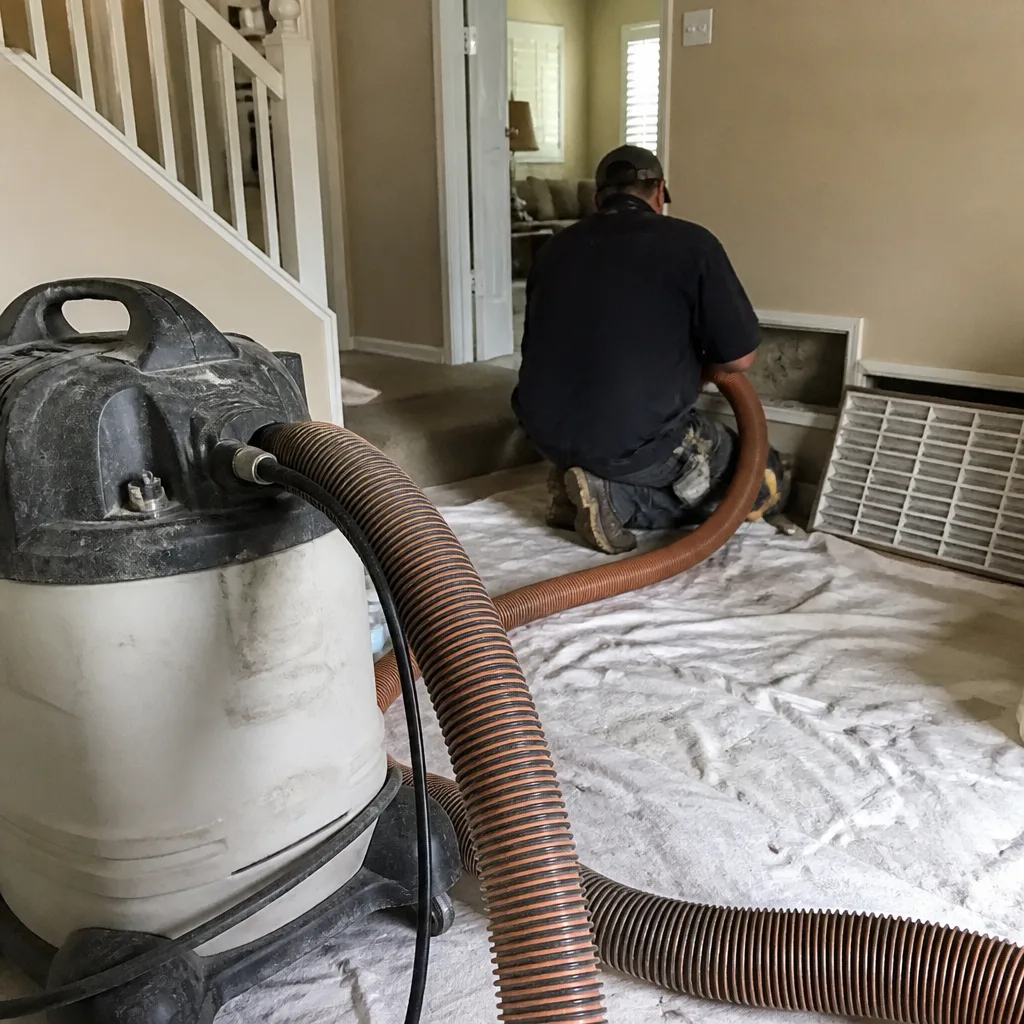
- Full negative-air setup. A Nikro HEPA-rated negative-air machine is connected to the supply and return trunks, placing the entire system under negative pressure while cleaning occurs. This means everything loosened by the brush gets pulled toward the machine, not pushed through your living room registers into the air you breathe. This is the same contamination-control approach used in mold and asbestos abatement work, and it is the single biggest equipment difference between professional shops and entry-level crews.
- Rotary brush agitation through every accessible run. A Rotobrush system sends a motorized brush head through each supply and return duct, physically scraping the walls rather than just blowing air through them. A vacuum alone, no matter how powerful, cannot remove the accumulated deposits that coat duct walls over years of use. The brush does the dislodging; the negative air does the removal.
- Registration-by-register validation. Every supply register is opened, every return grille is pulled, and each branch line is accessed and confirmed clean before moving to the next. This is slow work. A three-bedroom home takes hours, not minutes, to do properly.
- Plenum and trunk line access. The cleaning must reach the main supply plenum, return drop, and trunk lines, not just the individual branch runs. In many homes, this requires cutting access ports that are then sealed and capped with removable plugs for future service.
- Filter inspection and replacement consultation. A technician who knows what they’re doing will check your current filter setup during the job and explain what’s working. Many San Clemente homes are running filter grilles that were designed for one-inch fiberglass filters, and the conversation about better filtration is a standard part of a professional visit, not an upsell.
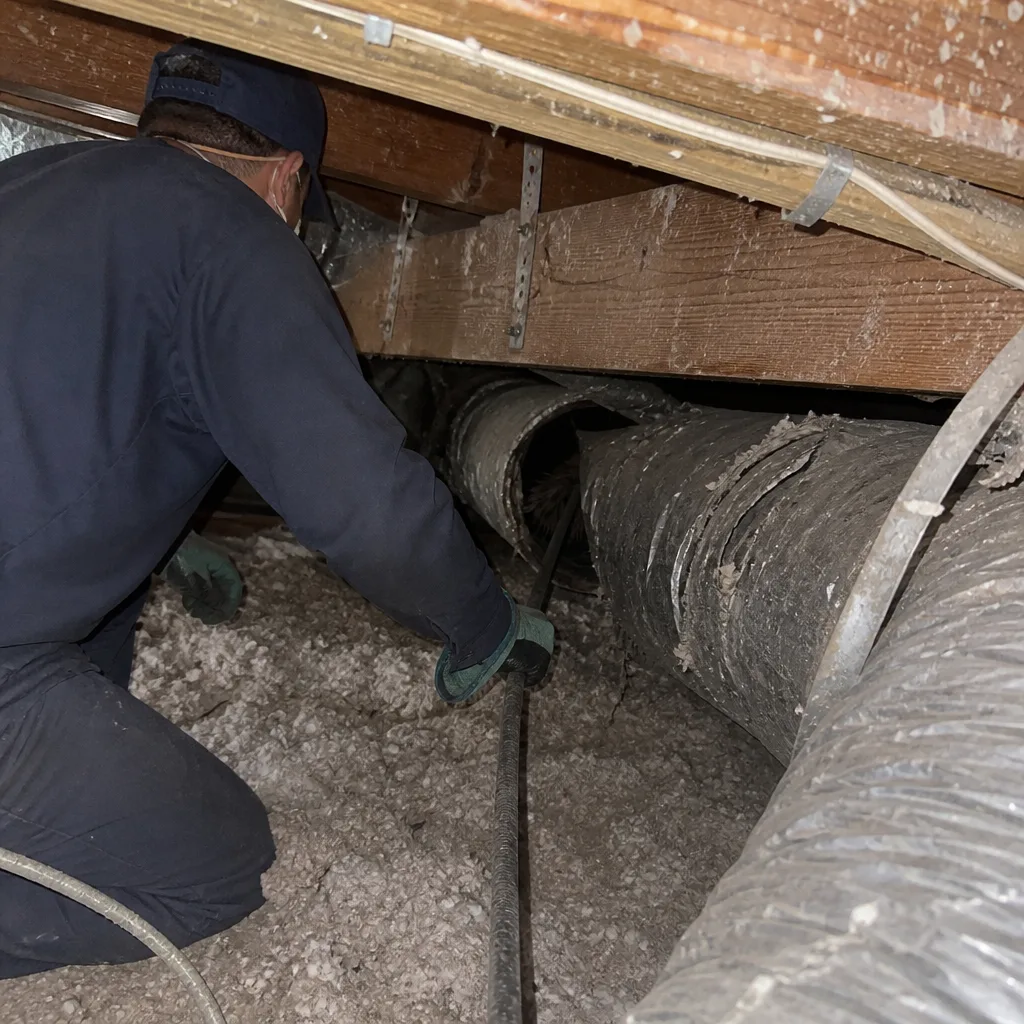
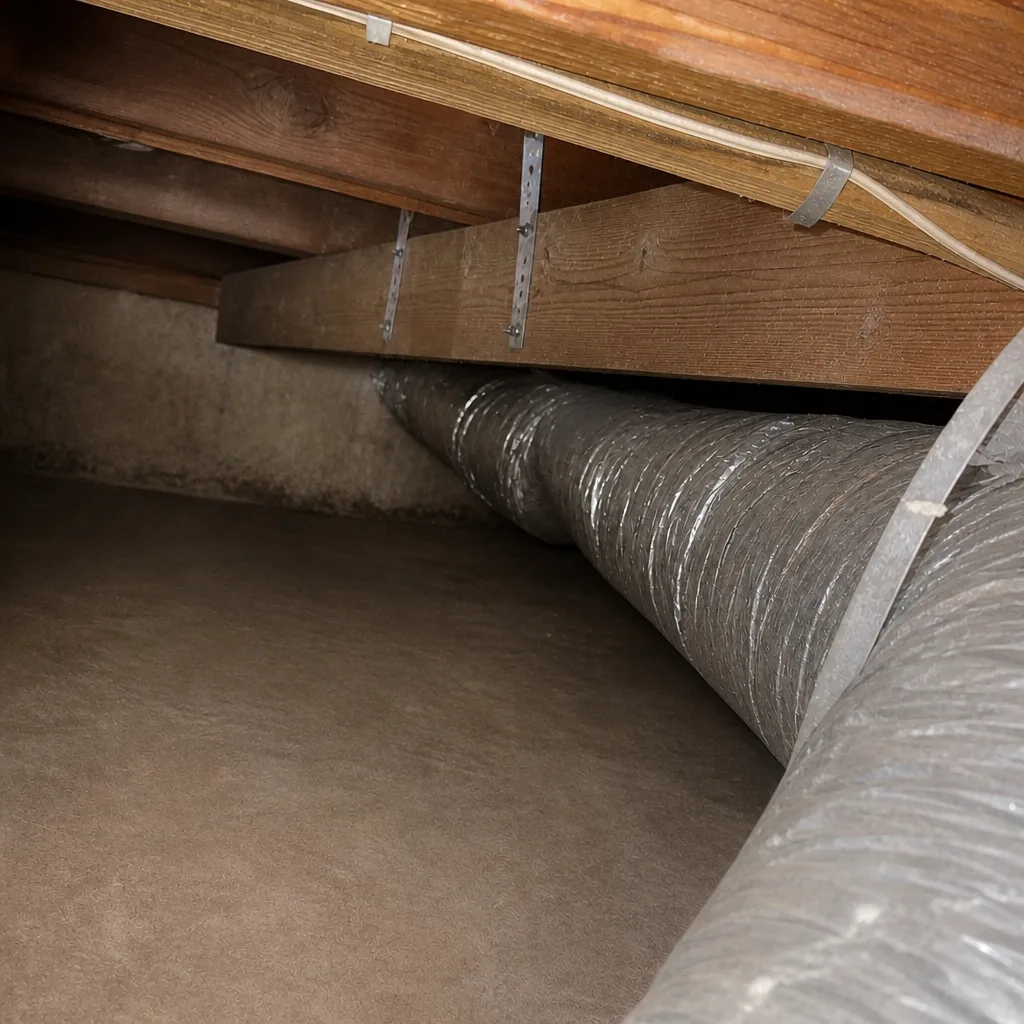
- Before-and-after visual documentation. Professional equipment makes professional documentation possible. We show homeowners their own ductwork on camera before we start and after we finish. If a company cannot show you the inside of your ducts before and after, you cannot verify any work happened. That is the whole ballgame.
Air duct cleaning in San Clemente is priced differently because the service itself is different. A company with truck-mounted Nikro negative-air systems and Rotobrush equipment carries overhead that a guy with a portable vacuum and a pole cannot match, and the work product is not the same thing. The question isn’t “why is one $89 and one $600?” The question is whether the $89 operator is actually performing the service at all.
How the Bait-and-Switch Actually Works
Most San Clemente homeowners who get burned don’t get burned by a completely fake company. They get burned by a real company with a carefully engineered pricing strategy. Understanding the mechanics is the best defense.
The pattern usually follows these steps:
- The hook price gets the appointment. $79 or $99 whole-home specials appear on billboards, in mailbox flyers, and in paid search ads. The price is designed to make you call. It is not designed to survive contact with your actual ductwork.
- The technician arrives with a visual inspection agenda. Before any cleaning happens, the nice professional in the uniform walks your home, looks at your system, and identifies “issues” that will require a higher service tier. These issues are usually real ($79 does not cover anything meaningful), but they were never going to be covered at that price. That’s the point.
- The upsell happens with equipment already in the driveway. Once a homeowner has made time for the appointment, arranged access, and is standing next to a technician who says the good cleaning is $600, most people say yes. Walking away feels harder than paying. This is the moment the price was always designed to create.
- “Sanitizing” and “deodorizing” become line-item add-ons. The cleaning itself is often quoted at a break-even price, and profit is built into aerosol sanitizing treatments, antimicrobial fogging, and odor-control applications that get appended at the end. Some of these have legitimate value. Many are margin plays with limited scientific evidence behind them, priced at $150 to $300 for a few minutes of work.
- The final invoice looks nothing like the advertised price. A $79 hook becomes a $700 to $1,100 invoice, and because it’s itemized with plausible-sounding services, the homeowner rarely protests. The company made exactly the profit it intended. The customer leaves feeling confused, which is the point.
This is not a rare occurrence in San Clemente. It is the dominant business model for a substantial segment of the residential duct cleaning trade. We hear the stories constantly: homeowners who end up paying far more than they planned, often for work they can’t confirm was ever done. The entire structure depends on low transparency at every step. One flat price per system, set in writing before work starts, is the simplest possible protection against the whole machine. We price this way because it makes the math legible: you get a number, you approve it, we do the work, the number doesn’t change. No add-on surprise at the register end of the conversation.
Typical San Clemente Pricing by Service Tier
Here’s a realistic look at what legitimate air duct cleaning costs in the San Clemente market in 2026, broken down by home size and service tier. These are working estimates based on what we see across the market, not universal prices. Every legitimate company should give you a written number specific to your home.
- Small homes and condos (under 1,200 sq ft, one HVAC system, 4-6 registers): $350 to $500. A clean single-system job with easy attic or garage access, done by a professional crew with genuine cleaning equipment. If a quote for this home comes in under $200, you’re being baited.
- Mid-size homes (1,200 to 2,500 sq ft, one HVAC system, 8-14 registers): $450 to $700. This is the most common San Clemente job and the range most legitimate companies will land in for a complete system clean with before-and-after documentation.
- Larger homes (2,500 to 4,000 sq ft, often two HVAC systems, 14-20 registers): $600 to $900. Two-system homes are effectively doubled labor on the equipment side, though the on-site setup is shared. Access difficulty and duct age can push this range higher.
- Larger estates or complex system retrofits (4,000+ sq ft, multiple systems, custom ductwork): $800 to $1,500. Custom homes with inaccessible attic returns, slab chases, or unusually long branch runs require meaningfully more time. These jobs are quoted per project, never by square footage alone.
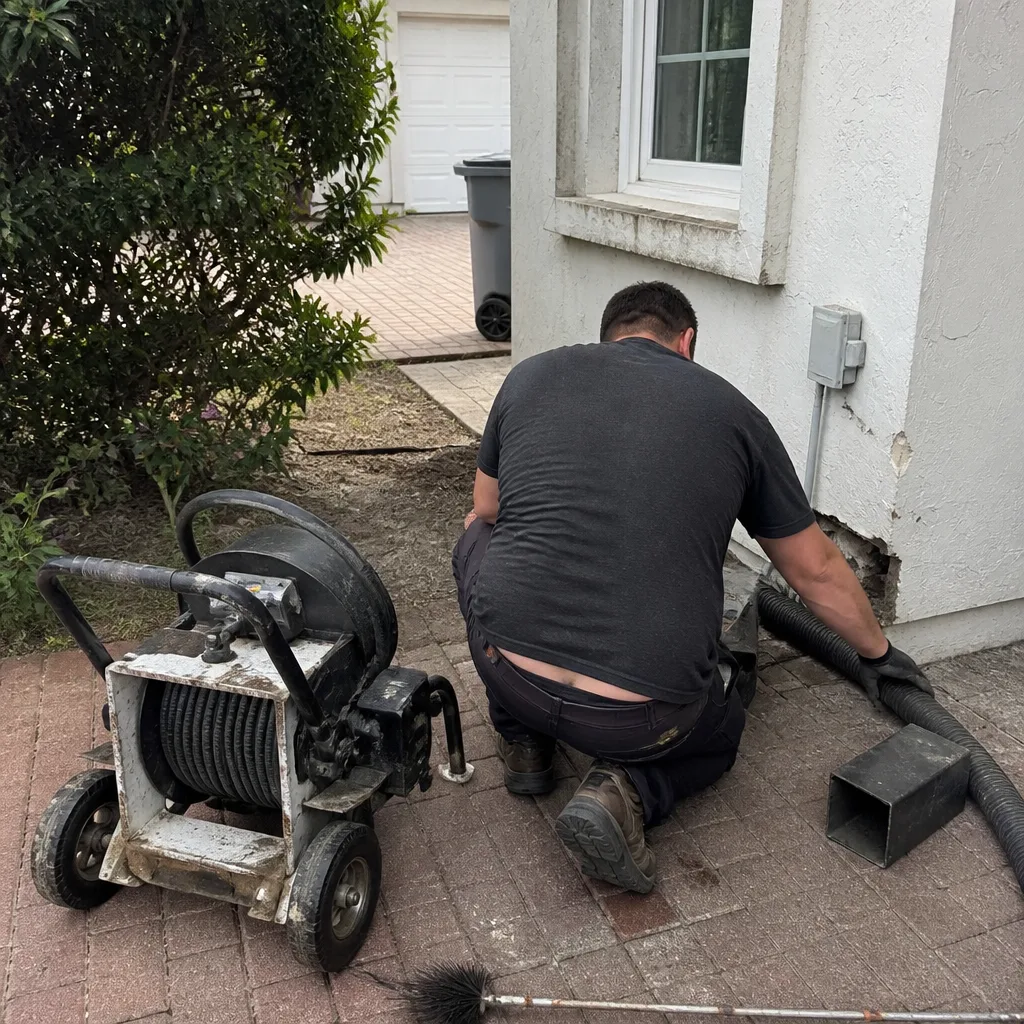
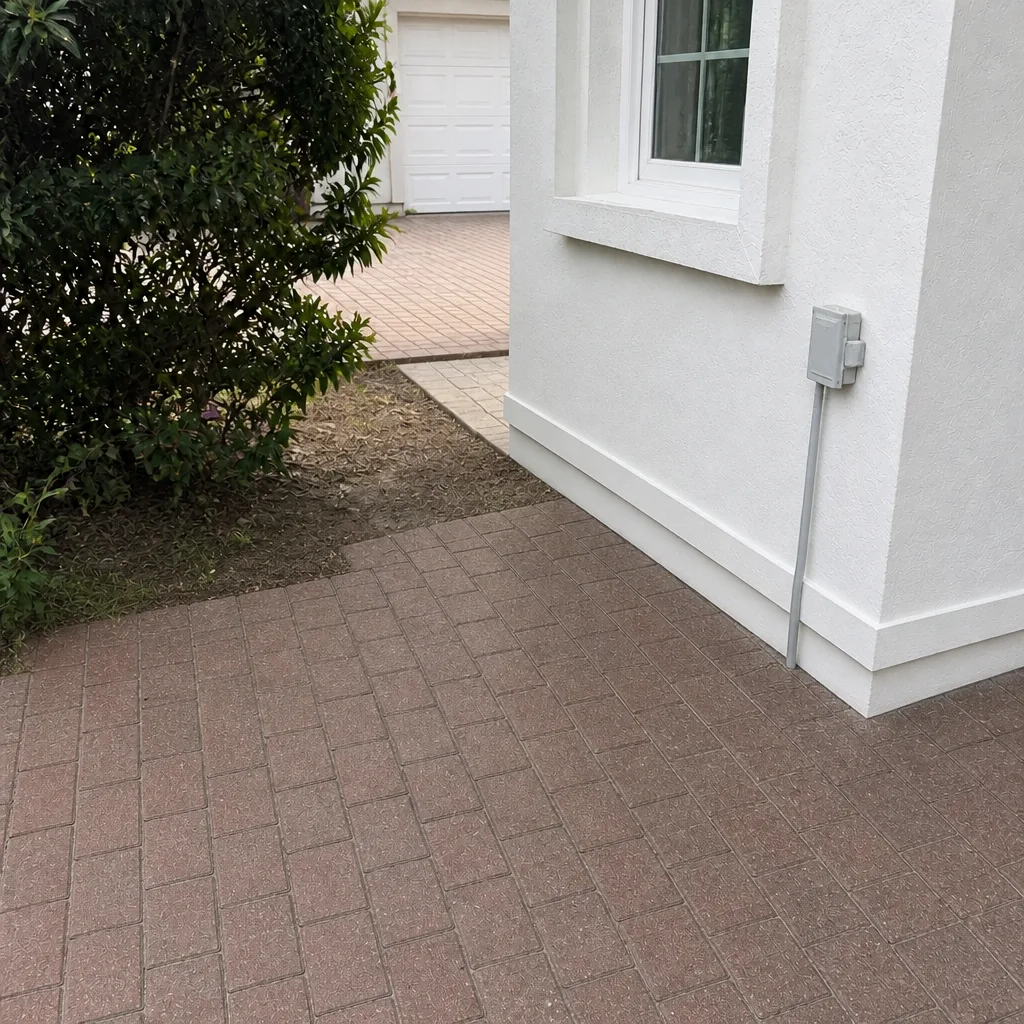
- Dryer vent cleaning (common add-on or standalone): $150 to $250 when done standalone, less when combined with a duct cleaning. Dryer vents are a fire risk when clogged with lint, and dryer vent cleaning is a fast, focused job that pays for itself in dryer performance and safety.
Here’s the same breakdown in table form for quick reference:
| Home Size | Systems | Typical Range | What It Includes |
|---|---|---|---|
| Under 1,200 sq ft | 1 | $350 – $500 | Full cleaning, negative-air setup, before/after photos |
| 1,200 – 2,500 sq ft | 1 | $450 – $700 | Full cleaning, all registers, trunk and plenum access |
| 2,500 – 4,000 sq ft | 2 | $600 – $900 | Full cleaning, both systems, longer job time |
| 4,000+ sq ft | 2+ | $800 – $1,500 | Custom per project, access complexity matters most |
| Dryer vent (add-on) | – | $150 – $250 | Full vent run clearing, termination point access |
One more thing: the cheapest legitimate tier in this table is still $350. That is the floor for professional work with professional equipment. There is no magic equipment that makes a good cleaning cost $79. If the price is below the floor, something in the scope is missing, and it is always the scope that changes once you’re on the hook.
The Add-On Audit: What’s Worth Paying For
Most San Clemente homeowners facing a duct cleaning quote are trying to make decisions about add-ons they never knew existed five minutes earlier. Some of these services have genuine value in the right home. Some are pure margin. Here’s an honest breakdown with no names blurred.
Dryer vent cleaning. This is the most underrated add-on in the entire HVAC maintenance category. Lint accumulation in dryer vents is a documented fire risk. If your dryer takes longer than one cycle to dry a normal load, or you notice a burning smell while it runs, the vent is clogged. We consider this a necessary partner to any duct cleaning, not an optional extra. If your dryer vent hasn’t been cleared in two years, and someone is already in your home with professional equipment, it should get done. The cost is modest, the risk is real, and the payoff is a dryer that works better and a house that’s safer. This is not a margin play. This is maintenance.
Coil cleaning. The evaporator coil sitting above your furnace or inside your air handler gets coated with the same dust that lines your ductwork, and a dirty coil means an inefficient system. If your coil has visible buildup, cleaning it is worthwhile. If a technician wants $400 to clean a coil they cannot show you, pause. The camera should show the coil before and after, the same as the ducts. If the coil is accessible and visibly dirty, the service has obvious value. If it’s hidden behind sealed panels and the quote is “should probably be cleaned,” request documentation or decline.
Sanitizer or antimicrobial application. This is where legitimate value and margin-play collide. Applying an EPA-registered antimicrobial product to duct interior surfaces can be useful in homes with documented mold issues or after rodent contamination. As a routine add-on for every home, the scientific case is much weaker. We are cautious with this one and only recommend it when there is a specific condition to address. A blanket “$199 sanitizer on every job” line item is a margin signal, not a service recommendation.
Air purification systems. This is an equipment upgrade conversation, not a duct cleaning add-on. Homes with allergy-sensitive occupants or chronic respiratory conditions may benefit from whole-home filtration or purification beyond the basic media filter. The conversation is legitimate when it happens at the right time, with the right equipment, and the homeowner’s actual air quality needs are the starting point. We work with San Clemente homeowners on whole-home options because the equipment we install and service includes Honeywell and Aprilaire product lines, familiar trusted names in the filtration world. But the conversation should always be: what problem are you solving? Not: what else can I sell you today?
Furnace blower cleaning. Pulling and cleaning the blower wheel is a real service that sometimes makes sense on neglected systems, but it is often billed at $200 to $300 for what amounts to a visual inspection and a quick vacuum. If you can see the blower in photos and the buildup is real, fine. If you’re being upsold without photos, decline.
The pattern in all of these is the same: value exists when you can see the condition, understand the scope, and the price matches the work. Any add-on you cannot verify with your own eyes, through before-and-after photos, is an unknown number on someone’s invoice.
How to Shop for Duct Cleaning Without Getting Played
Smart San Clemente homeowners approach duct cleaning shopping the way they approach any significant home service purchase: with questions that expose whether the number is real before anyone steps in the door. Here’s how we suggest running the process.
- Ask for the price as an all-in flat number before the appointment. If a company cannot give you a price over the phone after asking about home size, system count, access type, and register count, they are not pricing by scope. They are pricing by feel, and the feel happens when the technician sees your house. Some people value on-site quotes. In duct cleaning, a real pro can quote the work over the phone. The walk-in quote model is how bait-pricing survives.
- Ask what equipment they run. You don’t need to be an HVAC nerd to ask this. “What brand of negative-air machine do you use?” or “What kind of brush system?” The answer tells you whether they own professional equipment or rent a portable vacuum. Names to listen for: Rotobrush, Nikro, Abatement Technologies, or comparable professional-grade systems. “A high-powered vacuum system” without a brand name is not an answer.
- Demand before-and-after scope documentation. Every legitimate air duct cleaning company can show you the interior of your ductwork before work starts and after it finishes. This is the only real proof that anything happened. If a company doesn’t do camera documentation, you cannot tell a completed job from a no-show. That’s not mean; that’s just how it works.
- Read the quote for scope items, not only the bottom number. A real quote says: number of systems, number of registers, access type, total job time, what’s included, and what’s excluded. A bait quote says: “$79 whole house special.” The shorter the quote, the higher the eventual invoice.
- Walk away from any same-day pitch that raises the price after you’ve said yes to a number. This is the most common play, and it is remarkably hard to resist in the moment. Decide in advance that any price change after arrival means the company is not one to work with. The number you approve is the number.
None of this is complicated. It just requires treating duct cleaning like a real trade with real standards, not a commodity you buy by clicking the lowest result. We price flat and document everything because it’s the only way to do this work and keep a straight face in front of a homeowner.
San Clemente Context: What Homeowners Here Actually Face
The climate in San Clemente changes the duct-cleaning conversation in a specific way. Our long, warm season means HVAC systems here run hard for months at a stretch, cycling air through ducts day after day. Air conditioning pulls the same volume of air across the same coil surface over and over, collecting the same microscopic dust, skin cells, pet dander, and pollen that find their way into every home. In cool-season climates where systems sit idle for half the year, duct contamination accumulates slowly. Here, it accumulates consistently. Homes near wildland areas, which describes a meaningful portion of the San Clemente market, see additional particulate loading during fire season months when outdoor air quality declines and systems pull smoky air through the return side without filtration to catch it.
All of this means that duct cleaning in this market is not an occasional luxury. For a San Clemente homeowner whose system runs daily from spring through fall, the ducts are actively moving air through whatever is inside them for most of the year. The question isn’t really “should I get this done sometime” but “how long has it been since it was last done.” If you don’t know the answer, it’s probably time.
Home age is another variable that shows up differently here. San Clemente has a solid inventory of homes built in the 1970s and 1980s, with original or early-retrofit duct systems. A duct system that has moved air continuously for forty years has accumulated material that a fifteen-year-old system simply hasn’t. Older homes also tend to have more access challenges: original duct runs in long-defunct configurations, retrofits that connected new branches to older trunks, and component layouts that no modern company designed. None of this is a problem; all of it takes time, and time is what labor costs. A firm that prices your 1978 tract home by square footage alone hasn’t accounted for what’s actually in your attic.
For rental property owners and property managers in San Clemente, the calculation is slightly different. Turnover cleaning is cheaper than air quality complaints, and tenant expectations around indoor air quality have risen steadily. A multi-unit property with recurring turnover benefits from a duct cleaning schedule that matches lease cycles. We recommend it for the same reason we recommend dryer vent cleaning: consistent maintenance is less expensive than deferred neglect.
Common Mistakes to Avoid
- Chasing the lowest number. The lowest number in San Clemente duct cleaning is almost always a hook. If the price floor for legitimate work is around $350 to $500, any quote far below that is not for the same service.
- Not asking about equipment before booking. You would not hire a roofer without knowing what material they’re installing. Duct cleaning equipment is the service, and a company that can’t or won’t name its machines is telling you something.
- Allowing work to begin without a written all-in price. Once the first register is opened, you lose leverage. Get the number and the scope in writing before anything starts.
- Paying for sanitizing services without a documented reason. Sanitizing can be legitimate. It is not a default for every home. If there’s no visible mold, no recent contamination, and the tech can’t explain what specific problem the sanitizer addresses, skip it.
- Skipping dryer vent cleaning during the same visit. If someone is already at your San Clemente home with the right equipment, clearing the dryer vent is a small investment in what is genuinely a fire-safety issue. Do not treat it as an optional luxury add-on.
- Hiring a company that can’t show you the duct interior. If there’s no camera documentation, there’s no verification. The entire point of the service is that you can see the difference. No photos, no proof, no way to know.
- Assuming duct cleaning is a frequent maintenance item. The National Air Duct Cleaners Association recommends cleaning every 3 to 5 years under normal conditions, though homes with heavy shedding pets, recent renovations, or respiratory-sensitive occupants may warrant more frequent cleaning. If someone is trying to sell you a quarterly or even annual cleaning, that’s not maintenance; that’s a subscription plan with a hose attached.
When to Call a Professional
Several conditions are clear signals that it’s time to have San Clemente ductwork evaluated. Visible dust accumulating on register covers, a persistent musty odor that returns after cleaning surfaces, or an unexplained spike in dust accumulation on furniture despite routine vacuuming all point to the air stream moving particulate through the ducts. If someone in the home has chronic respiratory irritation or allergies that worsen indoors, the ducts are a logical place to look, especially if the system hasn’t been cleaned in years. Post-construction or post-remodel conditions are another common trigger: drywall dust and debris inside new duct runs is almost universal after any project where interior walls were opened. Rodent activity in attics or crawlspaces also warrants duct inspection and cleaning, since nesting material and droppings can enter trunk lines through gaps around boots and connections.
Monarch Air Duct Cleaning offers free estimates in San Clemente. Call (866) 282-7304 and we’ll walk you through what makes sense for your home, square footage, system count, and budget. We answer 24/7. Fast dispatch from 7am to 7pm, Sunday through Friday.
Frequently Asked Questions
Professional whole-home air duct cleaning in San Clemente typically runs $450 to $900 in 2026, with smaller homes and condos landing in the $350 to $500 range and larger or multi-system homes reaching $1,200 to $1,500. Any quote materially below $350 is almost certainly a loss-leader that will escalate once an on-site visit begins. A real quote is a flat number based on home size, system count, register count, and access difficulty, and it should include full-system cleaning of supply and return ducts, trunk and plenum access, and before-and-after camera documentation. Call (866) 282-7304 for a free exact quote on your San Clemente home.
Cheap quotes in San Clemente are usually bait. An advertised $79 or $99 whole-home price cannot cover equipment amortization, labor hours, insurance, and a legitimate full-system cleaning, so the business plan relies on converting that low hook into a $600 to $1,100 invoice once a technician is on site and pointing at “issues” only visible after the appointment began. The difference between a $99 quote and a $650 quote is not profit margin; it’s scope. The $99 price was never meant to survive contact with your ductwork, and the real cost appears later under different names.
Camera documentation is the only reliable proof. A professional duct cleaning company records the interior of your supply and return ducts before work begins and after it finishes, showing the same runs side by side. If a company cannot show you those images, you have no way to verify that anything inside your walls was touched. Registers can be wiped from inside the living space without cleaning a single run of duct. The before-and-after comparison is the entire verification system, and we show it on every job because it is the only honest way to close a cleaning.
Under normal conditions, every 3 to 5 years is the standard recommendation for most San Clemente homes. Homes with multiple shedding pets, recent remodeling, active smokers, or occupants with serious allergies or respiratory conditions may warrant cleaning every 2 to 3 years. If someone tells you that you need annual duct cleaning as a routine, that’s a sales proposition, not an industry standard. Call (866) 282-7304 and we’ll tell you honestly whether your system looks due or can wait.
For most homes here, yes, if it’s been more than three to five years since the last cleaning or you’ve never had it done. Our warm season means HVAC systems move air constantly for half the year, and what’s inside the ducts is what’s in your air. The return on duct cleaning shows up as less visible dust on surfaces, better airflow from registers, and a system that doesn’t smell musty when the blower kicks on. It’s not a luxury service for this climate; it’s maintenance.
Ask for the flat all-in price before scheduling, based on home size, system count, and register count. Ask what equipment they run and whether they’ll show before-and-after photos. Ask what’s included and what’s excluded in writing. Ask about additional services like dryer vent cleaning and whether it can be done during the same visit. A company that answers these questions comfortably over the phone is almost certainly legitimate. A company that deflects, stalls, or says “we’ll assess everything on site” is working from a different playbook. Monarch Air Duct Cleaning answers all of these questions before you book, and the number you approve is the number you pay.
The Bottom Line
Duct cleaning pricing in San Clemente is confusing by design. The gap between a $99 bait quote and a $650 professional cleaning is not the difference between overpaying and getting a deal; it’s the difference between two completely different services being sold under one name. A legitimate cleaning uses professional equipment, moves through every accessible run, creates negative pressure to capture loosened debris, and documents the entire job with before-and-after imagery. That service costs a real amount of money. This guide exists to make that amount predictable, so San Clemente homeowners know what they’re paying for and never have to wonder if the work happened after the van pulls away. One flat price, agreed before work starts, documented in full: that’s the only duct cleaning worth buying.
Written by the team at Monarch Air Duct Cleaning, serving San Clemente since 2012.
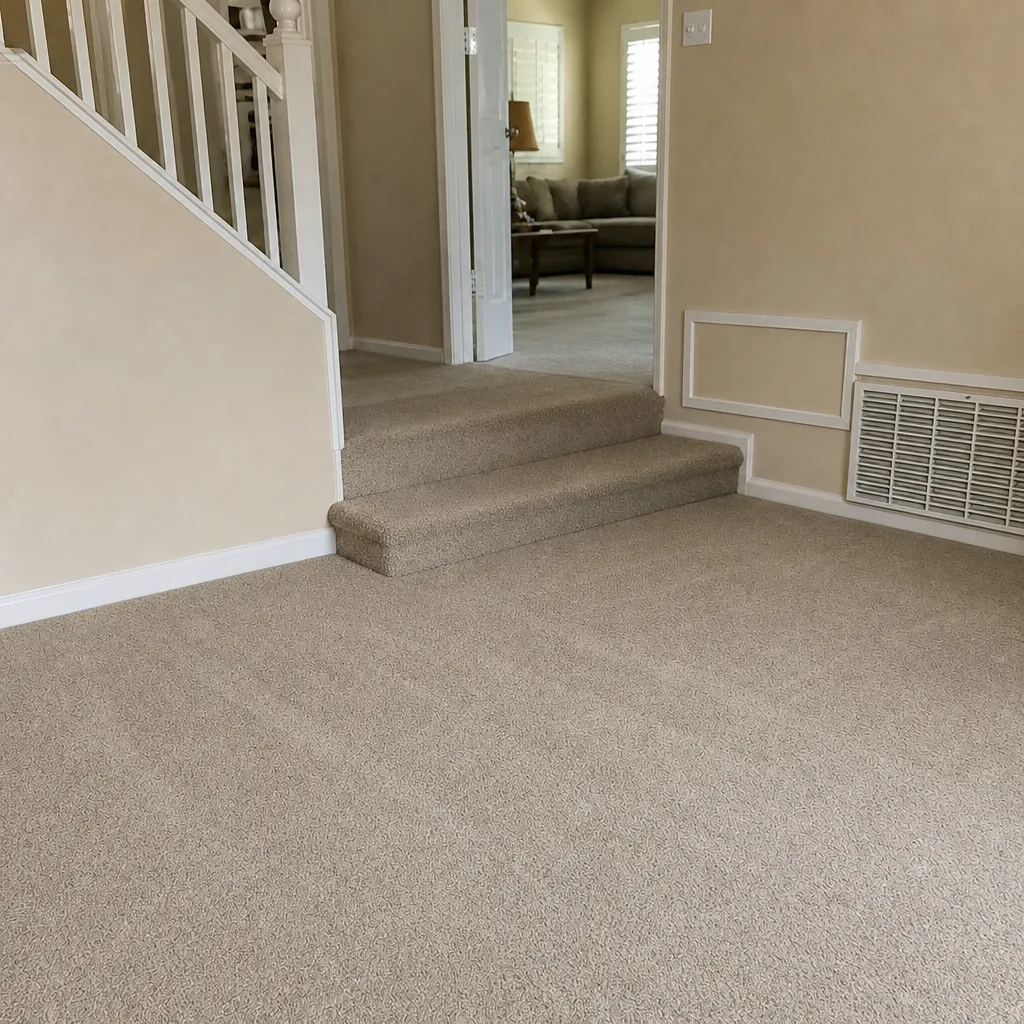
See the difference
 Before
 After
 Before
 After
 Before
 After