
Last updated November 4, 2026
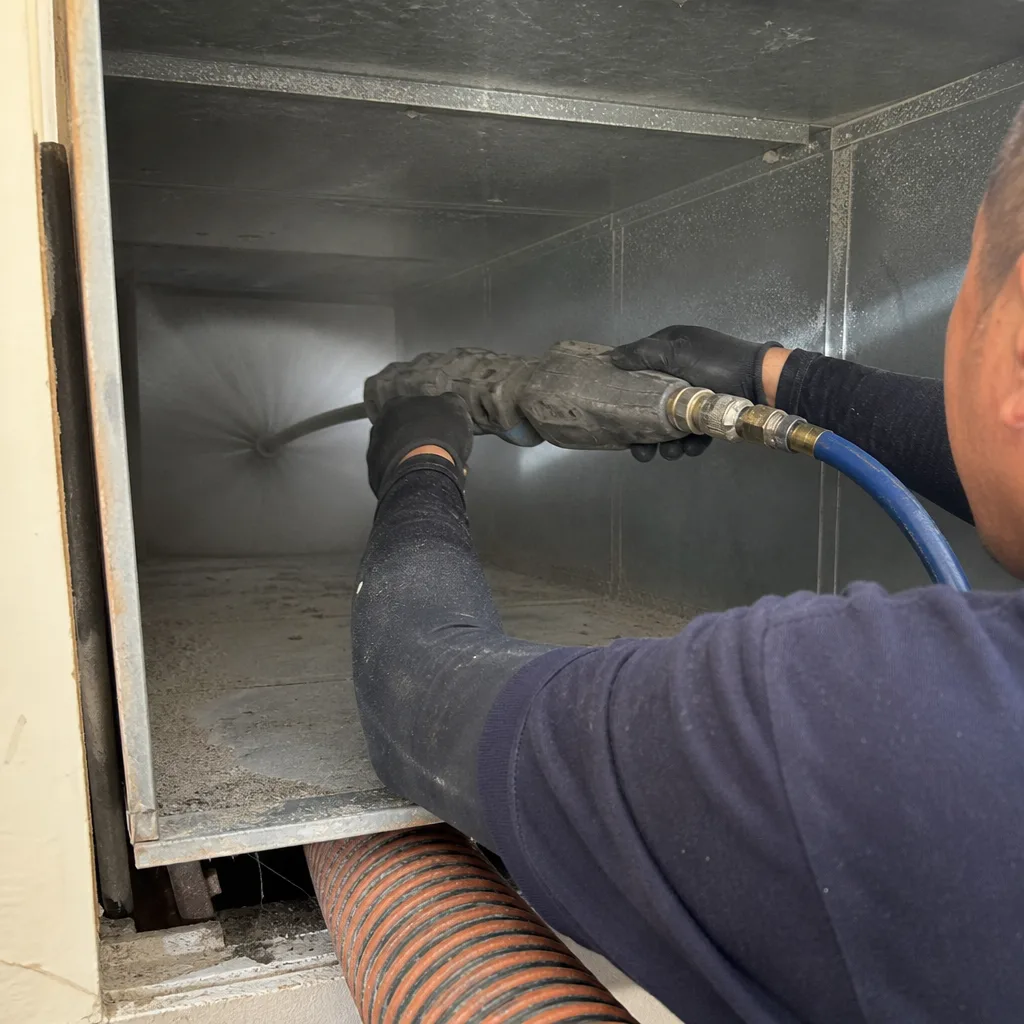
 Whole-home duct cleaning
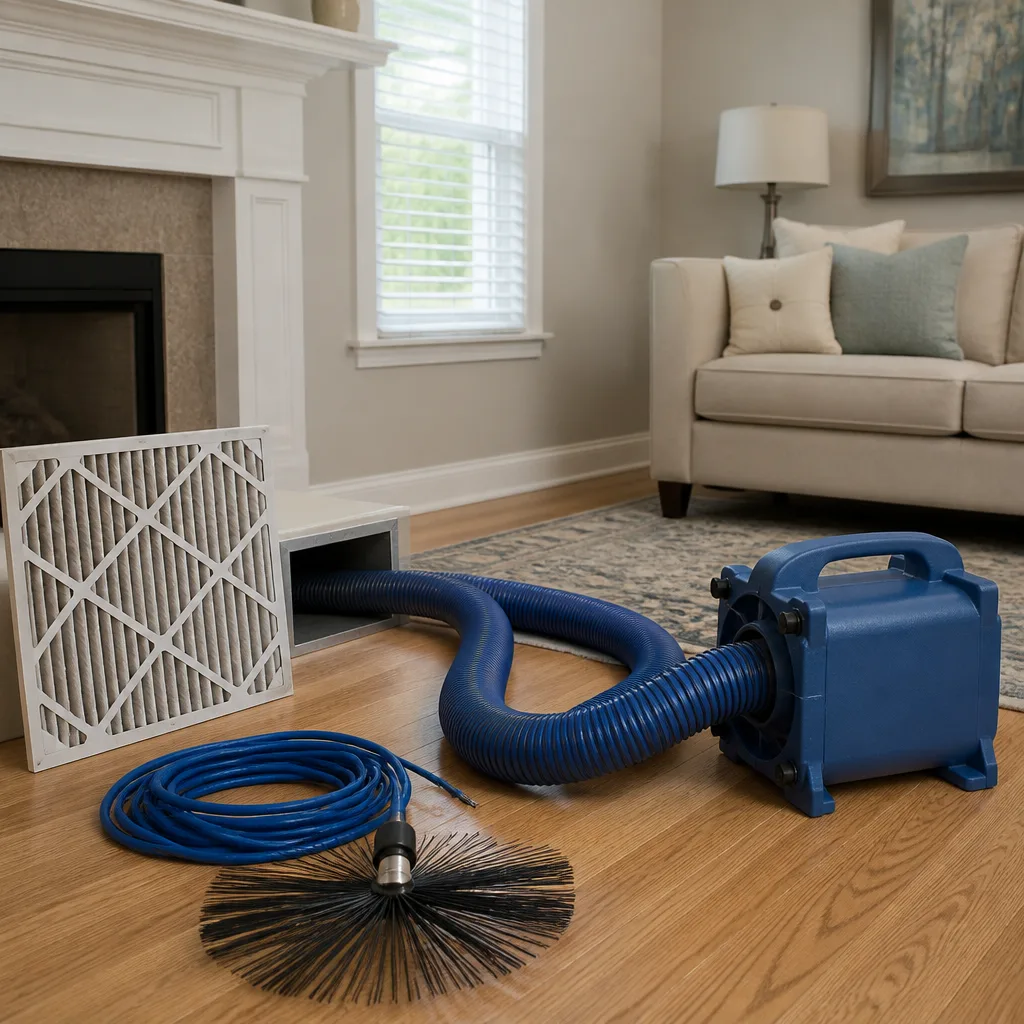
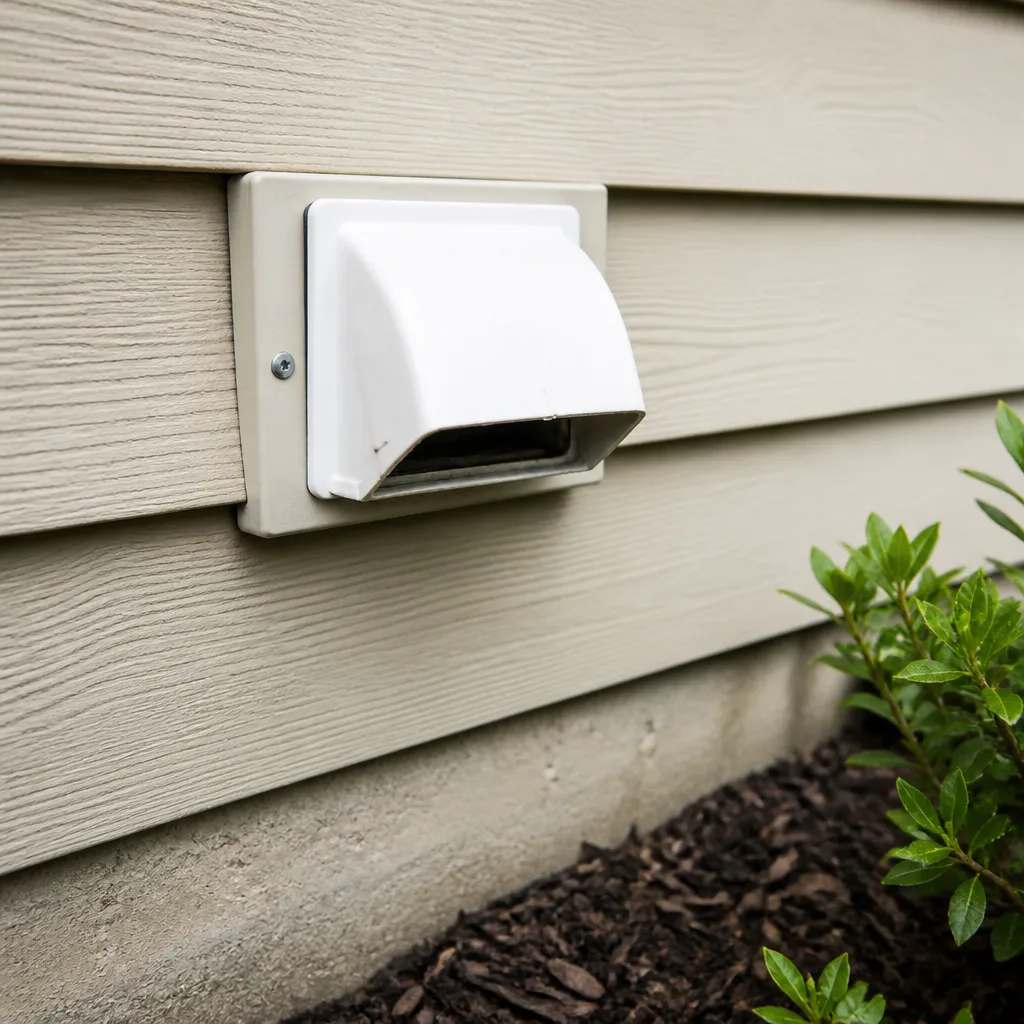 Dryer vent cleaning
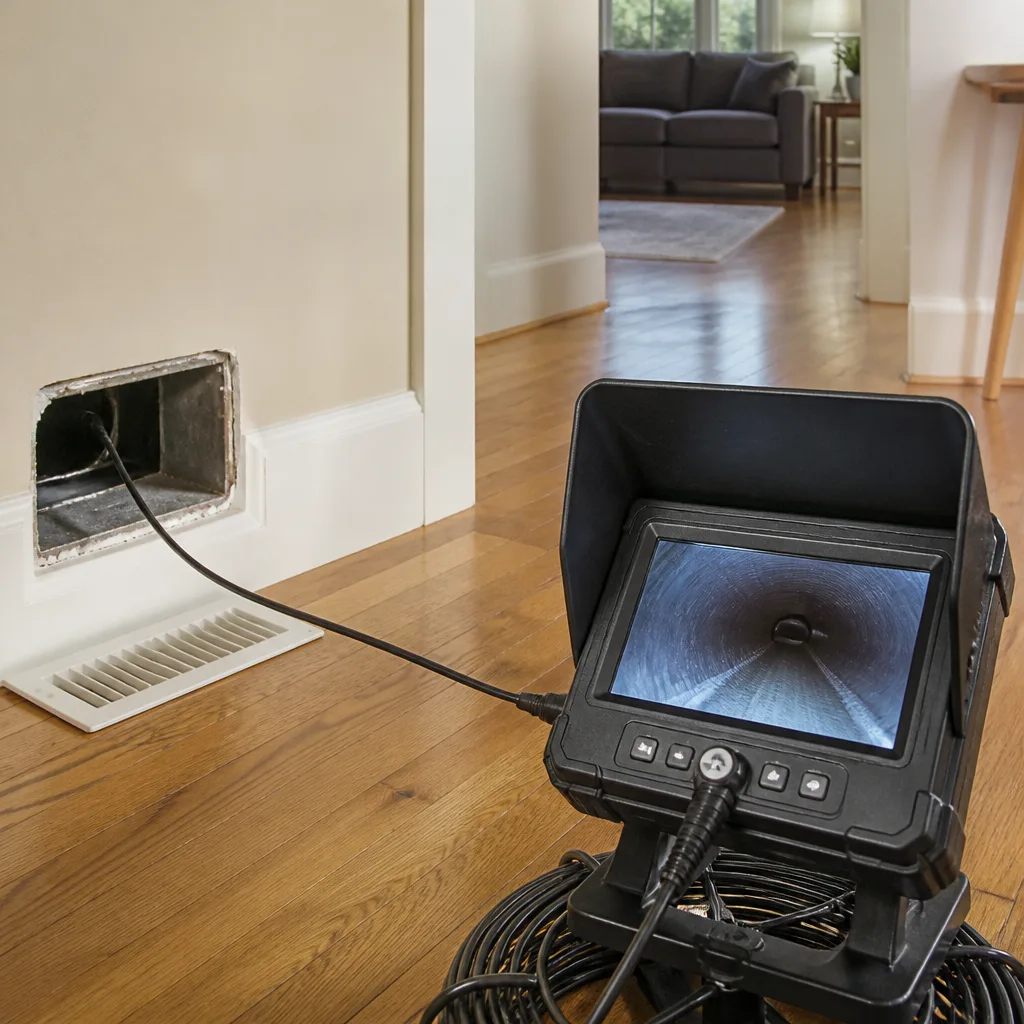 Camera inspection
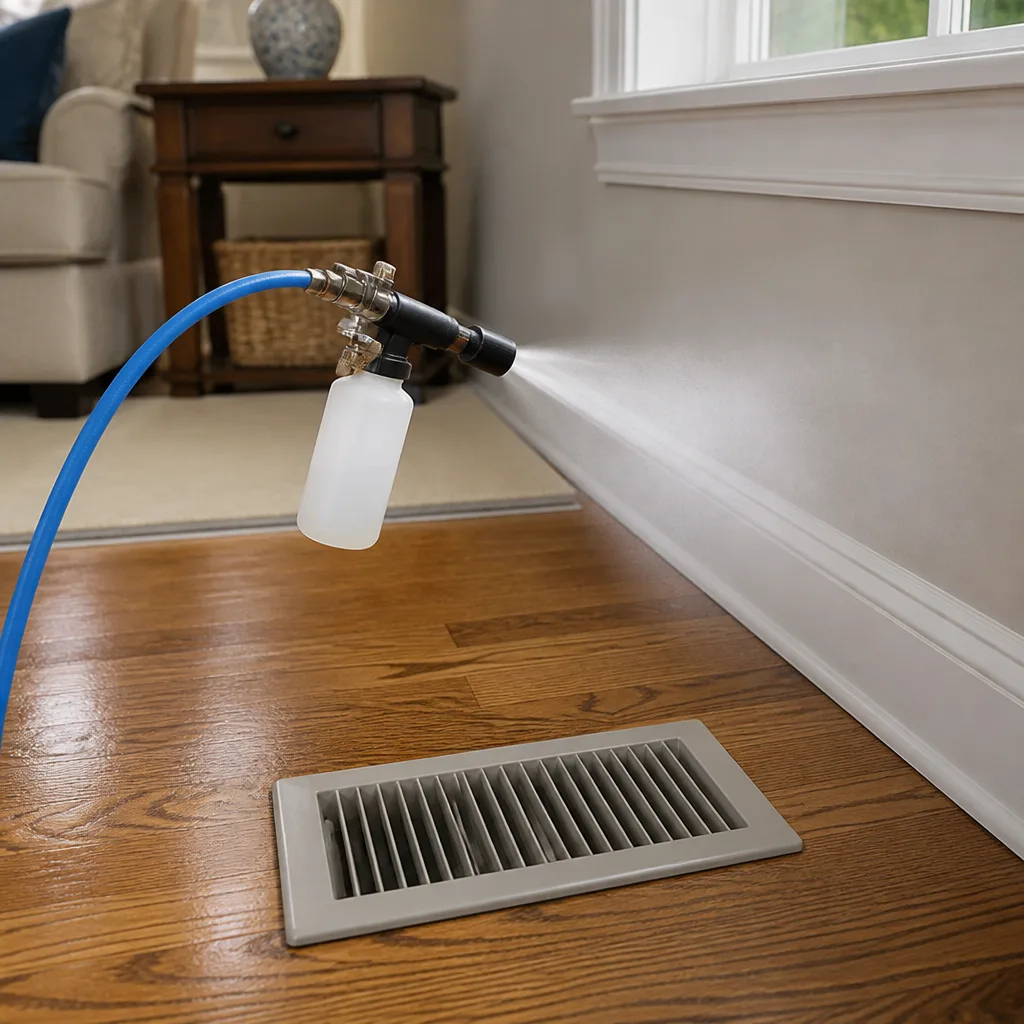 Sanitizing & deodorizing
Whole-system duct and dryer vent check with before-and-after photos - you see exactly what came out of your vents
That "$99 whole-house special" is a bait ad - the real number appears once they are in your hallway, or the "clean" is a shop-vac at the register. We photograph the inside of your ducts before and after instead.
The Complete Guide to Air Duct Cleaning in San Clemente
Most air duct guides read like they were written for a house in Ohio. Flat terrain, four predictable seasons, and a furnace that runs half the year. San Clemente doesn’t work that way. Between the marine layer that parks itself over the hills each morning, the canyon winds that carry fine particulate through Talega and Forster Ranch, and the persistent humidity that settles into crawl spaces and wall cavities, your ductwork faces a set of conditions that a generic cleaning schedule never accounts for. This guide covers what actually accumulates in San Clemente duct systems, how a proper cleaning works, what it should cost, and how to verify the job was done right.
Quick Answer
Air duct cleaning in San Clemente typically costs between $450 and $950 for a whole-home system, depending on home size, number of returns, and how much debris has accumulated. The job should use negative-pressure extraction paired with mechanical agitation, per NADCA source-removal standards. To schedule a free estimate from Monarch Air Duct Cleaning, call (866) 282-7304. We answer 24/7. Fast dispatch from 7am to 7pm, Sunday through Friday.
Styles & brands we work with
- Whole-home duct cleaning
- Dryer vent cleaning
- Camera inspection
- Sanitizing & deodorizing
Table of Contents
- Why San Clemente Ducts Are Different From the National Average
- What Actually Accumulates in Your Ductwork
- How Source Removal Works (and Why Equipment Matters)
- How San Clemente House Styles Affect Duct Cleaning
- How Much Does Air Duct Cleaning Cost in San Clemente?
- How to Verify the Cleaning Was Actually Done
- Dryer Vents, Duct Repair, and the Full-System Picture
- Common Mistakes to Avoid
Why San Clemente Ducts Are Different From the National Average
The single biggest variable in duct contamination isn’t age or filter quality. It’s moisture. Ductwork in dry climates collects dust that stays dry, loose, and relatively inert. Ductwork in humid climates collects dust that becomes sticky, binds to duct surfaces, and creates a substrate where mold spores and dust mites establish themselves. San Clemente sits squarely in that second category for much of the year.
Marine layer humidity pushes moisture into wall cavities and crawl spaces every morning, especially from late spring through early fall. That moisture migrates into return-air chases and supply plenums. The result is a thin film of condensation that periodically forms on the inside of duct runs, particularly in homes where the HVAC system cycles off for hours at a stretch. When that film dries, it leaves behind whatever was suspended in the air: salt aerosols, fine dust, pollen, and combustion particulates from wildfire smoke events that have become a recurring part of late-summer and fall in Southern California.
Then there’s the wind. The canyons that cut through San Clemente act as natural funnels. Onshore airflow moves through Camp Pendleton’s open terrain to the north, picks up fine dust and pollen, and gets channeled into residential areas. Homes in Rimrock, Marblehead, and Forster Ranch catch this particulate load. Coastal-adjacent neighborhoods closer to the water deal with a different profile: heavier humidity, more salt aerosol, and slower drying cycles.
The takeaway: a San Clemente duct system typically shows heavier surface adhesion, more biological growth potential, and a finer particulate profile than the national average. That’s not a reason to panic. It’s a reason to be specific about how the system gets cleaned.
What Actually Accumulates in Your Ductwork
Homeowners in San Clemente often assume their ducts are full of one thing: dust. In our experience, that’s only part of the picture. A typical return-side duct run in this area accumulates a layered mix of materials.
- Fine dust and skin cells. The baseline. Every home has this. The volume depends on occupancy, pets, and how often floors are cleaned.
- Pollen and plant fibers. San Clemente’s year-round growing season means something is blooming in every month. Pollen from eucalyptus, acacia, and coastal sage collects in return grilles and duct interiors.
- Salt aerosol residue. In neighborhoods within a mile or two of the water, the marine layer carries fine salt particles that settle as a fine white film on duct surfaces. This film attracts and holds dust more readily than bare metal.
- Pet dander and hair. Dander is small enough to remain airborne through the return system and imbed in the duct lining. Hair accumulates at bends, dampers, and register boots.
- Soot and carbon particulate from wildfire smoke. During smoke events, HVAC systems pull outside air into the return side. Fine soot deposits on dampers and plenums. This is a newer, recurring problem in Southern California and one we’ve documented across San Clemente homes in recent years.
- Construction debris. Drywall dust, sawdust, and paint overspray from remodels sit in ducts and get recirculated every time the system runs. This is common in older San Clemente neighborhoods where renovations are frequent.
- Mold and mildew. Not universal, but far more common in coastal-adjacent homes than inland ones due to the humidity profile. When humidity inside the duct consistently exceeds 60-70%, biological growth becomes possible on the accumulated dust itself.
The important distinction is between loose debris and adhered debris. Loose debris responds to negative-pressure extraction fairly easily. Adhered debris, the kind that forms a film on duct walls, requires mechanical agitation to break up. That’s the difference a professional-grade system actually makes.
How Source Removal Works (and Why Equipment Matters)
The term that governs legitimate duct cleaning is source removal. Per NADCA standards, source removal means physically dislodging contaminants from duct surfaces and removing them from the system. Anything less, such as a surface brush pass or a vacuum run, is partial work masquerading as a cleaning.
Here’s the step-by-step process for a proper source-removal cleaning, whether in San Clemente or anywhere else.
- System inspection. The technician examines the furnace or air handler, supply plenum, return plenum, and accessible duct runs. This identifies access points, checks for leaks, and notes any damage that needs repair.
- Containment and negative pressure. The system is placed under continuous negative pressure. At Monarch, we use Nikro HEPA-rated negative-air machines. These pull air through the duct system the entire time work is happening, capturing dislodged material before it enters the living space. The HEPA filtration captures particles down to 0.3 microns.
- Mechanical agitation. With negative pressure running, a rotating brush enters each duct run. Our Rotobrush systems send a motorized brush down every reachable supply and return line. The brush dislodges adhered debris and moves it toward the vacuum source.
- Register and boot cleaning. Each supply register and return grille is removed, cleaned, and wiped down. The boots, the transition pieces where duct connects to register, are brushed out individually. This is where a lot of crud hides.
- Plenum and air handler cleaning. The supply and return plenums get cleaned by direct access. The blower assembly, evaporator coil, and condensate pan get inspected; if the coil is heavily loaded, it gets cleaned as part of the job.
- Final air sweep. The negative-air machine continues running after agitation completes, making a final pass to capture any remaining airborne material in the system.
- Documentation. Before and after photos are taken through the access points so you can see the result. A professional company leaves you with documentation of what was done.
Now, the equipment piece matters more in San Clemente than it does in Phoenix or Las Vegas. Why? Because the adhered film generated by marine-layer humidity requires real mechanical agitation to break up. A portable vacuum and a small brush often cannot generate enough contact force or airflow to separate that film from the duct wall. That’s not an upsell talking point; it’s basic material physics. The same industrial methodology used in commercial remediation, negative-pressure HEPA capture paired with rotary-brush agitation, is what separates a cleaning that lasts from one that leaves the problem in place.
We also run Abatement Technologies air filtration equipment on our jobs, a contamination-control standard more commonly seen on mold and asbestos remediation crews. That’s the class of service this kind of work calls for when you’re dealing with fine particulate and adhered debris in a humid coastal environment.
How San Clemente House Styles Affect Duct Cleaning
San Clemente’s housing stock is not uniform. The difference between a 1970s Spanish-style rancher in the flats and a 2010s coastal contemporary in Marblehead matters for how the duct system behaves and what cleaning it requires.
Spanish-style and ranch homes (1950s-1980s). These homes usually have HVAC systems that were retrofitted. The original builds were often heated by wall furnaces or floor heaters; central air came later. That means duct layouts that are less direct, with longer return-air paths, multiple transitions, and sometimes undersized returns for the home’s current square footage. The return chase in these homes has been pulling unfiltered air through wall cavities for the life of the retrofit, and when we open them up, the return plenum is typically the dirtiest part of the system. These are the homes where register-level cleaning alone would miss half the problem.
Mid-century modern and hillside builds. Homes built into San Clemente’s hillsides, especially in the eastern neighborhoods like Talega and parts of the foothills, often have split-level HVAC with ducts run through tight attic and crawl spaces that are difficult to access. The cleaning challenge here is access design. A reputable crew will identify every accessible duct run up front and explain what can and can’t be reached.
Newer construction (1990s-present). Tighter building envelopes mean less passive air infiltration but more reliance on mechanical ventilation. These homes use flexible duct more heavily. Flex duct collects debris in its helical ribs, and the interior liner can trap dust in a way rigid metal does not. Cleaning flex duct requires lower-pressure, controlled agitation to avoid liner damage. This is where a rotary-brush system with adjustable speed matters; a one-size brute-force approach is not appropriate.
The point for a San Clemente homeowner is simple: ask the estimator how they plan to access your specific duct system. If you’re in a 1970s rancher with a single return, the approach should be different than a Talega two-story with flex duct in a low-clearance attic. A one-bid-fits-all process is a red flag.
How Much Does Air Duct Cleaning Cost in San Clemente?
Whole-home air duct cleaning in San Clemente typically runs between $450 and $950. That range covers a single HVAC system in a home up to roughly 3,000 square feet. Larger homes, dual systems, and systems with heavy contamination fall above that range. Here’s the line-item picture.
| Scope | Typical Range | Notes |
|---|---|---|
| Single HVAC system, up to 2,500 sq ft | $450 – $650 | Most common residential scope |
| Single system, 2,500 – 4,000 sq ft | $600 – $850 | More registers and longer duct runs |
| Two HVAC systems | $800 – $1,100+ | Common in larger hillside homes |
| Heavy contamination or debris load | Adds $150 – $300 | Extra passes and time needed for adhered material |
| Dryer vent cleaning (add-on) | $100 – $175 | Usually paired with duct cleaning |
These are estimates, not quotes. The written estimate sets the final price. What should you watch for? Bids below $300 for a full system. That pricing usually means a “blower truck” pass with minimal agitation, meaning someone hooks a big vacuum to one register and calls it done. The adhered material stays in place. In San Clemente’s humidity, that means you’re paying for a partial clean that won’t hold up. Bid low, pay twice. Pay once, get source removal.
The honest price conversation is this: one flat price per system, agreed before work starts. No per-vent pricing, no bait-and-switch add-ons. If the estimator can’t give you a firm price before the van shows up, that’s a problem. Call (866) 282-7304 for a free estimate. We answer 24/7. Fast dispatch from 7am to 7pm, Sunday through Friday.
How to Verify the Cleaning Was Actually Done
The legitimate concern in this trade is the bait-and-switch: a low coupon price, a quick vacuum pass, and an invoice with little relationship to the work described. Here’s how to make sure you’re getting the job you paid for in San Clemente.
- Ask for before-and-after photos of the inside of the duct. Not of the vent covers. The inside of the plenum and the duct runs. A professional crew will take these anyway. If they can’t show you the inside of your ducts after cleaning, ask why.
- Confirm negative pressure was used the entire time. The HEPA negative-air machine should be running when the agitation begins and continue through the job. This is the containment method that keeps dislodged debris out of your living room.
- Look for evidence of access. A legitimate cleaning requires access holes cut into the duct system in strategic locations, then sealed with metal caps and mastic or foil tape. If the crew worked without cutting any access, they cleaned what they could reach, which isn’t much beyond the first few feet from the registers.
- Ask what got cleaned. The answer should include supply runs, return runs, plenums, registers, boots, and the air handler cabinet. If the answer stops at “the vents,” that’s a red flag.
- Get a written report. A reputable company documents what was done, notes any damage or leaks found, and tells you what’s recommended next.
One more transparency note: we encourage homeowners in San Clemente to watch the work. Not literally stand over the technician’s shoulder all day, but you should feel welcome at the access points, and the crew should show you what’s coming out of the ducts. If a company discourages you from looking, that’s a signal.
Dryer Vents, Duct Repair, and the Full-System Picture
Air duct cleaning is the most requested service, but it’s not the only thing going on inside the walls of a San Clemente home. Two adjacent services matter: dryer vent clearing and air duct repair.
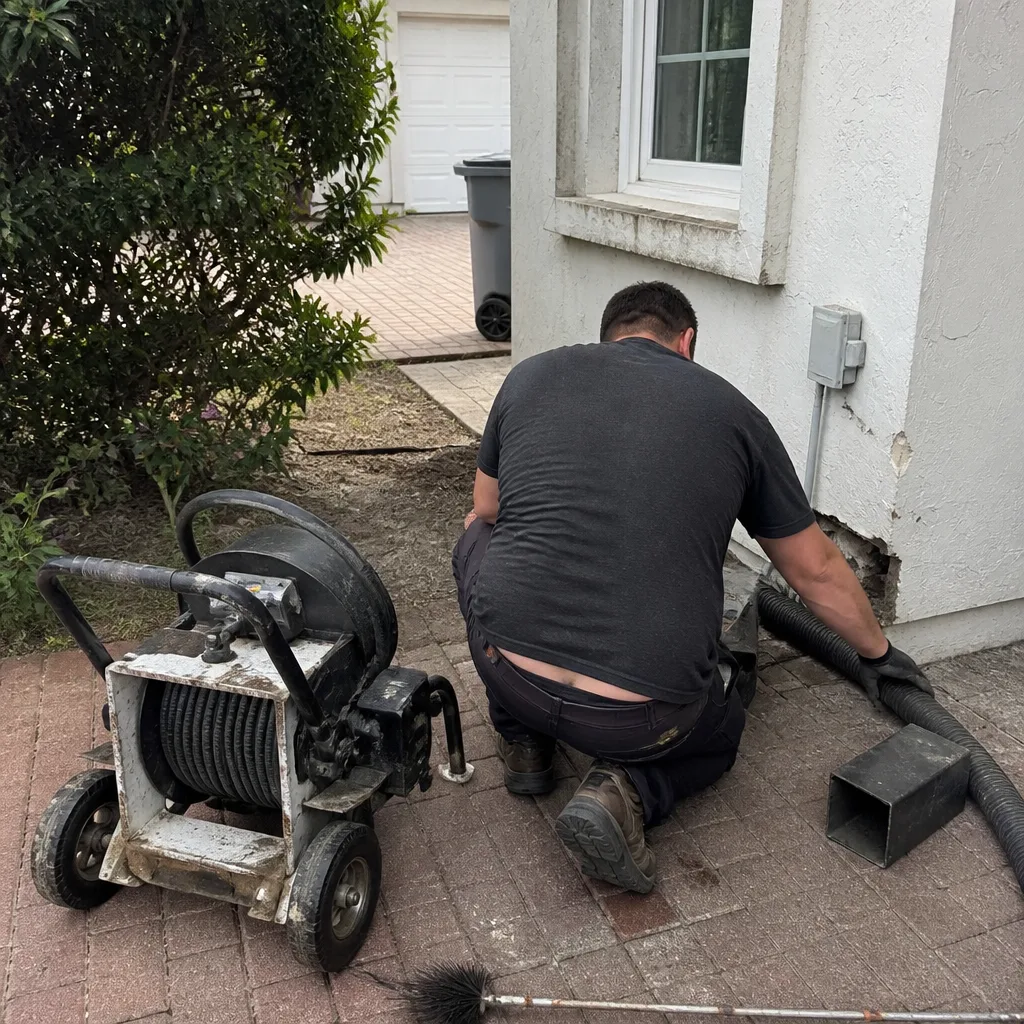
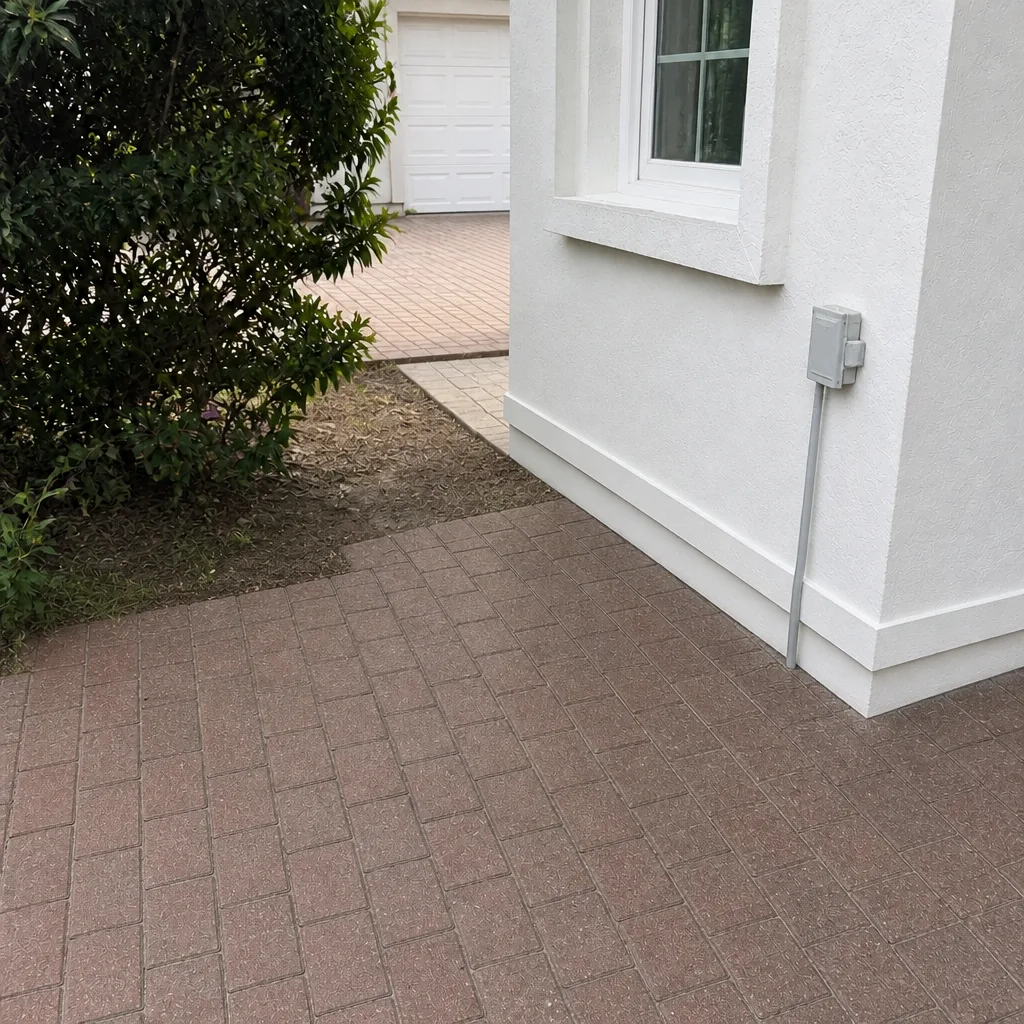
Dryer vents are a fire-safety item, not a comfort item. Lint accumulates in the vent run between the dryer and the exterior termination point. The leading cause of dryer fires in Southern California is restricted airflow from accumulated lint, which causes heat buildup at the dryer. We clear dryer vents using the same Rotobrush and negative-pressure approach, pulling lint out from the duct rather than pushing it around. In many San Clemente homes, especially commercial properties and multi-unit buildings, dryer vent runs are long and convoluted, making them more prone to accumulation. Dryer vent cleaning is the most overlooked safety service in the trade.
Duct repair happens when the cleaning uncovers a problem. Leaky joints, crushed flex duct, disconnected boots, torn insulation. These are findings that a cleaning-only company cannot fix. They hand you a list and walk away. Our team carries materials for structural air duct repair, which means problems discovered during cleaning can be addressed in the same service relationship. That’s the third leg of the Monarch approach: we clean the system, we clear the vents, and we fix what’s broken. Better air starts inside the walls, and it takes all three to get there.
For the bigger picture of what air duct cleaning entails for your home, including what a typical job looks like start to finish, we’ve documented our process in detail. If you’re in San Clemente and wondering whether your system is due, the short answer is: if you can’t remember the last time it was cleaned, it’s due.
Common Mistakes to Avoid
- Choosing a bid based only on price. A $299 whole-home cleaning in San Clemente is not the same service as a $650 one. The low-bid model relies on volume, not thoroughness. In this climate, that means leaving the adhered film in place.
- Assuming your ducts don’t need cleaning because you change your filters. Filters protect the HVAC equipment from large debris, but they do not stop the fine particulate that travels through returns and settles in the system. By the time a filter loads up, material is already past it.
- Cleaning supply ducts but ignoring the return side. The return side is the first stop for all the dust, dander, and smoke particulate your home’s air carries. It is usually the dirtiest section. So ask specifically: “Are you cleaning the entire return path?”
- Hiring a company that uses only a portable vacuum. A consumer-grade portable unit cannot create the negative pressure required to capture fine dust from long duct runs. You need a truck-mounted or industrial HEPA negative-air machine for true source removal.
- Skipping documentation. If a company can’t show you before-and-after photos, you have no way to verify the work. Insist on it. It’s not a luxury; it’s verification.
- Waiting for a visible problem. Duct contamination is invisible. By the time you see dust blowing from registers or smell something damp, the system has been recirculating that material for months. Annual or biennial cleaning is appropriate for most San Clemente homes, with more frequent attention for homes near the coast or with pets.
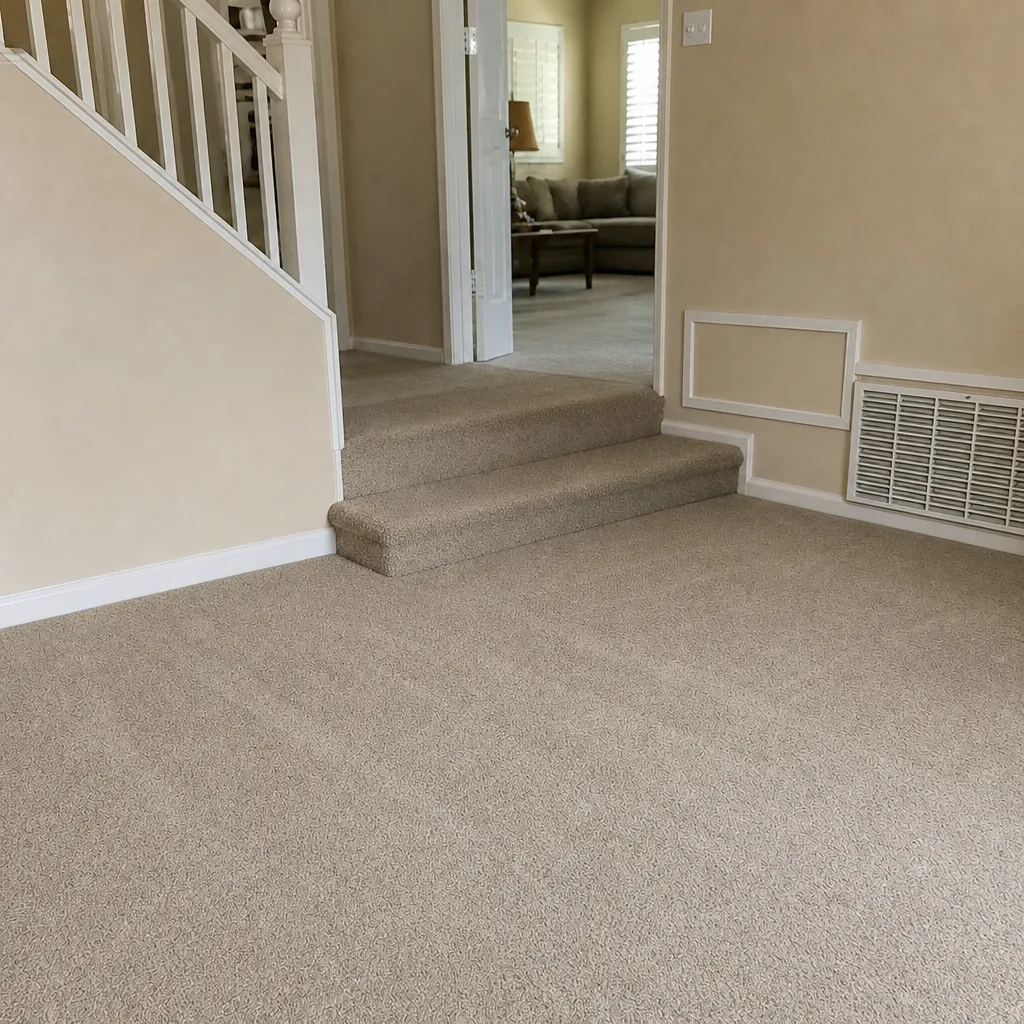
See the difference
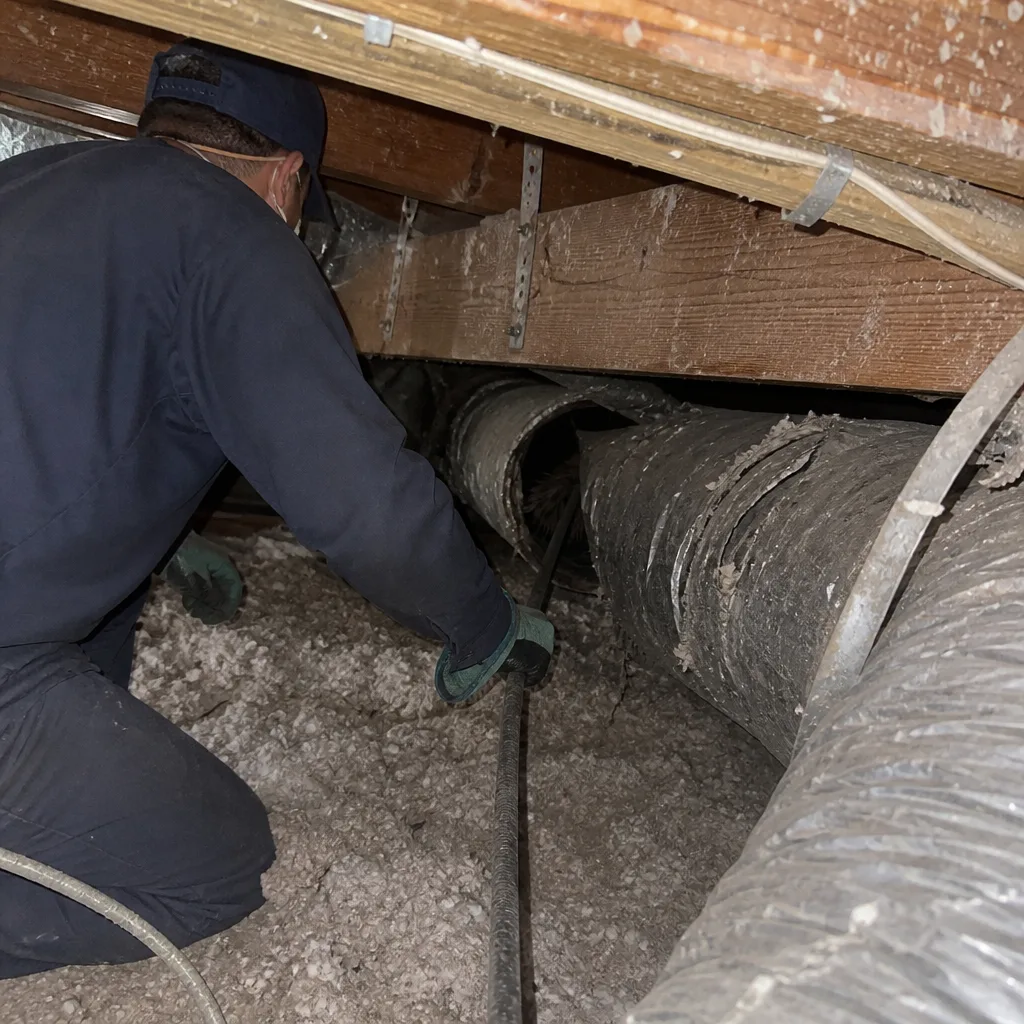 Before
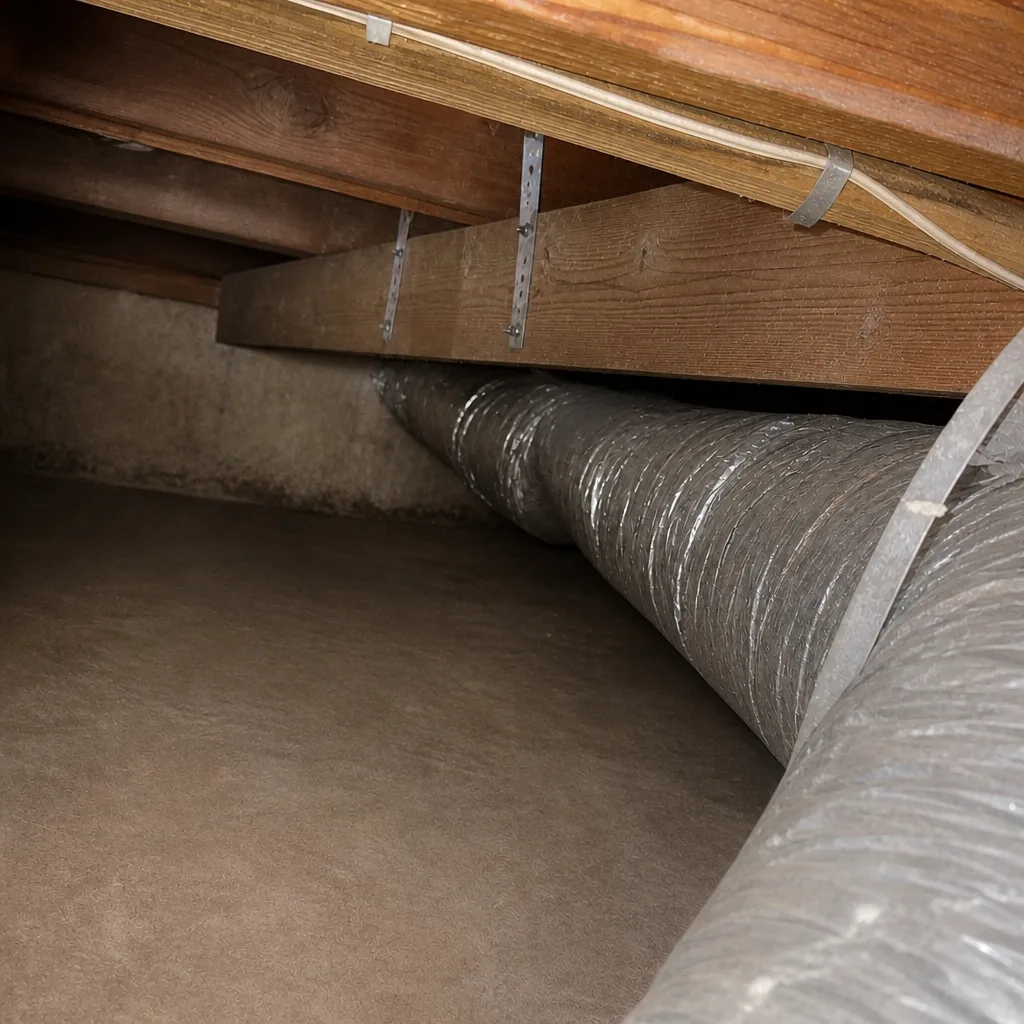 After
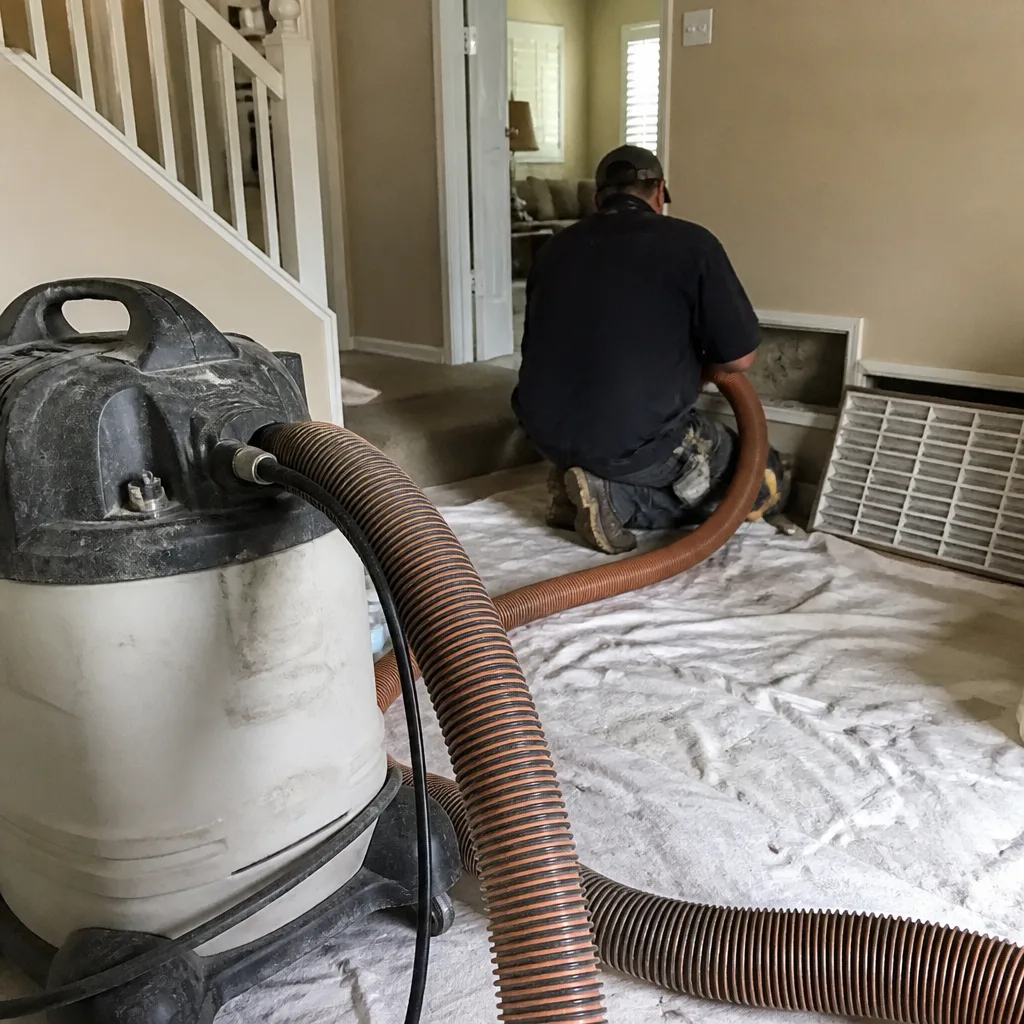 Before
 After
 Before
 After
When to Call a Professional
Call a professional when you can’t remember the last cleaning. When you see dust accumulating on surfaces within days of cleaning. When your registers show dark staining around the edges. When you’ve had any construction or remodel work without closing off the HVAC system. When wildfire smoke has been present in San Clemente multiple times in a season. When you have pets, allergies, or respiratory concerns and the air in your home feels heavy. When you move into a new home and don’t know the duct system’s history. Monarch Air Duct Cleaning offers free estimates in San Clemente. Call (866) 282-7304. We answer 24/7. Fast dispatch from 7am to 7pm, Sunday through Friday.
Frequently Asked Questions
You should expect to pay between $450 and $950 for a whole-home system in San Clemente, with larger homes and dual systems running above that. Any bid below $300 should raise questions about how thorough the work will actually be. Call (866) 282-7304 for an exact quote, estimates are free.
Low quotes usually mean low-effort equipment and a single pass through the accessible section of the duct. Portable vacuums without true negative pressure leave adhered debris untouched. In San Clemente’s humidity, that adhered debris is exactly what you’re paying to remove.
Most San Clemente homes benefit from cleaning every one to two years. Coastal-adjacent neighborhoods with higher humidity, homes with pets, and homes that have been through wildfire smoke events should lean toward annual cleanings. Inland areas like Rancho San Clemente can often go two years between jobs.
Ask for before-and-after photos of the inside of the ducts, not just the registers. Confirm that a HEPA negative-air machine was running through the entire job. Ask where access points were cut and how they were sealed. A reputable company will show you the work.
It can, provided the cleaning removes the source material rather than stirring it around. Pollen, dander, and dust mite byproducts trapped in duct adhesive from San Clemente’s humidity are common allergy triggers. Removing them from the system means they stop recirculating through the living space.
Yes. You can combine air duct cleaning and dryer vent cleaning in a single appointment. The dryer vent is a short add-on once the main system is under negative pressure, and the cost is modest. Call (866) 282-7304 to ask about pricing.
The Bottom Line
San Clemente’s ductwork carries a heavier load than the national average because of the marine layer, canyon winds, and recurring smoke events. That means cleaning here requires more than a coupon-grade vacuum pass. Source removal, with negative-pressure HEPA capture and rotary-brush agitation, is the standard that actually works. Verify the work with before-and-after documentation and access-point evidence. And remember that the system is bigger than the ducts: dryer vents need clearing, and repairs need a contractor who can fix what the cleaning uncovers. Monarch Air Duct Cleaning covers all three in San Clemente. Call (866) 282-7304 for a free estimate.
Written by the team at Monarch Air Duct Cleaning, serving San Clemente since 2012.