
Last updated November 4, 2026
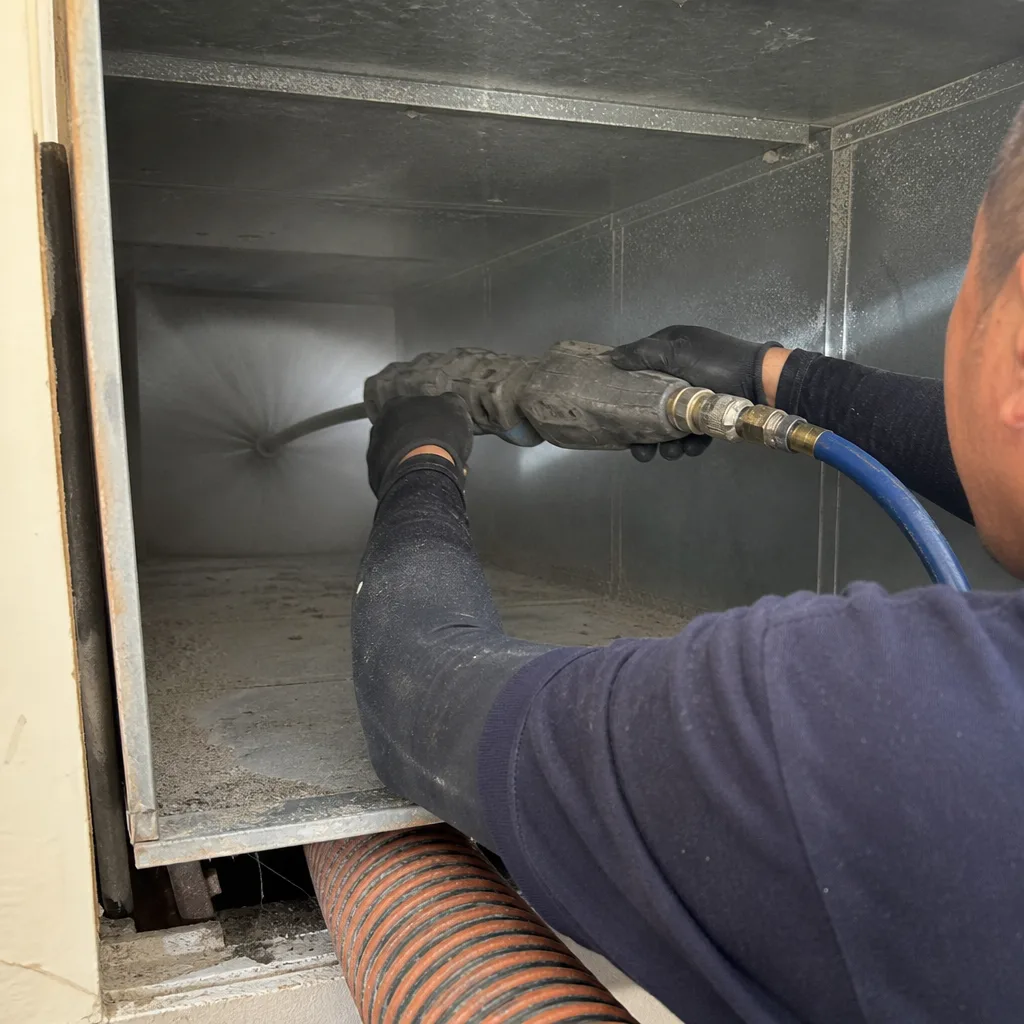
 Whole-home duct cleaning
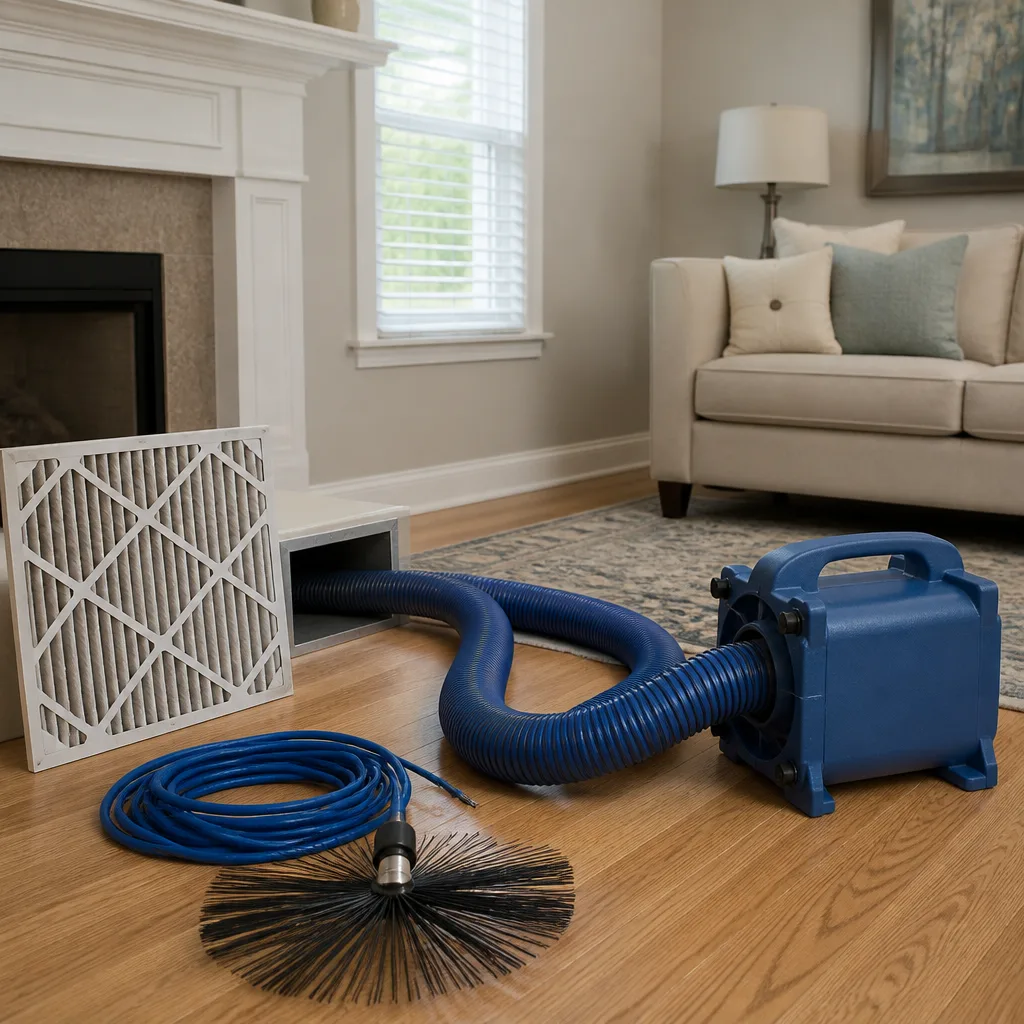
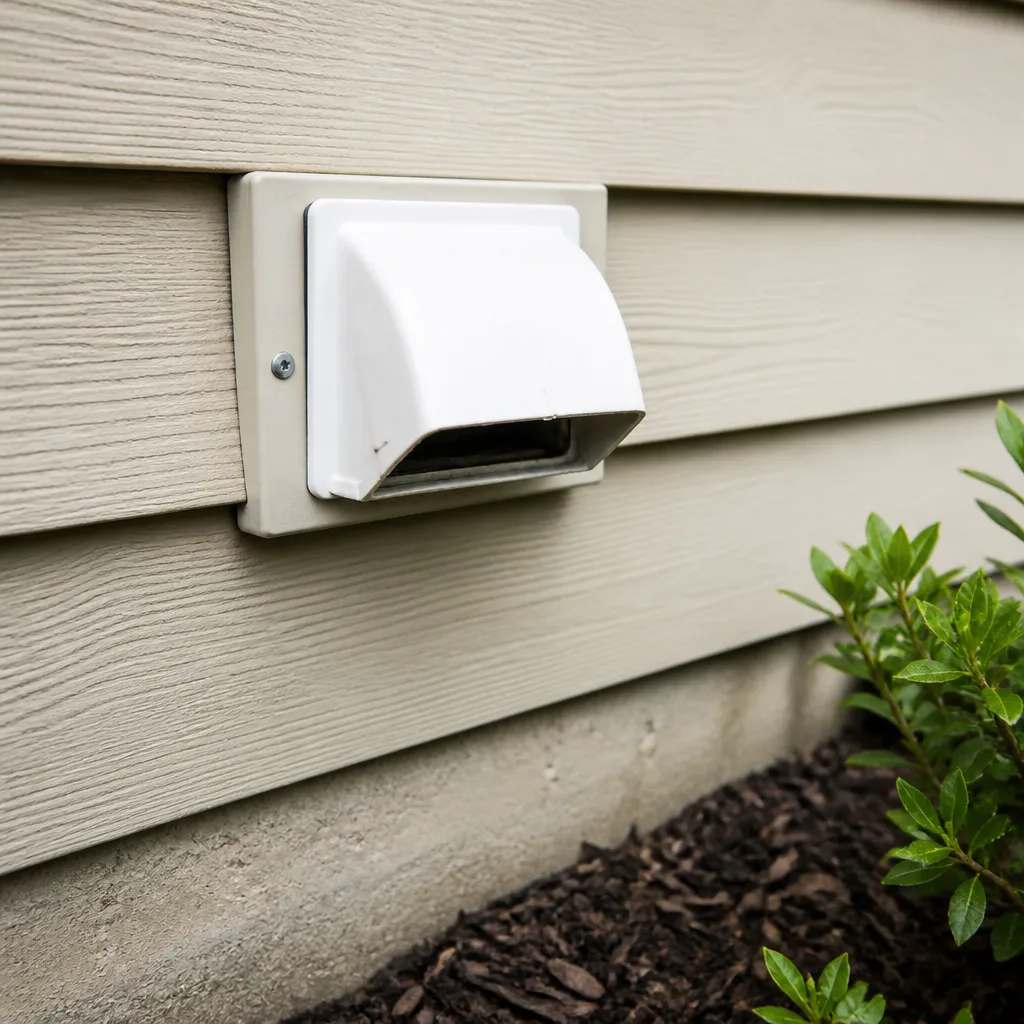 Dryer vent cleaning
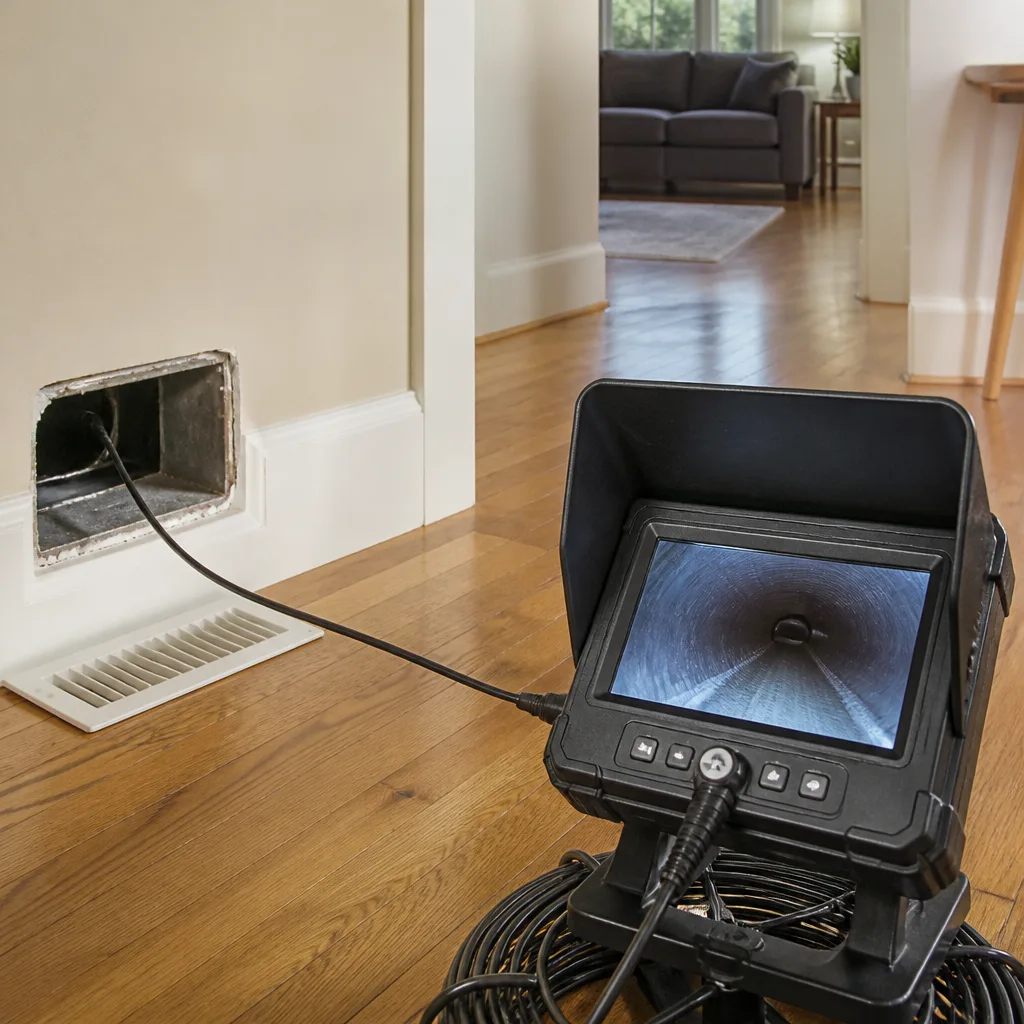 Camera inspection
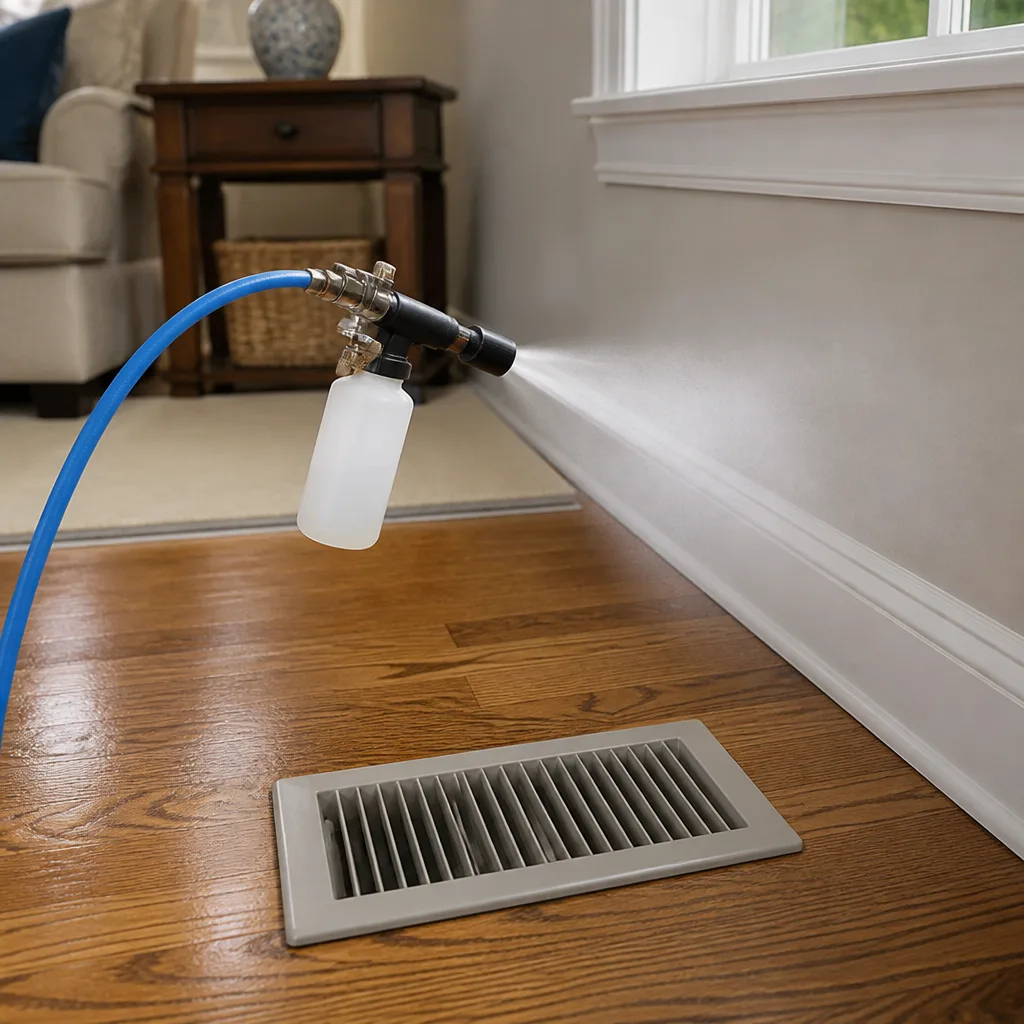 Sanitizing & deodorizing
Whole-system duct and dryer vent check with before-and-after photos - you see exactly what came out of your vents
That "$99 whole-house special" is a bait ad - the real number appears once they are in your hallway, or the "clean" is a shop-vac at the register. We photograph the inside of your ducts before and after instead.
DIY vs Professional Air Duct Cleaning: The San Clemente Homeowner’s Decision Guide
You can rent a duct cleaning kit and spend a Saturday on it. What you cannot rent is a truck-mounted vacuum system that pulls 4,000+ CFM of negative pressure, and that is what it actually takes to extract debris from the full depth of a duct run rather than just agitating it closer to your living space. This guide explains the physics that separates real source removal from surface brushing, what a San Clemente homeowner can safely do themselves, and when a professional-grade setup is the only responsible choice. By the end, you will know exactly why the equipment question matters more than the effort question.
Styles & brands we work with
- Whole-home duct cleaning
- Dryer vent cleaning
- Camera inspection
- Sanitizing & deodorizing
Quick Answer
DIY air duct cleaning in San Clemente can handle the visible basics: register wiping, return grille maintenance, and filter changes. But genuine source removal requires commercial negative-air pressure that consumer and rental equipment simply cannot generate, so most DIY attempts redistribute dust and spores rather than remove them. If your ducts have not been cleaned in years, or if you see mold, rodent signs, or renovation debris, professional cleaning is the only option that actually fixes the problem.
Table of Contents
- The Physics of Source Removal: Why CFM Decides Everything
- What a San Clemente Homeowner Can Legitimately DIY
- What DIY Cannot Do, No Matter How Careful You Are
- Why San Clemente’s Older Duct Systems Raise the DIY Stakes
- The Real Cost Comparison: Rental Fees, Time, and Partial Results
- When Professional Cleaning Is Non-Negotiable
- What Professional-Grade Duct Cleaning Actually Looks Like
- Common Mistakes to Avoid
- When to Call a Professional
- Frequently Asked Questions
- The Bottom Line
The Physics of Source Removal: Why CFM Decides Everything
Duct cleaning is not about scrubbing. It is about airflow. Specifically, it is about how much air a vacuum system can move through a sealed duct run at any given moment, measured in cubic feet per minute, or CFM. That number determines whether a system extracts debris or simply stirs it around.
A professional truck-mounted or trailer-mounted negative-air unit pulls between 4,000 and 8,000 CFM through the duct system. That airflow creates enough suction to lift settled dust, pet dander, construction debris, and biological particles from deep inside a 30-foot run and carry them out of the house entirely. The Rotobrush rotary-brush systems we use at Monarch Air Duct Cleaning pair with Nikro HEPA-rated negative-air vacuums for exactly this reason: the brush agitates, and the negative pressure extracts. Without both, you get one or the other.
Consumer equipment tells a different story. A strong shop vacuum pulls between 150 and 200 CFM in ideal conditions. Rental kits from hardware stores use small portable blowers that may reach 600 CFM at the machine, but real-world performance through a 25-foot hose drops dramatically. By the time the airflow reaches the far end of a duct run, there is not enough negative pressure to lift anything heavier than loose surface dust. The debris that settles in the bottom third of the duct, the stuff that actually affects indoor air quality, stays put.
Here is the counterintuitive part: low-CFM DIY cleaning can make air quality worse. The agitation loosens settled particles, but the vacuum cannot capture them before they drift back into living spaces. A homeowner spends a Saturday pushing dust around, then wonders why the house feels dustier the following week. That is not a failure of effort. It is a failure of physics.
The same systems professionals use for remediation work rely on this principle. Abatement Technologies air filtration equipment is standard on mold and asbestos abatement jobs because those environments demand true containment, not just visible cleanup. When a duct cleaning company brings that same standard to a San Clemente home, the difference is not marketing. It is measurable airflow and verified extraction.
What a San Clemente Homeowner Can Legitimately DIY
None of this means a homeowner should keep their hands off the HVAC system entirely. There is a meaningful list of maintenance tasks that are safe, effective, and genuinely worth doing yourself. These tasks do not require high CFM, do not risk damaging duct work, and provide real benefits when done consistently.
- Change the HVAC filter on schedule. This is the single highest-impact DIY task for any home. In San Clemente, where windows stay open through much of the year, pollen and coastal dust load filters faster than many homeowners expect. A pleated MERV 8 to MERV 11 filter changed every 60 to 90 days keeps return air clean and reduces the load on the blower motor.
- Wipe down supply registers and return grilles. Dust collects on the visible metal surfaces of registers and grilles year-round. A damp microfiber cloth and a vacuum with a brush attachment handles this in minutes. Remove the register, wipe both sides, vacuum the first few inches of visible duct opening, and replace it. This prevents the visible buildup that makes homeowners wonder if the whole system needs cleaning.
- Vacuum around the return air intake. The return grille is where air enters the system, and it collects lint, pet hair, and household dust faster than anywhere else. Vacuuming the grille face and surrounding wall every month reduces what enters the ducts in the first place.
- Keep vents unobstructed. Furniture, rugs, and drapes placed over supply registers disrupt airflow and create dead zones where dust settles inside duct runs. Walk each room and confirm every register has at least a few inches of clearance. This is free, takes ten minutes, and improves both HVAC efficiency and duct cleanliness.
- Monitor indoor humidity. San Clemente’s mild climate keeps homes comfortable, but coastal humidity can still push indoor levels above 60 percent, especially in older homes without whole-house ventilation. A simple hygrometer from a hardware store lets you track it. Keeping humidity between 30 and 50 percent makes mold growth inside ducts far less likely.
These tasks cover what homeowner maintenance is supposed to do: reduce what enters the system and keep visible surfaces clean. They do not replace professional cleaning, but they extend the interval between cleanings and make each professional visit more effective.
What DIY Cannot Do, No Matter How Careful You Are
The DIY list ends at the register. Beyond that point, the duct system is enclosed, interconnected, and sensitive to damage. Attempting deeper cleaning without professional equipment creates three specific problems.
First, you cannot reach the middle of a duct run. Residential duct runs in San Clemente homes typically extend 20 to 40 feet from the air handler to the farthest register. A homeowner with a rental kit can reach 6 to 10 feet from each opening, leaving the middle 60 to 80 percent of the run untouched. The dust, pet dander, and construction debris sitting in that middle section stays exactly where it was.
Second, you cannot capture what you dislodge. This is the CFM problem again. Even the best rental equipment cannot contain the debris it loosens. Brushes spin, dust lifts into the airstream, and then the vacuum lacks the airflow to pull it out of the run. The debris resettles, often in a new location. Some of it drifts into living spaces through supply registers. The cleaning attempt becomes a redistribution exercise.
Third, you risk damaging the duct work itself. Residential ducts are often made of flexible insulated material or thin-gauge sheet metal. Aggressive brushing with a stiff DIY brush can tear flex duct, separate taped joints, or puncture the inner liner. A torn flex duct leaks conditioned air into unconditioned spaces, which raises energy costs and draws in attic dust. A separated joint does the same. What started as a cleaning project becomes a repair project, and that repair is the kind of work only a contractor with air duct cleaning and repair capability should handle.
Professional cleaning avoids all three problems because the equipment is designed for them. Rotary brushes are sized to the duct diameter. Negative-air vacuums are connected at the air handler and pull through the entire system at once. The process is contained from start to finish.
Why San Clemente’s Older Duct Systems Raise the DIY Stakes
San Clemente’s housing stock shapes this conversation. A significant share of homes in neighborhoods like Talega, Forster Ranch, and the older central districts were built between the 1960s and the 1990s. That means many duct systems have been in place for decades, and not all of them have aged gracefully.
Older duct systems in San Clemente homes commonly contain fiberglass duct board or internally lined flex duct. Fiberglass insulation inside ducts sheds fibers over time, and those fibers settle in the duct interior. Disturbing them with aggressive DIY brushing releases those fibers into the airstream. A trained duct cleaning technician who encounters this condition adjusts the approach, often using lower-agitation methods and verifying containment before proceeding. A DIY attempt does not have that knowledge base behind it.
Mold is the second concern. San Clemente’s marine layer keeps morning humidity high, and any duct seam or plenum leak that pulls that humid air into the system creates conditions where mold can establish. Once present, settled mold spores remain dormant until air movement disturbs them. Brushing a mold-affected duct with a rental kit sends those spores through the house. Professional cleaning with HEPA-filtered negative air captures spores at the source and vents them outside. This is not a small difference. It is the difference between containing a problem and spreading it.
Rodent activity is the third concern, and it is common enough in older San Clemente neighborhoods that every homeowner should check for it. Rats and mice find their way into duct systems through disconnected joints, crawlspace openings, and vent penetrations. Their droppings, urine residue, and nesting material settle into the ducts. Disturbing that material with DIY equipment aerosolizes particulates that should never enter living air. Any homeowner who finds rodent evidence in their system should stop the DIY conversation entirely and get professional help.
The Real Cost Comparison: Rental Fees, Time, and Partial Results
The financial case for DIY duct cleaning looks compelling at first glance. A rental kit runs somewhere between $50 and $150 per day depending on the store and the machine. Add a shop vacuum and some basic tools most homeowners already own, and the out-of-pocket cost stays under $200. Professional air duct cleaning for a typical San Clemente home, by contrast, runs considerably more. But that comparison misses what the money actually buys.
The rental kit buys you a brush that spins and a vacuum that cannot reach the middle of your duct runs. It buys you a full Saturday of work, some frustration, and a result you cannot verify beyond what you see at the register openings. It does not buy extraction. It does not buy containment. It does not buy documentation. Most of the debris remains in the system, and within weeks the visible dust returns because the source was never removed.
A professional cleaning buys the opposite. The equipment generates enough negative pressure to extract settled debris from full duct depth. The process is contained so nothing re-enters the living space. The result is verifiable through before-and-after photos of the duct interior, which a San Clemente homeowner can review immediately. And if the cleaning uncovers damage, a company that also handles duct repair can address it before it becomes a larger problem. No second contractor. No second estimate. No second visit.
Time enters the equation too. A DIY attempt takes most of a day, requires a trip to the rental counter, and often ends in a second attempt once the homeowner realizes the first pass did not work. A professional cleaning of a single system in an average San Clemente home is typically completed in a few hours by a trained crew. The homeowner gets their Saturday back and gets a result they can see.
The honest way to frame the comparison is not “cheap DIY or expensive professional.” It is “pay a small amount for a process that cannot succeed, or pay a larger amount once for a process that does.” We have watched enough homeowners in San Clemente try the first path and then call us for the second that we know which one costs more in the long run.
When Professional Cleaning Is Non-Negotiable
Most duct cleaning decisions involve judgment. A homeowner weighs cost, urgency, perceived need, and convenience. But there are four situations where judgment no longer applies and professional cleaning is the only responsible choice. No equipment rental, no amount of DIY effort, and no schedule convenience changes this.
- Visible mold in or around the duct system. If you see dark staining on register interiors, on the plenum, or on duct surfaces visible from an access point, do not attempt to clean it yourself. Mold spores aerosolize when disturbed, and DIY equipment cannot contain them. This requires professional removal with HEPA filtration and negative-air containment. Abatement Technologies filtration equipment is standard on remediation jobs precisely because this scenario demands serious contamination control.
- Rodent or pest activity in the ducts. Droppings, nesting material, or dead pests in the system are biological hazards. Disturbing them with rental equipment sends particulates through the house. Professional cleaning removes the material under containment and identifies how the animals got in, so the problem does not return.
- Post-renovation or post-remediation debris. If the home has recently undergone construction, drywall work, painting, or mold remediation, fine particulate has entered the duct system. This debris is abrasive, fine enough to bypass standard filters, and in the case of drywall dust, highly disruptive to blower motors. Professional cleaning after renovation is standard practice for a reason, and many San Clemente contractors recommend it before homeowners reoccupy finished spaces.
- Unresolved respiratory symptoms or persistent odors. If household members experience unexplained allergy symptoms, asthma flare-ups, or chronic congestion that improves away from home, or if the house carries a persistent musty or dusty odor that returns after cleaning, the duct system is a primary suspect. Professional cleaning with documented before-and-after photos identifies what is actually in the ducts and removes it. A DIY attempt leaves the question unanswered.
In any of these four situations, skipping professional help does not save money. It defers a problem that compounds. Mold spreads. Rodents return. Fine debris damages HVAC components. The homeowner pays more later than they would have paid now.
What Professional-Grade Duct Cleaning Actually Looks Like
If you have never seen professional duct cleaning done correctly, the process may surprise you. It is not a person with a vacuum hose walking from room to room. It is a contained, systematic procedure that treats the duct system as a single connected unit, not a collection of separate vents.
The process starts at the air handler. The technician connects a large-diameter vacuum hose to the supply and return plenums, typically through an access point cut at the unit. This connection links the entire duct system to a negative-air vacuum that pulls thousands of CFM through the runs. The system is effectively sealed, so no debris bypasses the filter.
With negative pressure established, the technician moves to the registers. A rotary brush, sized to the duct diameter, is inserted through each register opening and run through the full length of the run. The brush agitates debris that has adhered to duct walls and corners. The negative-air vacuum, already pulling from the air handler side, captures the loosened material and carries it out of the system through HEPA filtration. Nothing returns to the living space.
Rotobrush equipment does this job with a self-contained brush-and-vacuum head at the point of agitation, which provides localized extraction even in runs where the negative-air pull is less direct. The combination of Rotobrush agitation and Nikro negative-air extraction is the same dual-method approach used in commercial remediation work. It is not entry-level equipment.
After the runs are cleaned, the technician addresses the return side, the plenums, and the air handler cabinet. Filters are checked. Leaks identified during the process are documented, and a company with repair capability can address them. At Monarch, we clean it, we clear it, and we fix it, so a problem found during cleaning does not turn into a second contractor search. The job finishes with before-and-after photos so the homeowner sees the result, not just a promise.
Common Mistakes to Avoid
- Renting equipment without checking CFM. Most rental kits move between 400 and 700 CFM at the machine, far below the 4,000+ CFM professional negative-air units generate. If the kit does not specify CFM prominently, that tells you what you need to know. Low airflow means surface brushing, not source removal.
- Brushing visible mold or rodent evidence. Any attempt to clean biological material with consumer equipment aerosolizes spores and particulates. If you see staining or droppings, stop. Containment and HEPA filtration are required, and those are not rental-counter items.
- Disconnecting duct sections without knowing how to reseal them. DIY tutorials sometimes suggest opening duct runs for access. Residential flex and sheet metal duct joints are sealed with mastic or tape, and reconnecting them without a proper seal creates leaks. A leaking duct system pulls attic or crawlspace air into the home and wastes conditioned air.
- Ignoring the return side. Home DIY attempts almost always focus on supply registers because they are visible. But the return side pulls more air through the system than any supply run. If the return plenum and return runs are not cleaned, the system re-contaminates quickly. Professional cleaning treats both sides as one job.
- Using a household vacuum with a hose extension. A standard upright or canister vacuum cannot reach beyond the first few inches of a register and cannot tolerate the airflow resistance of a long hose. It cleans the visible register face, nothing more. This is register cleaning, not duct cleaning, and it is important to know the difference.
- Assuming no dust means no problem. Duct contamination is not evenly distributed. A clean-looking register tells you nothing about the middle of the run or the plenum. Before-and-after camera inspection is the only way to know what the system actually contains.
- Putting off a repair discovered during cleaning. If cleaning reveals a torn flex duct or a disconnected joint, that damage is actively leaking conditioned air and pulling in debris. Delaying the repair undoes the cleaning work. Companies that clean and repair in the same service relationship solve this in one visit.
When to Call a Professional
If your San Clemente home has not had its ducts cleaned in several years, if you see visible dust on register interiors, if anyone in the house struggles with allergies that improve away from home, or if you have recently completed any renovation, the answer is straightforward: call a professional. Duct cleaning is one of those trades where the equipment question precedes every other question, and consumer equipment does not clear the bar. Monarch Air Duct Cleaning offers free estimates in San Clemente. Call (866) 282-7304. We answer 24/7. Fast dispatch from 7am to 7pm, Sunday through Friday. A written estimate, with the system condition documented, removes the guesswork from the decision.
Frequently Asked Questions
DIY air duct cleaning can remove visible dust from register openings, but it cannot generate the negative pressure required to extract debris from the middle of duct runs. Rental equipment typically moves a few hundred CFM, while professional systems pull 4,000+ CFM through the entire system at once. The DIY result is surface cleaning, not source removal, and in many cases it redistributes dust deeper into the home. Call (866) 282-7304 for a free estimate on professional cleaning in San Clemente.
A shop vac, even a strong one, does not have the airflow or hose reach to clean beyond the first few feet of a duct run. It cleans register openings, not ducts. The dust, pet dander, and debris that affect indoor air quality sit deeper in the system, where a shop vac cannot reach. For genuine cleaning, professional negative-air equipment is required.
The reliable indicators are visible dust accumulation on register interiors, persistent dust in the home despite regular cleaning, a musty odor from the vents, unexplained allergy symptoms that improve away from home, or any evidence of rodents or mold in the system. If you have recently completed renovation work, fine construction dust has likely entered the ducts. A professional inspection with camera documentation answers this question definitively.
Professional air duct cleaning for a typical San Clemente home is priced per job, not per vent, and the exact figure depends on the size of the system, the number of returns, the level of contamination, and whether any repairs are needed. The written estimate sets the final price before any work begins. Call (866) 282-7304 for a free estimate, and we will inspect the system and provide a firm number.
Most homes benefit from professional cleaning every three to five years, though homes with pets, recent renovations, or household members with respiratory conditions may need it more often. In San Clemente, where windows stay open much of the year, pollen and coastal dust increase the load on the system. If you cannot remember the last cleaning, it is likely time for an inspection.
If the duct system contains settled dust, pet dander, pollen, or biological material, removing that accumulation reduces the particulate load circulating through the home. For allergy sufferers who notice their symptoms improve when they leave the house, the ducts are a logical contributor. Professional cleaning with HEPA filtration removes the source material rather than redistributing it. Dryer vent cleaning, a related service, also removes lint buildup that affects air quality and poses a fire risk.
The Bottom Line
The DIY versus professional question is not about effort and it is not about frugality. It is about whether the equipment can do the job. Consumer-grade and rental equipment cannot generate the negative pressure required to extract debris from the full depth of a duct run, which means DIY cleaning in most cases moves dust around instead of removing it. San Clemente homeowners with older duct systems face additional risk from mold spores, fiberglass fibers, and rodent material that should never be disturbed without containment. The genuinely useful DIY tasks are register maintenance, filter changes, and humidity monitoring. Everything deeper than the register belongs to professional equipment and experienced hands. Better air starts inside the walls, and getting it out takes real airflow.
Written by the team at Monarch Air Duct Cleaning, serving San Clemente since 2012.
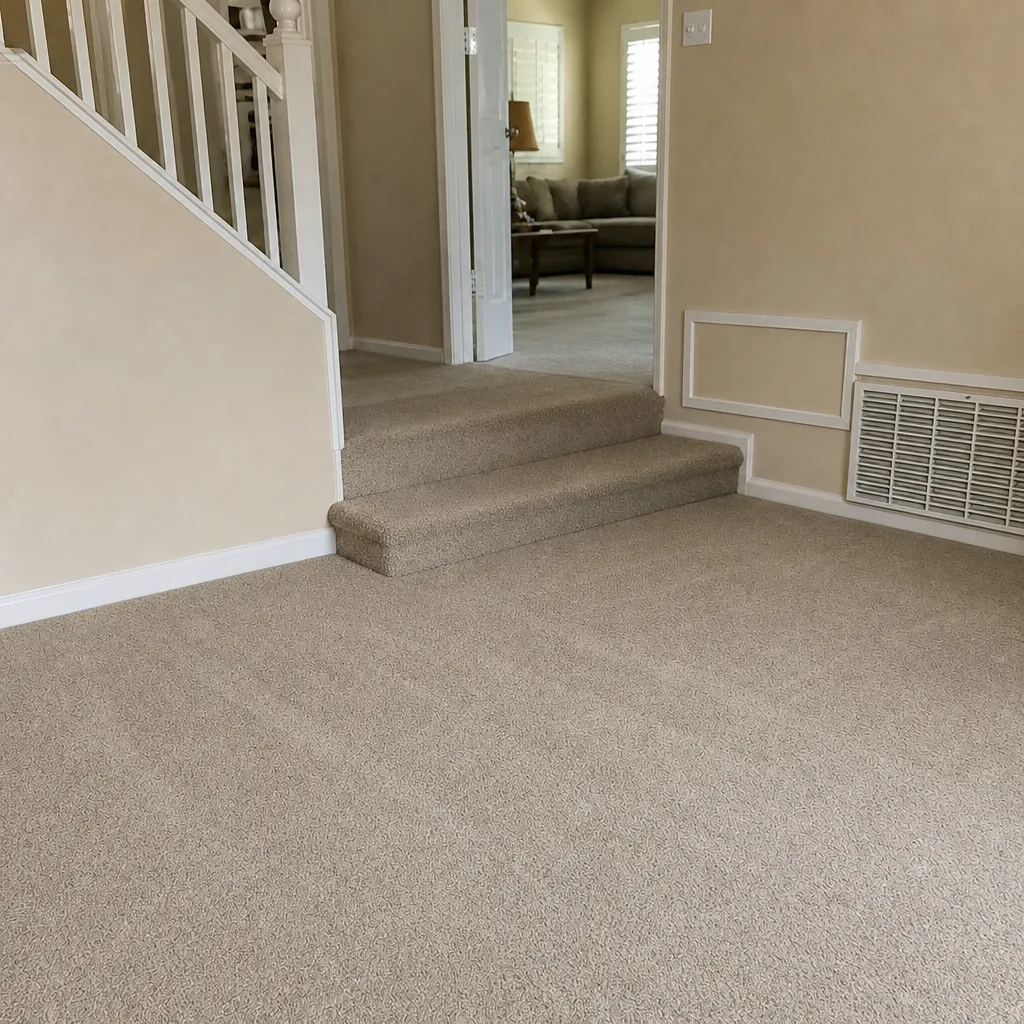
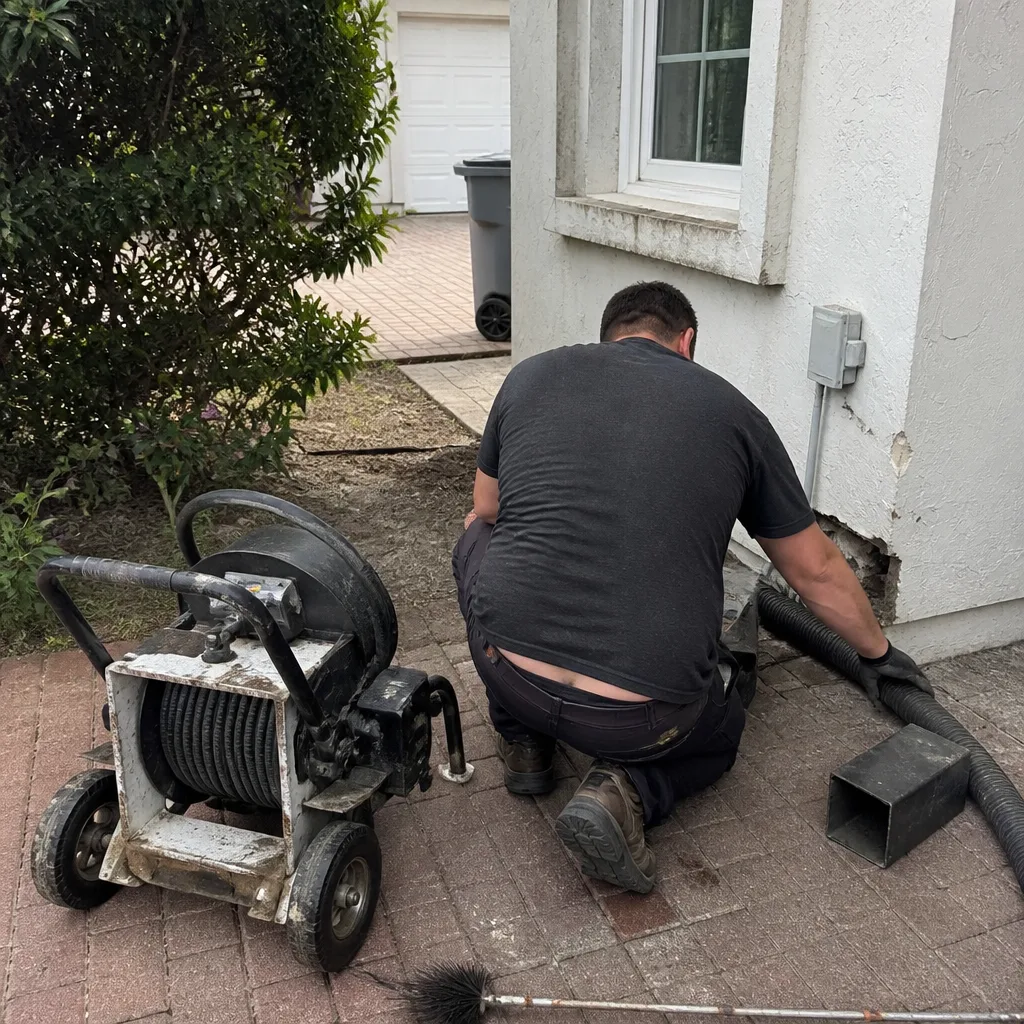
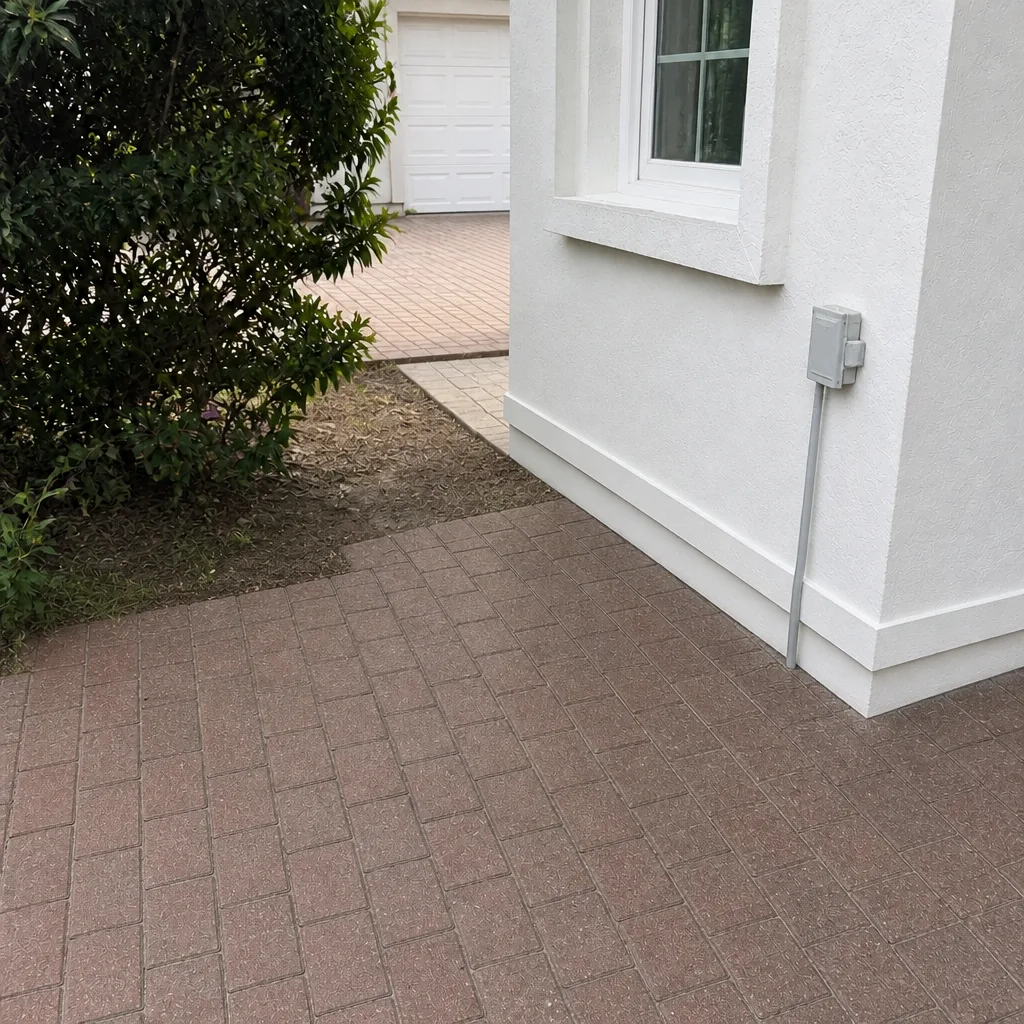
See the difference
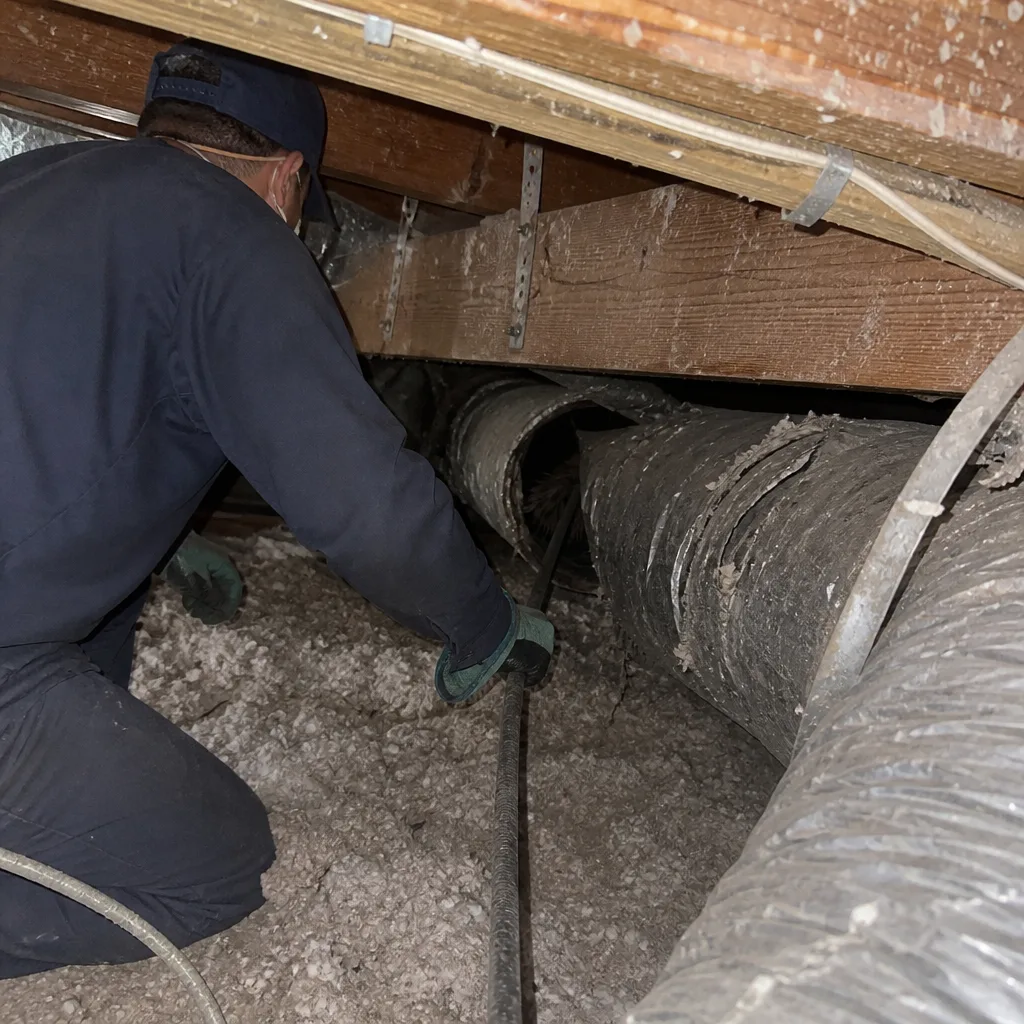 Before
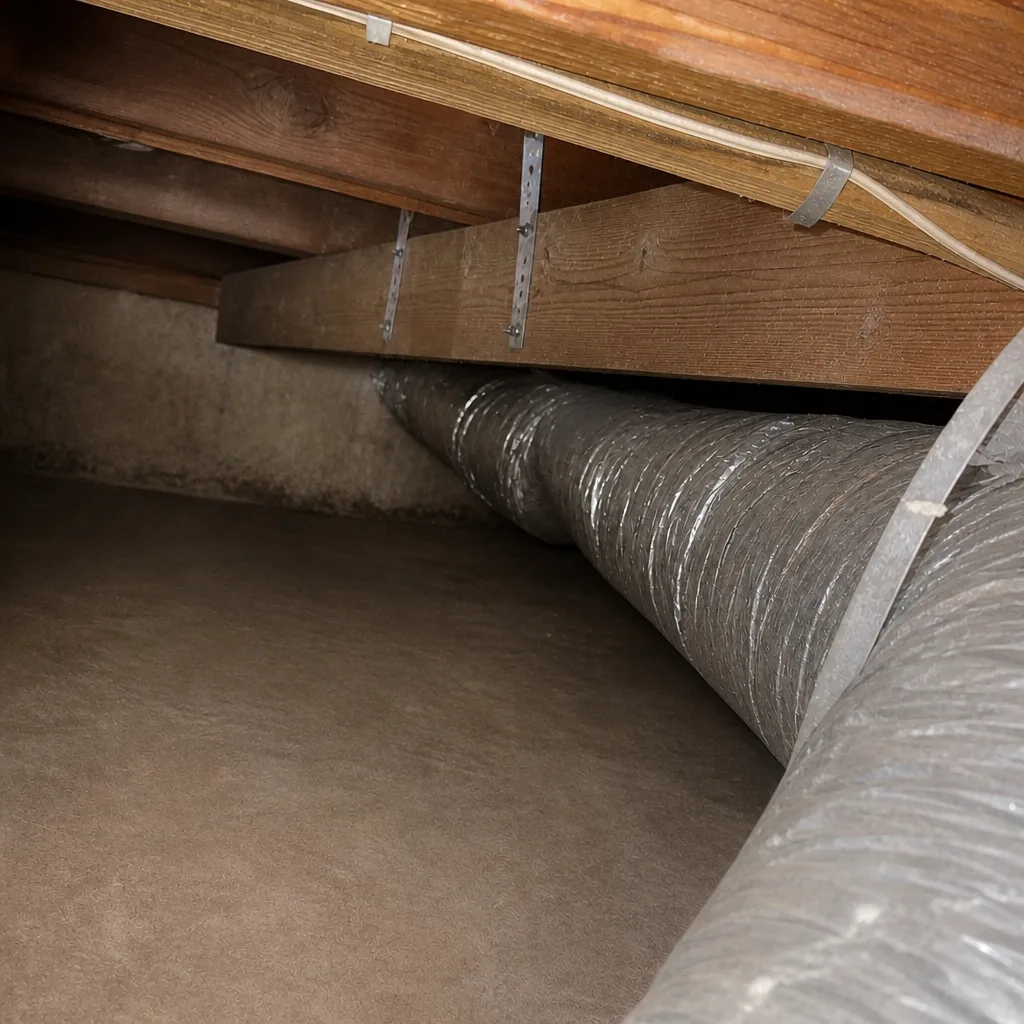 After
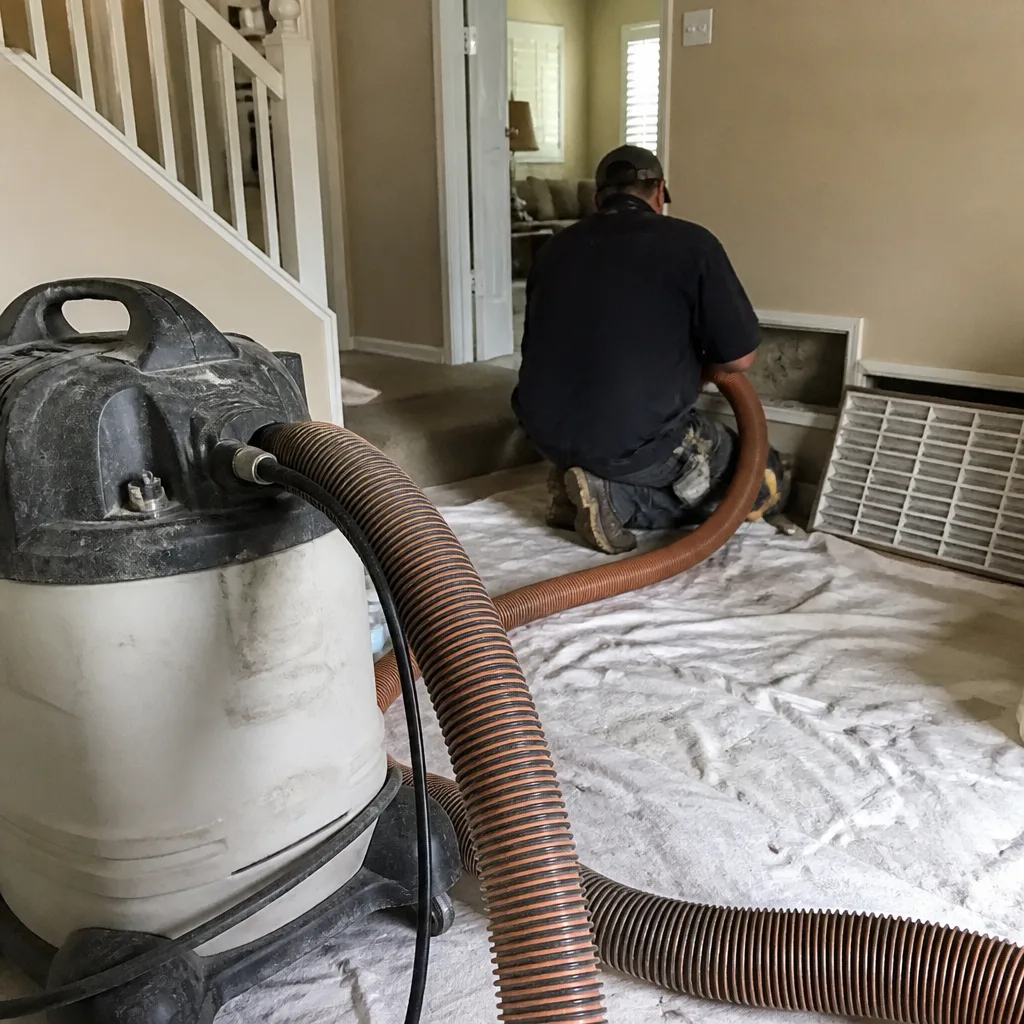 Before
 After
 Before
 After